

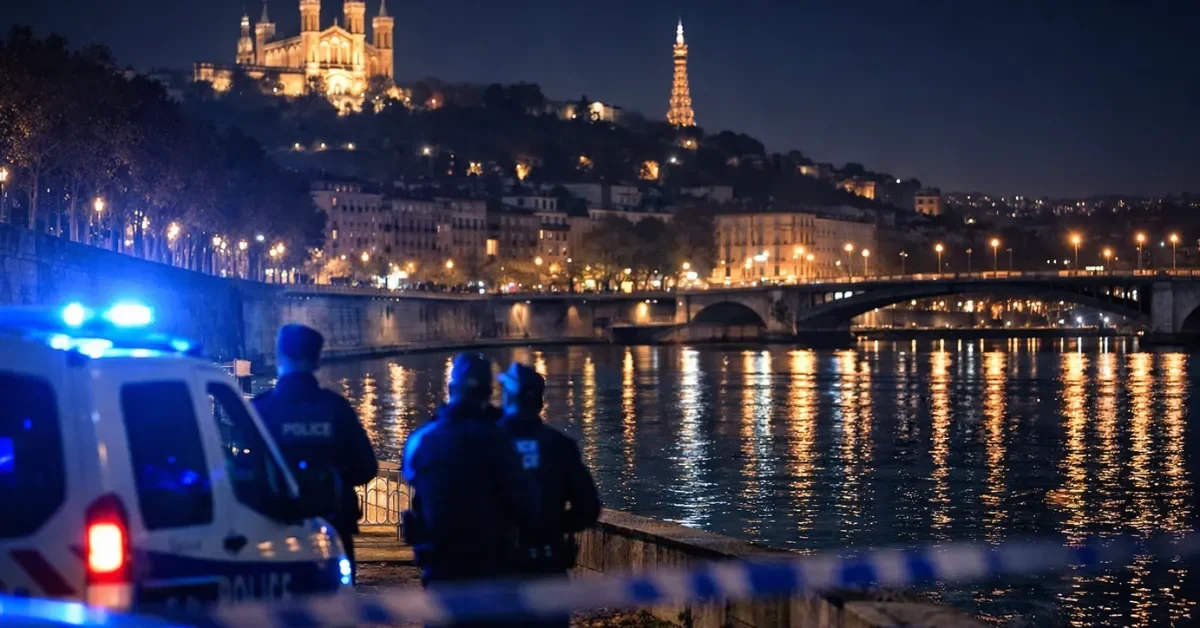
French police have taken eleven people into custody in connection with the violent death of a 21-year-old student and far-right activist in Lyon. The killing of Quentin Deranque has sparked intense political debate across France, heightening tensions between opposing political factions and drawing sharp condemnation from government officials.
The investigation is moving quickly following the fatal incident that occurred early Sunday morning. Authorities are treating the case as intentional homicide committed by an organized group. As investigators examine the circumstances of the brawl, the tragedy has become a flashpoint for national arguments regarding political violence and public safety.
Suspects Linked to Far-Left Groups
Law enforcement officers carried out a series of raids leading to the arrests. According to the Paris prosecutor’s office, the individuals in custody are suspected of being associated with the “ultra-left” movement. The arrests took place primarily in Villeurbanne and Vaulx-en-Velin, which are suburbs located near Lyon.
The suspects are young adults, reported to be between the ages of 19 and 23. Intelligence services had previously been monitoring some of these individuals due to their affiliations with radical groups. The swift police action comes as authorities attempt to piece together the events that led to Deranque’s death. Investigators are currently reviewing CCTV footage from the area and analyzing witness testimony to determine individual responsibilities.
Fatal Brawl on the Banks of the Rhône
The violence erupted around 2:30 a.m. on Sunday along the banks of the Rhône river in Lyon. This area is a popular gathering spot for young people in the city. Reports indicate that a violent altercation broke out, resulting in severe injuries to Deranque.
Emergency services arrived at the scene to treat the victim. Despite their efforts, Deranque succumbed to his injuries. He was identified as a student and a known figure within local far-right circles. Specifically, he was associated with the group known as “Rempart,” which the French government had officially dissolved in 2022. The exact trigger for the brawl remains under investigation, but the political affiliations of those involved have become the central focus of the inquiry.
Government and Right-Wing Reactions
The death has drawn immediate and furious reactions from France’s right-wing political leaders and government ministers. Interior Minister Bruno Retailleau confirmed the political nature of the suspects, stating they belonged to the “extreme left.” He condemned the violence in strong terms, emphasizing that the state would not tolerate such brutality.
Prime Minister Michel Barnier also weighed in, calling the incident a tragedy and promising that justice would be served with severity. The reaction from the far-right National Rally party was particularly vocal. Jordan Bardella, the president of the National Rally, described the killing as an act of “savagery” and criticized what he views as a climate of lawlessness. Marine Le Pen echoed these sentiments, blaming the government for allowing violent extremist groups to operate.
Controversy Surrounding Jean-Luc Mélenchon
While the government and right-wing leaders issued immediate condemnations, the response from the far-left has generated its own controversy. Jean-Luc Mélenchon, the leader of the France Unbowed (LFI) party, faced a wave of backlash for his initial comments regarding the death.
On social media, Mélenchon questioned whether the victim was actually a “political activist” and urged “prudence” regarding the details of the case. He stated that he would not “excuse” the crime but also would not “overlook” the context, a stance that many critics interpreted as an attempt to minimize the tragedy. His comments were met with outrage from across the political spectrum.
Socialist Party leader Olivier Faure distanced himself from Mélenchon’s remarks, asserting that the death of a young man should be condemned unequivocally, regardless of his political views. Facing mounting pressure, Mélenchon later clarified his position, acknowledging the horror of the event, but the political damage had already intensified the debate.
Rising Political Polarization
The killing of Quentin Deranque highlights a worrying trend of increasing polarization and violence in France. Lyon, in particular, has seen frequent clashes between rival political extremists. The government has attempted to crack down on these groups by issuing dissolution decrees for organizations on both the far-right and far-left that are deemed dangerous.
However, critics argue that these measures have not stopped the violence on the streets. As the investigation continues and the eleven suspects face questioning, the country remains on edge. The tragedy has reignited difficult conversations about radicalization among French youth and the ability of the state to maintain order amidst growing ideological divides.
