

Ukraine is confronting intensified Russian attacks on its energy infrastructure even as Kyiv and Western allies pursue talks aimed at ending the nearly four-year-old conflict. Russian missile and drone strikes have knocked out electricity in large parts of southeastern Ukraine, while international negotiations in Paris seek binding security guarantees and a path toward peace. Focus Keyword: Ukraine peace talks
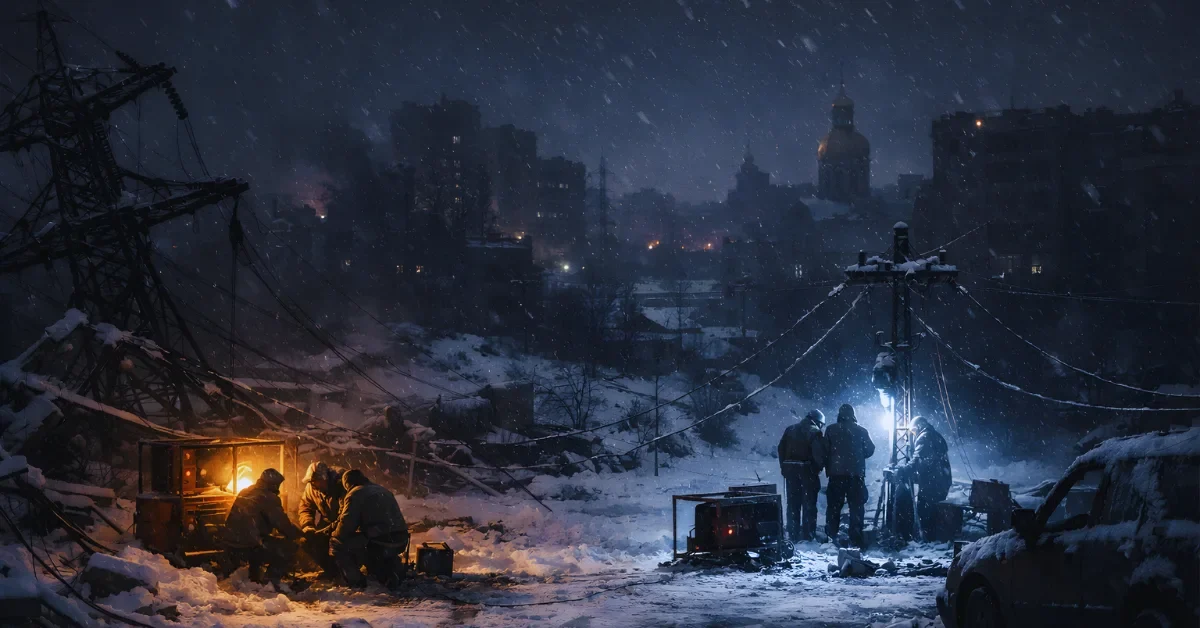
Russian strikes on Dnipropetrovsk and Zaporizhzhia regions left those areas almost entirely without power on January 7, Ukrainian energy officials said, plunging thousands into blackout conditions amid severe winter cold. Critical infrastructure is operating on backup generators, with subway services in Dnipro halted and warnings to residents in Kryvyi Rih to prepare for prolonged outages. Train and signalling systems are running on reserve power, and mobile communications in Zaporizhzhia are under emergency measures, though water and hospitals remain functioning. This latest wave underscores the ongoing toll of Russia’s offensive on Ukrainian civilian infrastructure.
Blackouts Deepen Winter Hardship
The energy ministry described the southeastern blackout as part of a broader campaign of Russian attacks targeting Ukraine’s power grid. Officials highlighted the hazardous conditions faced by energy workers trying to keep essential services running as temperatures plunge below minus 20 degrees Celsius. In Dnipro, the blackout stopped metro transportation entirely, disrupting daily life in one of Ukraine’s major cities, while in Zaporizhzhia, disabled air raid sirens and strained communications added to residents’ vulnerability. The severity of these strikes has compounded hardship for civilians during a harsh winter.
Paris Talks: Progress and Persistent Challenges
Amid these attacks, Ukraine’s government and its Western partners are pressing forward with peace negotiations in Paris. Ukrainian Presidential Chief of Staff Kyrylo Budanov reported that the second day of talks yielded “concrete results,” though the central challenge—the territorial dispute with Russia—remains unresolved. The discussions aim to secure robust security guarantees for Ukraine should a ceasefire be agreed.
At this summit of Ukraine’s allies—including European leaders and U.S. envoys—participants are working on a framework of legally binding commitments to deter future Russian aggression. Special Envoy Steve Witkoff and adviser Jared Kushner, representing the United States, have backed a package of security protocols that coalition leaders described as strong and designed to both deter and respond to further attacks.
Security Guarantees and Military Presence
The coalition’s Paris declaration outlines a plan for security guarantees that could involve a U.S.-led ceasefire monitoring system using drones, sensors, and satellites, along with support from European forces once a ceasefire is reached. France and the United Kingdom have pledged to deploy troops to Ukraine after a ceasefire to establish military hubs and protected facilities to support Ukrainian defense and reconstruction. This force would not engage Russian troops directly but would serve as a deterrent against renewed aggression.
Despite progress, Ukrainian President Volodymyr Zelenskiy and other leaders have underscored that details of these security commitments still need to be fully defined and ratified by national legislatures, including the U.S. Congress. Zelenskiy has also sought additional meetings with U.S. leadership to intensify diplomatic pressure on Russia and expand long-term guarantees extending potentially more than 15 years.
Territorial Dispute Remains Sticking Point
A core obstacle in the negotiations remains Russia’s demand that Ukraine cede territory in the eastern Donbas region in exchange for peace. Ukraine has firmly rejected territorial concessions, with Ukrainian negotiators insisting that their national interests and borders remain intact. U.S. envoys and Ukrainian officials have discussed various ideas—including proposals for special economic zones or administrative arrangements in contested regions—but no breakthrough has been reached.
War Continues as Diplomacy Advances
Even as talks progress, Russian military activity persists. Beyond the energy grid attacks, other reports indicate Russian assaults on Ukrainian port infrastructure and ongoing drone attacks across Ukrainian territory, emphasizing the fragility of peace prospects. Against this backdrop, Ukraine’s allies are pledging increased support that ranges from long-term military assistance to strengthening Ukraine’s defensive capabilities.
With winter deepening and Russian strikes intensifying, Ukraine’s peace negotiations and pursuit of fortified security guarantees could shape the country’s future stability and long-term defence. The coming days of talks in Paris may determine whether diplomatic momentum can translate into sustained protection for Ukraine and a framework for peace.
