

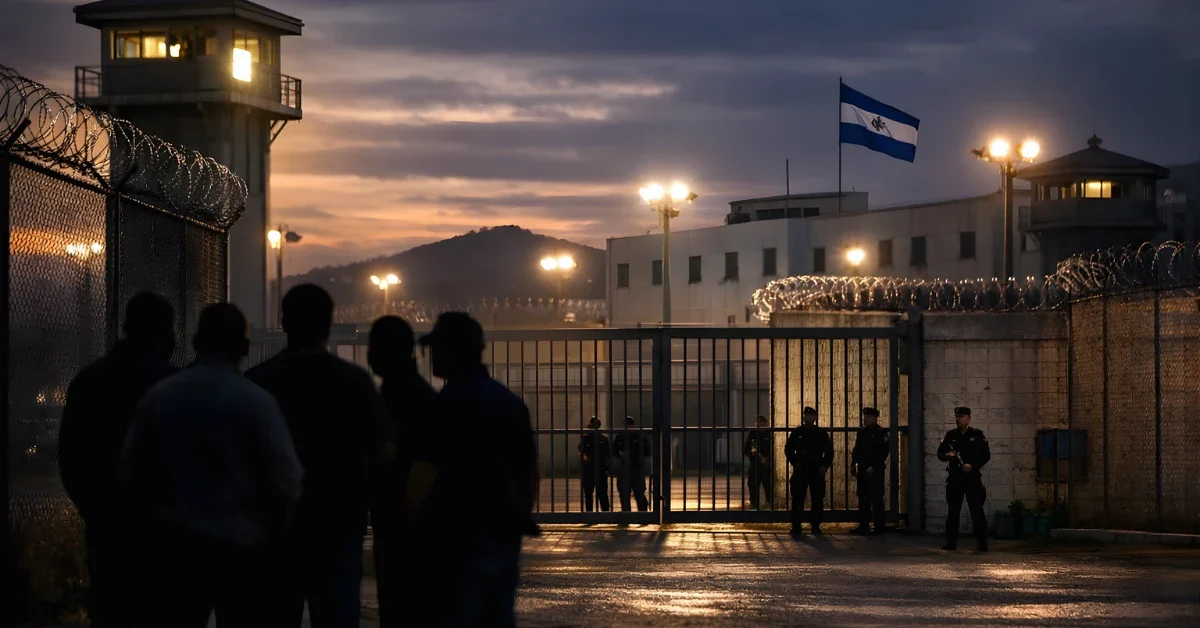
Nicaragua’s government announced on Saturday that it had freed dozens of people from its national penitentiary system, a move that came a day after the United States demanded the release of more than 60 political prisoners in the country. The announcement landed as other left-wing governments in the region, including Venezuela, faced heightened U.S. pressure from the Trump administration.
In its statement, President Daniel Ortega’s government said “tens” of detainees had gone home to their families, describing the action as a commemorative gesture marking 19 years of Ortega’s rule. The statement did not name the detainees, confirm an exact number, or explain why they had been held, and other reporting also said the government did not confirm whether those freed had been detained for political reasons.
Conflicting counts and unanswered questions
The government did not provide a specific number of people released, and reporting noted uncertainty about whether the freed detainees would face restrictions such as house arrest. A human rights NGO that tracks political prisoners in Nicaragua identified 19 people released on Saturday, according to Reuters reporting republished by The Print. NDTV separately reported the government’s description of the release as involving “tens” of people, without listing names or reasons for detention.
State media in Nicaragua published images of detainees signing release papers and embracing relatives, according to NDTV. Reuters reporting said the government announcement did not confirm whether the detainees were political prisoners.
Opposition figures say political prisoners freed
Ana Margarita Vijil, an opposition leader, former prisoner, and head of the UNAMOS political movement, told Reuters that the people released “are political prisoners,” and said several were friends. Vijil said she did not know the total number freed, but said those released included former mayor Oscar Gadea and Evangelical pastor Rudy Palacios, along with four of Palacios’s relatives. Reuters reporting said Palacios was detained in July after criticizing the government over human rights violations and after supporting the 2018 protests demanding Ortega’s ouster.
A coalition of opposition groups, Liberales Nicaragua, praised the releases in a statement and said it had “no doubt” the move was the result of U.S. political pressure and events linked to developments in Venezuela. That same Reuters reporting described Nicaragua’s release as reflecting the level of pressure some left-wing governments in Latin America face to meet U.S. demands.
US pressure and embassy message
The U.S. embassy in Nicaragua publicly urged Ortega’s government to follow Venezuela’s steps after praising a promised release of opposition figures in Venezuela, according to Reuters reporting. In a post quoted in Reuters coverage, the embassy said that “more than 60” people in Nicaragua remained “unjustly detained or missing,” including pastors, religious workers, the sick, and the elderly, and added: “Peace is only possible with freedom!” NDTV also reported the embassy’s message and repeated the “more than 60” figure, using the wording “unjustly detained or disappeared.”
NDTV reported that the U.S. State Department has branded the Murillo-Ortega government a dictatorship and accused it of consolidating total power through a constitutional rewrite and by crushing dissent since unrest during 2018 protests that left 300 people dead. Reuters reporting similarly said Ortega responded to the 2018 protests with repression that left at least 350 dead and hundreds detained, and said Ortega and his wife, Rosario Murillo, control virtually every aspect of government, including the armed forces and the judiciary.
Venezuela’s role in the timing
Reuters reporting said the Nicaragua announcement came as Venezuela was beginning to release political prisoners under U.S. pressure. Reuters also said U.S. pressure in the region had been especially intense since the Trump administration attacked Venezuela a week earlier and captured President Nicolas Maduro. NDTV reported that Maduro was seized by U.S. troops in Caracas a week earlier and taken to New York to face drug trafficking charges.
NDTV also reported that an NGO and exiled media said at least 61 people had been arrested for celebrating or supporting Maduro’s capture, describing Maduro as a close ally of Ortega and Murillo. Reuters reporting republished by The Print described Maduro’s capture as “last week’s stunning capture” by U.S. special forces and said Maduro faces U.S. federal charges of narco-terrorism and drug trafficking, while also noting Maduro has said he was kidnapped.
