

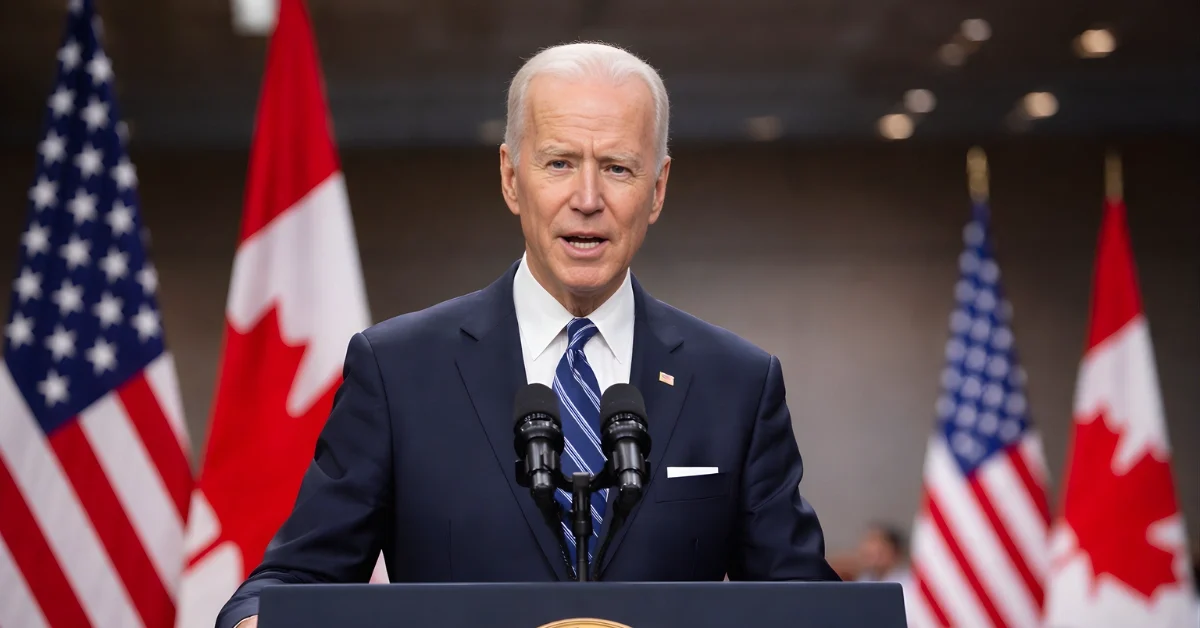
U.S. President Donald Trump has withdrawn Canada’s invitation to join his newly formed “Board of Peace,” escalating a growing public rift with Canadian Prime Minister Mark Carney. Trump announced the decision in a message posted on social media, framing it as a formal notice that the board was pulling back its offer for Canada to participate.
In his post, Trump addressed Carney directly and wrote: “Please let this Letter serve to represent that the Board of Peace is withdrawing its invitation to you regarding Canada’s joining, what will be, the most prestigious Board of Leaders ever assembled, at any time.” Reports said Trump made the post as he returned to Washington after attending the World Economic Forum (WEF) in Davos, Switzerland.
Trump did not explain his reasons for withdrawing the invitation. Carney’s office did not immediately respond, and recent public remarks from Canadian officials and the prime minister pointed to rising tensions over the direction of the U.S.-led international order, tariffs, and other disputes.
A decision tied to Davos remarks
The withdrawal came after Carney delivered a high-profile speech at the World Economic Forum warning that the rules-based international order—described as largely shaped by American hegemony—was facing a “rupture.” In the same address, Carney urged so-called middle powers to work together, saying, “Middle powers must act together because if we’re not at the table, we’re on the menu.”
Carney also argued that legitimacy, integrity, and rules still matter, if countries choose to use them together. Without naming Trump directly, he criticized U.S. threats of tariffs against allies who opposed Trump’s stated aim to acquire Greenland and said Canada supported Danish sovereignty over the territory.
Trump publicly responded the next day with sharp criticism of Canada’s stance and Carney’s tone. In remarks at the WEF, Trump said Canada “gets a lot of freebies” from the United States and suggested it should be more appreciative. He also said, “Canada lives because of the United States,” adding, “Remember that, Mark, the next time you make your statements.”
Carney answered back in remarks delivered in Quebec City on Thursday, describing the two countries as having built a strong partnership in the economy, security, and cultural exchange. He rejected Trump’s framing, saying Canada does not “live because of the United States,” and added that Canada “thrives” because it is Canadian.
What the Board of Peace is—and how it’s being pitched
Trump has promoted the Board of Peace as a new international group meant to help resolve conflicts. Some reporting described the group as a tool Trump created to facilitate a peace agreement between Israel and Hamas in Gaza, and said he later sought to expand it into a broader organization that could rival the United Nations.
In Davos, Trump formally launched the board and presented it as a major global initiative. According to reporting, the total number of participating countries is unclear, but Trump has said that nearly 30 nations had already signed up. Permanent members would be required to contribute $1 billion each to fund the board, and Trump has described it as something the group could use to do “pretty much whatever we want” once fully formed, while operating “in conjunction with the United Nations.”
More than two dozen countries had signed on so far, including Israel, Saudi Arabia, and Qatar. At that point, none of the United States’ major European allies were among the countries said to have joined, and France, Norway, Sweden, and the United Kingdom had either declined the invitation or expressed significant reservations.
The Vatican has said Pope Leo—described as the first American pope—had been asked to join the board and was evaluating the invitation.
Canada’s stance and the widening dispute
Beyond the personal exchange between Trump and Carney, reporting described broader tensions between the two governments. The relationship has been strained for months over tariffs and Trump’s repeated calls since returning to office for Canada to become the 51st state of the United States.
Canada had signaled it was open to participating in the board but would not contribute financially. Carney’s office had also indicated he had accepted the invitation before it was later revoked.
While Trump’s post did not spell out a specific trigger, multiple reports connected the timing to Carney’s Davos remarks challenging what he described as a rupture in the U.S.-led global order and calling on other countries to act together in the face of pressure from larger powers.
