

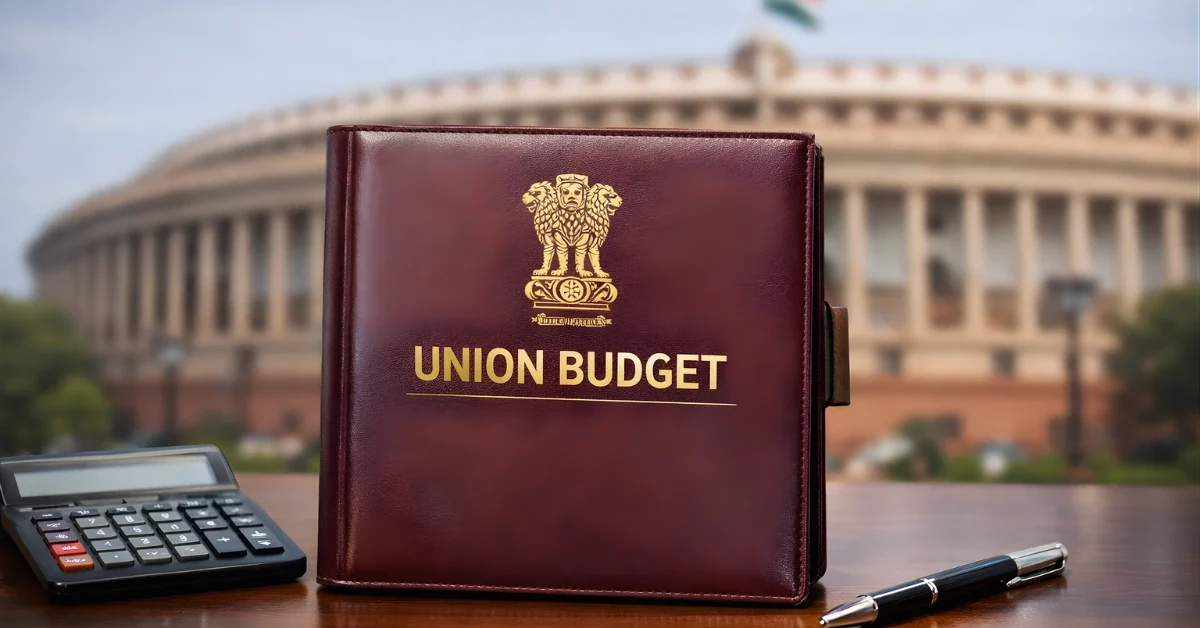
Business leaders have laid out wide-ranging Budget 2026 expectations, asking for policy support that helps exports, innovation, and domestic manufacturing scale faster. Alongside sector-specific tax and compliance requests, several executives also flagged the need for more predictable funding models for digital infrastructure, including India’s digital payments ecosystem.
In comments shared ahead of the Union Budget 2026-27, voices from renewables, healthcare, consumer brands, travel, appliances, and technology focused on practical measures—such as targeted incentives, clearer rules, and smoother implementation—to support growth. Some also pointed to the importance of strengthening India’s innovation pipeline, including deeper support for applied research and commercialization pathways.
Export mission and growth push
One major theme was India’s export ambitions. Abhijeet Sinha, Principal Adviser at SEPC in the Ministry of Commerce & Industry, said Budget 2026-27 is expected to begin a countdown toward a “$1 trillion product and services export dream,” and described a mission that received Cabinet approval in November 2025 with an outlay of Rs. 25,060 crore for FY26 to FY31.
Sinha also said the export mission aims to strengthen export-led growth by shifting from “multiple fragmented schemes” to a “single, outcome-based, adaptive mission” that can respond quickly to trade challenges and changing exporter needs amid global tariff wars. Separately, a market participant, Anooshka Soham Bathwal of Dhanvesttor, said fiscal consolidation is likely to remain a core focus while geopolitical uncertainty may prompt additional support to the defence sector, alongside expectations of higher allocations for infrastructure and measures to boost consumption.
Digital payments and financial markets
In the digital economy, one executive highlighted sustainability concerns for payments infrastructure. Deepak Chand Thakur, Chairman and Managing Director of NPST, said the Union Budget is a key opportunity to strengthen the sustainability of India’s digital payments ecosystem, adding that the “zero MDR framework” has played a critical role in driving adoption and inclusion.
Thakur said rising UPI volumes and system complexity require predictable funding models to support ongoing investment in infrastructure, security, and innovation, and he suggested that calibrated MDR or multi-year reimbursement mechanisms could preserve affordability while supporting long-term resilience and trust. In capital markets, Nikhil Aggarwal of Grip Invest argued that reducing friction and improving liquidity could accelerate bond adoption, with steps such as incentivising secondary-market trading, strengthening repo and market-making frameworks, and expanding credit enhancement mechanisms.
Aggarwal also referenced a Niti Aayog report on deepening the bond market that identifies “tax asymmetries,” including slab-rate taxation of interest, TDS inefficiencies, and unfavourable capital-gains treatment, as deterrents to long-term bond investing. He said rationalising these, especially for long-tenor listed bonds and retail-focused fixed-income products, would improve household participation.
Innovation, AI and cloud-native computing
Technology leaders also framed the Budget as a lever to modernize how India builds and uses digital systems. Chitranshu Mahant, CEO and Co-Founder of Primebook India, said policy measures that encourage cloud-native operating systems could help move beyond “device-bound performance,” improve resource efficiency, and reduce dependency on legacy systems.
AI was another recurring topic, with calls to treat it as a foundational capability rather than a niche line item. Pratap Daruka, CFO of Tredence, said Budget 2026 must clearly recognize AI, data engineering, and applied analytics as “strategic growth infrastructure,” and suggested a targeted push through stronger R&D incentives, AI-ready digital and compute infrastructure, clean-power data centres, and deeper public–private collaboration on skilling.
A separate AI-focused publication also described a shift in the broader conversation ahead of the India AI Impact Summit in New Delhi this February, saying attention is moving past the era of “AI potential” and into an era it calls “Commissioning Velocity.” The same page describes its focus as covering artificial intelligence updates, including breakthroughs and real-world applications across industries.
Manufacturing, GST and sector-specific asks
Across consumer and manufacturing segments, several leaders called for policies that lower costs and improve affordability while keeping compliance manageable. Tushar Gupta of Thermocool Home Appliances said continued focus on PLI schemes and reduced import duties on key components and raw materials could help domestic manufacturing scale, and he also called for higher R&D incentives—especially for AI- and IoT-driven products tied to energy efficiency and sustainability.
Tax and compliance issues showed up in multiple sectors. In outbound travel, Wilfred Selvaraj of LGT Holidays said high GST on tour packages and a 20% TCS on overseas tour programs have increased costs for consumers and affected cash flows and pricing, while also mentioning foreign spending caps and compliance complexities under the LRS. In real estate, Abhishek Raj of Jenika Ventures said GST reforms such as simplified rates and reductions for construction materials could help reduce costs and improve transparency, and he also mentioned proposed measures including RERA, infrastructure development, online land record management, and sustainability norms.
Healthcare voices focused on access and incentives beyond big cities. Dr. Mukesh Batra of Dr Batra’s Healthcare said expectations include stronger insurance coverage and wellness provisions that include long-term preventive care, plus faster investment in digital health infrastructure and community-based clinics to bridge access gaps in Tier-2, Tier-3, and semi-urban regions. Dr. Roy Patankar of Zen Multispeciality Hospital called for a three-year tax holiday for PPP hospitals with more than 200 beds in Grade B towns to promote advanced hospitals, diagnostics, and specialised care in smaller cities.
On the energy side, Faruk G Patel of KPI Green Energy said Budget 2026 should continue policy support for hybrid energy systems, energy storage, and green hydrogen, adding that strengthened incentives, tax clarity, and capital support mechanisms would sustain investor confidence and job creation. Meanwhile, the Wadhwani Foundation’s Ajay Kela said Budget 2026 should strengthen innovation ecosystems that move ideas “from labs to markets,” including translation support, applied research, and clear commercialization pathways, to help AI and emerging technologies drive new ventures and high-value employment.
