

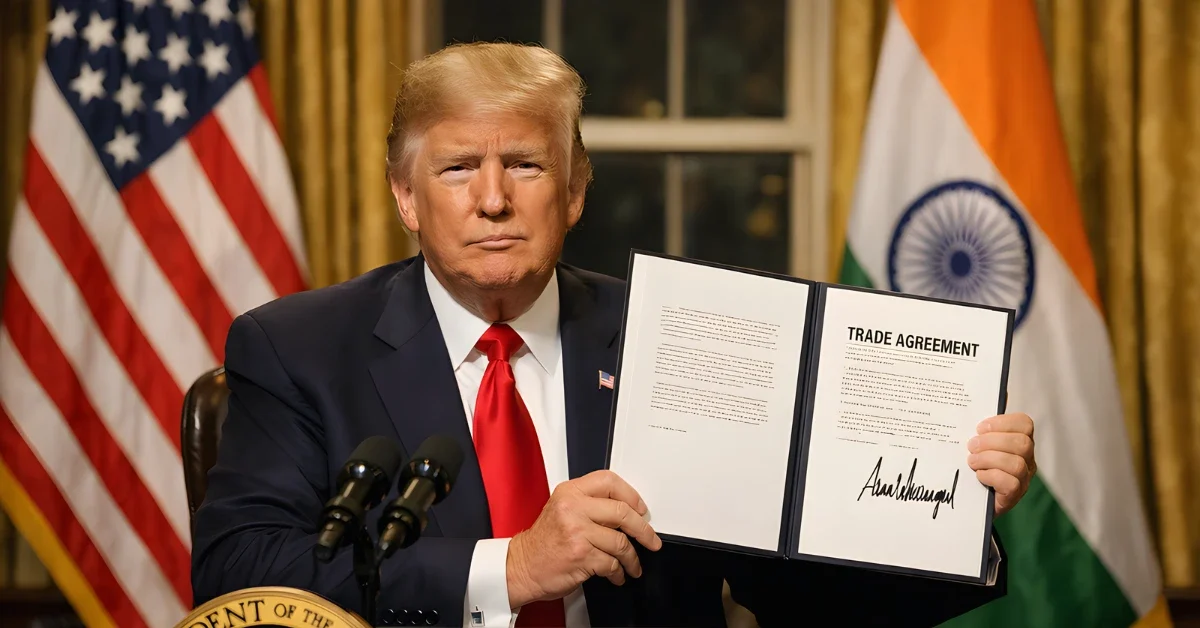
President Donald Trump has announced a significant trade deal between the United States and India, reducing tariffs to 18 percent. This move follows a recent phone call with Indian Prime Minister Narendra Modi and marks a key development in bilateral relations.
The agreement lowers US tariffs on Indian goods from the previous 25 percent level to 18 percent. Reports describe the arrangement as reciprocal, with both sides agreeing to the new rate. This tariff adjustment aims to foster better trade balance between the two nations.
Announcement After Modi Call
Trump made the revelation shortly after speaking with Modi over the phone. The conversation appears to have paved the way for the deal’s finalization. Indian media outlets highlight the direct link between the leaders’ discussion and the trade breakthrough.
Details from various accounts confirm the timing of the announcement aligns with the conclusion of these high-level talks. US officials involved in the negotiations contributed to reaching this point. The deal represents progress in ongoing India-US economic dialogues.
Reciprocal Tariff Structure
The trade deal features a mutual reduction in tariffs to 18 percent. This reciprocal cut applies across relevant categories of goods traded between the countries. Sources emphasize the balanced nature of the agreement, benefiting exporters on both sides.
Previously set at 25 percent, the tariffs now stand at the lower figure for US imports from India. This change provides immediate relief for Indian businesses targeting the American market. Trade experts note the structure promotes fairness in exchanges.
India’s Strategic Advantage
India stands to gain a competitive edge over other regional players thanks to the lowered US tariffs. The 18 percent rate positions Indian products more favorably in the US compared to peers in the region. This development enhances India’s position in global supply chains.
Business reports point out how the deal bolsters India’s export capabilities. Lower barriers open doors for increased shipments to the largest economy. The advantage could spur growth in sectors sensitive to tariff levels.
Key Figures in Talks
India-US discussions included prominent names such as Sergio Gor alongside the leaders’ call. These talks formed the backdrop for the tariff reductions. Negotiators worked to hammer out the specifics of the 18 percent rate.
The involvement of such figures underscores the deal’s importance. Ongoing communications between Washington and New Delhi led to this outcome. The agreement reflects sustained efforts in trade diplomacy.
Broader Trade Context
The US-India trade deal arrives amid efforts to recalibrate economic ties. Trump’s announcement highlights a willingness to adjust tariffs for mutual benefit. The reduction to 18 percent signals a positive shift from prior levels.
Various news outlets covered the story on February 2, 2026, capturing the excitement around the reciprocal cuts. The deal’s details circulated quickly, with focus on the tariff drop. It sets a new tone for future interactions.
Indian publications celebrated the news, noting India’s strengthened stance. US media echoed the tariff specifics and the Modi-Trump connection. Consistency across reports affirms the core elements of the agreement.
This trade development could influence upcoming economic strategies. With tariffs now at 18 percent, businesses prepare for adjusted operations. The reciprocal framework ensures symmetry in the partnership.
The phone call between the two leaders catalyzed swift action. Reports link the discussion directly to the deal’s unveiling. Such direct engagement proves effective in resolving trade matters.
India’s gain over regional competitors adds another layer. The lower tariffs differentiate India in trade competitions. Exporters anticipate smoother access to US consumers.
As details emerge, the 18 percent tariff becomes the focal point. From 25 percent down, the cut delivers tangible change. Trump’s proclamation puts the spotlight on this bilateral win.
The deal’s reciprocal design appeals to both economies. Balanced tariffs support sustainable trade volumes. Negotiations paid off with this concrete result.
Overall, the US-India trade pact with 18 percent tariffs reshapes dynamics. Following Modi’s call, progress materialized quickly. This step forward benefits stakeholders on both sides of the Pacific.
(Word count: 712)
