

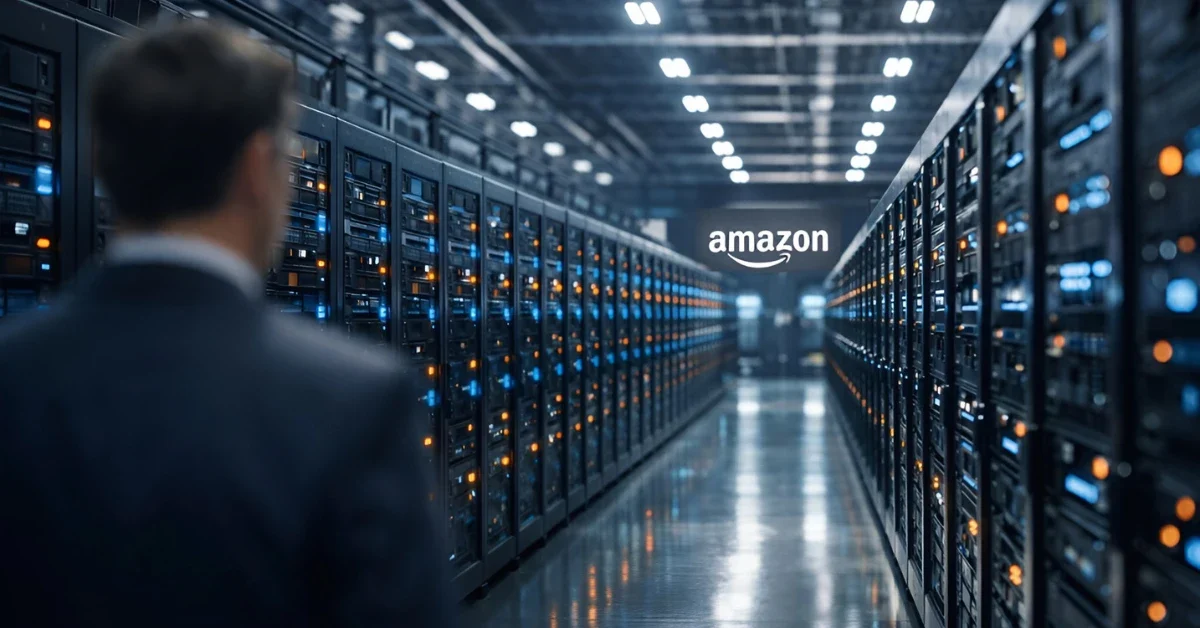
Amazon has announced plans for approximately $200 billion in capital spending this year, a massive investment strategy that has sparked an immediate negative reaction from Wall Street. The tech giant revealed this figure alongside its fourth-quarter earnings report, signaling an aggressive push to expand its artificial intelligence capabilities and data center infrastructure. Investors responded sharply to the news, sending Amazon shares tumbling significantly in after-hours trading.
The projected $200 billion expenditure represents a dramatic increase from previous years and highlights the company’s commitment to securing a dominant position in the competitive AI landscape. This spending plan exceeds the capital outlays of many of its hyperscaler rivals, redefining the financial stakes of modern tech competition. While Amazon’s leadership views this as a necessary step for future growth, the sheer scale of the investment has raised concerns among shareholders about near-term profitability and margins.
Wall Street Reacts to Profit Miss and Spending Surge
The market’s reaction was swift and severe, with Amazon stock sinking roughly 10% following the announcement. This sell-off was driven not only by the shocking capital expenditure forecast but also by a miss on fourth-quarter profit expectations. Although the company reported strong revenue growth in key areas, the bottom-line results failed to meet analyst projections, compounding the anxiety caused by the massive spending plan.
Investors appear to be recoiling at the rising price of AI dominance. The drop in share price reflects a broader skepticism about whether such heavy spending will yield proportionate returns in the near future. As the company pours billions into building out the infrastructure required for generative AI and cloud computing, shareholders are left weighing the long-term potential against the immediate impact on earnings per share.
AWS and Advertising Segments Show Strong Growth
Despite the profit miss and the controversy over spending, Amazon’s core business units continued to demonstrate robust performance. Amazon Web Services (AWS), the company’s cloud computing division, reported accelerating growth. This acceleration is a critical positive signal, suggesting that demand for cloud infrastructure remains high even as the company ramps up investment to meet future AI needs.
The advertising business also delivered impressive results, jumping 23% in the quarter. This surge in ad revenue underscores the strength of Amazon’s digital advertising platform, which continues to capture a larger share of marketing budgets. These growth engines provided a counter-narrative to the bearish sentiment surrounding the capital expenditure news, proving that the underlying businesses remain healthy and are expanding at a rapid clip.
CEO Andy Jassy Defends Investment Strategy
Amazon CEO Andy Jassy addressed the spending plans directly, framing the $200 billion outlay as an essential wager on the future. Jassy signaled that the company is in a unique position to capitalize on the generational shift toward artificial intelligence. By investing heavily now, Amazon aims to ensure it has the capacity to handle the explosion of data and processing power required by next-generation technologies.
The leadership team emphasized that these investments are largely demand-driven. As more enterprises migrate to the cloud and integrate AI into their operations, Amazon must have the infrastructure ready to support them. Jassy’s comments suggest that the company sees this period as a pivotal moment where under-investing could be more risky than over-spending. The strategy relies on the belief that these initial costs will translate into substantial long-term cash flow and market leadership.
Implications for the Tech Industry
Amazon’s move to spend $200 billion in a single year sets a new benchmark for the technology sector. It places immense pressure on other tech giants to keep pace or risk falling behind in the AI arms race. This aggressive capital deployment redefines the competitive landscape for hyperscalers, indicating that the cost of entry and maintenance in the top tier of tech is rising exponentially.
For the broader market, Amazon’s plunge serves as a bellwether for investor sentiment regarding AI spending. It highlights a growing tension between the promise of revolutionary technology and the financial discipline traditionally demanded by Wall Street. As the dust settles on this earnings report, all eyes will be on how effectively Amazon can deploy this capital and whether it can convince investors that the massive upfront cost will eventually pay off.
