

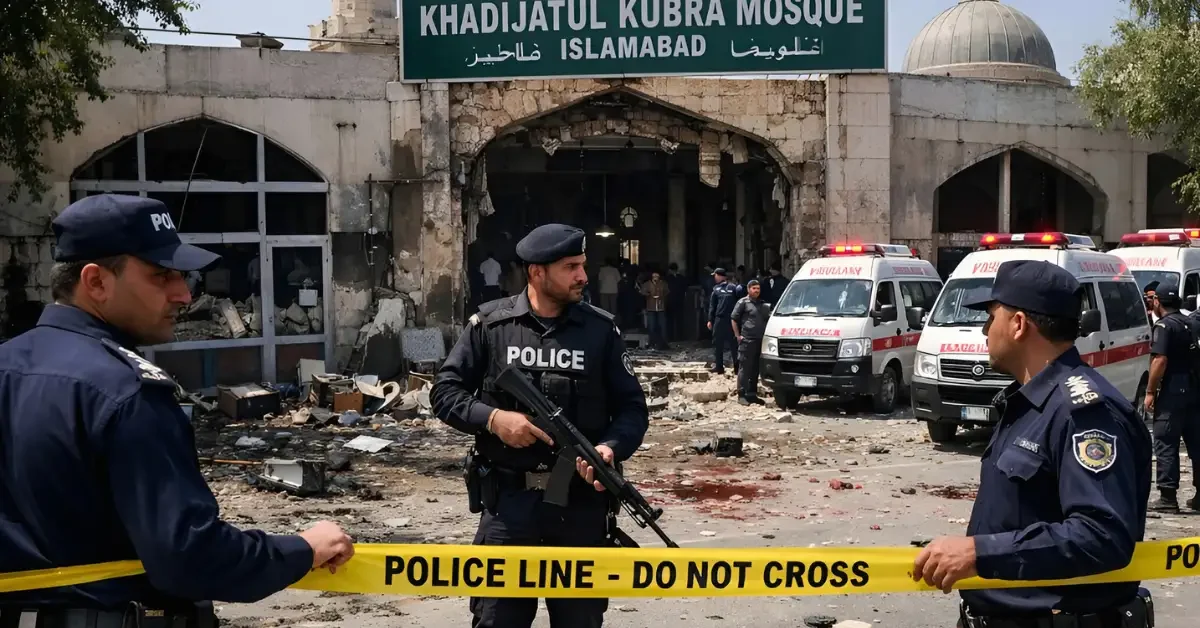
A powerful suicide bombing struck a Shia mosque in Islamabad on Friday, killing at least 31 people and wounding 169 others. The explosion occurred during weekly congregational prayers in the Tarlai Kalan area on the outskirts of the Pakistani capital, shattering the sanctity of the religious gathering.
The Islamic State (ISIL), also known as ISIS, claimed responsibility for the attack later that evening. In a statement released on its Telegram channel, the group said a “martyrdom-seeker” detonated his explosive vest after reaching the inner gate of the mosque. The group also published a photograph of the attacker, whose face was obscured, holding a weapon.
Security Guards Intercepted Attacker
According to Pakistani officials, the death toll could have been higher if not for the intervention of security personnel stationed at the mosque’s entrance. Defense Minister Khawaja Asif stated that the assailant opened fire on the guards after they attempted to stop him. Following the exchange of gunfire, the attacker detonated his explosives among the worshippers.
Witnesses at the Khadijatul Kubra Mosque described a scene of chaos and devastation. Syed Ashfaq, the mosque’s caretaker who lives nearby, told reporters that he rushed to the site after hearing the gunshot and subsequent explosion. He described seeing bodies scattered across the area, with many victims suffering severe injuries. Emergency teams transported the wounded, some in critical condition, to the Pakistan Institute of Medical Sciences (PIMS) and other hospitals in the capital, which were placed on high alert.
Officials and World Leaders Condemn “Cowardly” Act
Prime Minister Shehbaz Sharif strongly condemned the bombing, vowing that the perpetrators would be brought to justice. He expressed gratitude for the international messages of sympathy and support received in the wake of the tragedy. Information Minister Attaullah Tarar denounced the attack as a “cowardly and hateful act against humanity,” emphasizing the government’s commitment to protecting its citizens and maintaining sectarian harmony.
International condemnation was swift. United Nations Secretary-General António Guterres condemned the attack in the “strongest terms.” In a statement issued by his spokesperson, Guterres reiterated that attacks against civilians and places of worship are unacceptable and stressed that those responsible must be held accountable. He extended his condolences to the bereaved families and reaffirmed the UN’s solidarity with the people of Pakistan.
The United Kingdom’s High Commissioner to Pakistan, Jane Marriott, said she was “outraged and heartbroken” by the horrific violence. In a statement, she offered her thoughts and prayers to the victims and their families, declaring that the UK stands with Pakistan against such “abhorrent” acts.
Investigations Underway
Police have launched an investigation into the incident. Defense Minister Asif indicated that the suspect had been traveling between Afghanistan and Pakistan, highlighting the cross-border security challenges facing the region. Forensic teams have collected evidence from the blast site to further determine the specifics of the explosive device used.
The attack has drawn sharp criticism from opposition leaders as well. Allama Raja Nasir Abbas, Leader of the Opposition in the Senate, termed the incident a direct assault on humanity and questioned the efficacy of security measures in the federal capital. PTI Chairman Barrister Gohar Ali Khan also condemned the bombing, praying for the martyrs and the recovery of the injured.
