

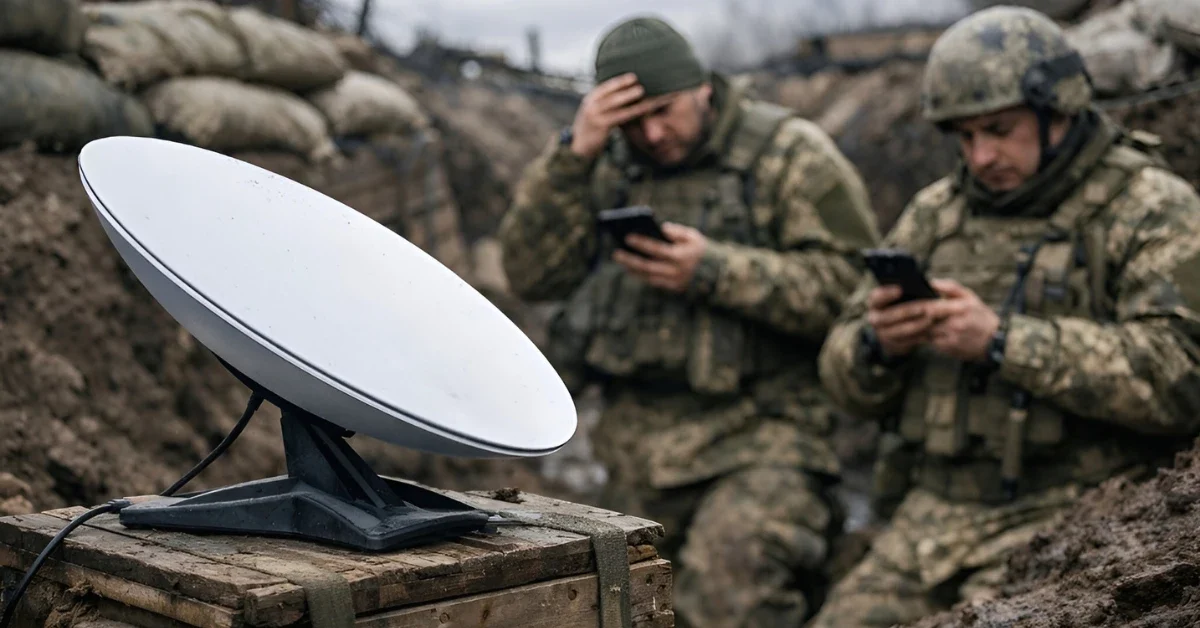
Russian military units operating in Ukraine have reportedly lost access to the Starlink satellite internet network, a development that Ukrainian officials claim has disrupted Russian command and control capabilities. The shutdown follows months of reports that Russian forces had illicitly acquired and utilized the terminals for battlefield communication and drone coordination.
Ukrainian Digital Transformation Minister Mykhailo Fedorov confirmed that Starlink terminals used by Russian troops were deactivated as of late Wednesday. This move represents a significant shift in the technological battleground, as connectivity has become a decisive factor in modern warfare. While Starlink has been a lifeline for Ukraine’s defense since the invasion began, its unauthorized use by opposing forces had increasingly complicated the conflict.
Impact on Russian Operations
The deactivation appears to have had an immediate effect on the front lines. A Ukrainian soldier serving in the 24th Aidar Assault Battalion stated that Russian assaults on their position ceased after the terminals went offline, attributing the pause directly to the loss of communication. Russian military bloggers also reported widespread outages, describing the situation as a “catastrophe” for their forces. According to these accounts, the loss of Starlink access has severely hampered the ability of Russian units to coordinate attacks and manage logistics.
Before this shutdown, Russian forces were reportedly using thousands of Starlink terminals in occupied territories. These devices were allegedly obtained through third-party intermediaries in countries where the technology is authorized, bypassing sanctions and direct sales bans. The terminals allowed Russian troops to maintain high-speed internet access, which is crucial for operating advanced drone systems and maintaining real-time situational awareness.
The “White-Listing” Strategy
The method used to cut off Russian access involves a new “white-listing” approach developed by Ukraine in collaboration with SpaceX, the parent company of Starlink. This system registers specific terminals authorized for use by Ukrainian forces, effectively blocking any device not on the approved list. Minister Fedorov noted that this technical solution was the result of lengthy negotiations with SpaceX to ensure that the restrictions would not inadvertently affect Ukrainian operations.
Implementing this block was complex because the front lines are fluid, and geofencing—blocking access based on location—risked cutting off Ukrainian troops fighting in the same contested areas. The white-listing strategy circumvents this by focusing on individual device authorization rather than broad geographic zones. This precise targeting allows Ukrainian units to continue using the service while denying it to the adversary, even when they are in close proximity.
Drone Warfare and Connectivity
The illicit use of Starlink had previously provided Russian forces with a tactical advantage, particularly in drone warfare. Recent reports indicated that Russia had begun integrating Starlink terminals directly into long-range Shahed attack drones. This integration allowed the drones to be controlled in real-time over vast distances, potentially enabling them to change targets mid-flight or transmit reconnaissance data back to operators.
The discovery of a Starlink dish inside a downed Shahed-136 drone earlier in the year highlighted the growing technological adaptation by Russian forces. By utilizing the satellite network, these drones could theoretically operate beyond the range of traditional radio control signals. The deactivation of unauthorized terminals aims to neutralize this capability, forcing Russian operators to rely on less secure or shorter-range communication methods.
Ongoing Technological Cat-and-Mouse
While Ukrainian officials have expressed optimism about the current blockade, they acknowledge that the solution may not be permanent. Minister Fedorov warned that Russian forces would likely attempt to find workarounds to restore their connectivity. The technological race between the two sides continues to evolve, with electronic warfare and counter-measures adapting rapidly.
SpaceX has consistently stated that it does not do business with the Russian government or military and that Starlink service is not active within Russia itself. However, the company faced challenges in policing the resale of its hardware on the black market. The new registration protocols represent a more aggressive stance in managing how the network is utilized in active combat zones, aiming to ensure the technology serves its intended defensive purpose for Ukraine.
