

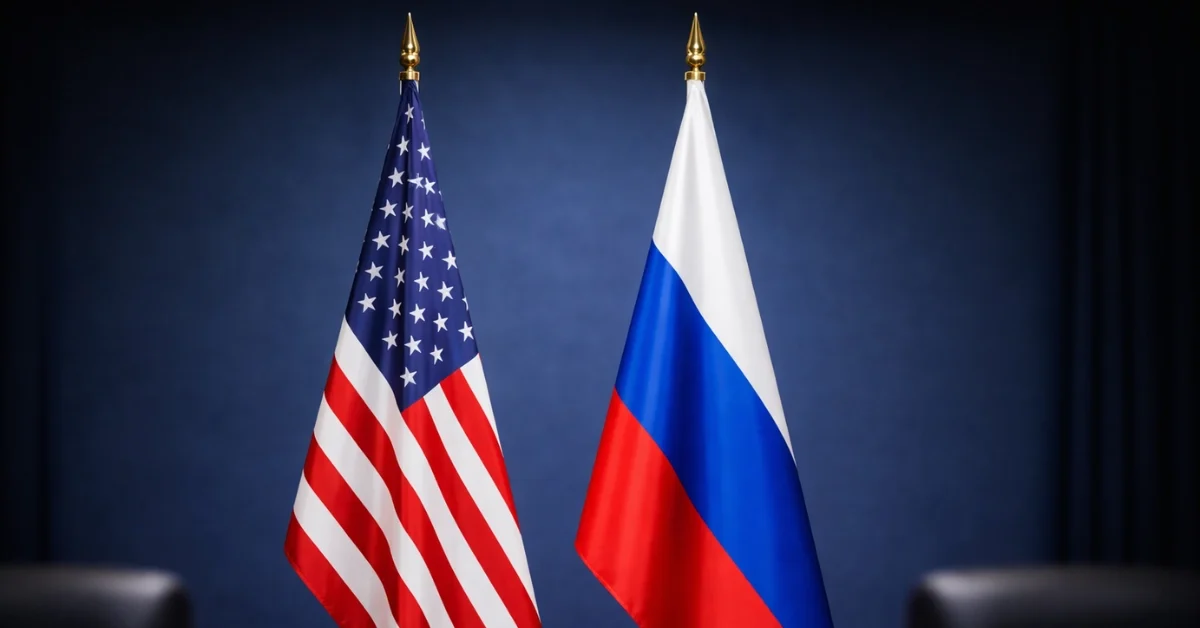
The last remaining nuclear arms control agreement between the United States and Russia officially ended this week, marking the first time in over fifty years that the world’s two largest nuclear arsenals face no binding restrictions. The New START treaty expired at midnight Thursday, opening an uncertain chapter in global nuclear security.
UN Secretary General António Guterres called the expiration a “grave moment” for international peace and security. He warned that the world is now entering uncharted territory without any legally binding constraints on American and Russian strategic nuclear weapons. The two nations together hold the vast majority of the world’s nuclear warheads.
Russia Proposes Extension, US Seeks New Deal
Russian President Vladimir Putin had offered to continue observing the treaty’s missile and warhead limits for another year if Washington did the same. However, the United States did not respond to this proposal, according to the Russian Foreign Ministry. Russia expressed disappointment that their ideas were being deliberately ignored, calling the American approach mistaken and regrettable.
President Donald Trump rejected the extension offer, arguing instead for a new, modernized treaty that would include China. He criticized New START as a badly negotiated deal that is being grossly violated, stating on his Truth Social platform that American nuclear experts should develop an improved agreement that can last long into the future.
Negotiations Continue Despite Expiration
Despite the treaty’s end, Russian and American negotiators discussed nuclear arms control during recent talks in the United Arab Emirates. The discussions occurred alongside separate meetings on a peace settlement in Ukraine. Kremlin spokesman Dmitry Peskov confirmed Friday that both sides recognize the need to start new arms control talks as soon as possible.
When asked about reports of a possible informal six-month agreement to observe treaty limits, Peskov clarified that any extension could only be formal. He stated it is hard to imagine any informal extension in this sphere, though Moscow would conduct dialogue if it receives constructive responses.
Military Communication Restored
The United States and Russia agreed Thursday to reestablish high-level military-to-military dialogue following the Abu Dhabi meeting, according to the US military command in Europe. This communication channel had been suspended in 2021 as relations between the two nations deteriorated before Russian troops entered Ukraine in February 2022.
What New START Required
The New START treaty, signed in 2010 by then-President Barack Obama and Russian President Dmitry Medvedev, was the final pact in a series of nuclear limitation agreements dating back to SALT I in 1972. It restricted each side to no more than 1,550 nuclear warheads deployed on no more than 700 missiles and bombers ready for use.
The agreement included extensive on-site inspections to verify compliance, though these stopped in 2020 due to the COVID-19 pandemic and never resumed. Putin suspended Russia’s participation in February 2023, saying Moscow could not allow American inspections while Washington and NATO allies openly declared a goal of Russia’s defeat in Ukraine. However, the Kremlin pledged to continue respecting the caps on nuclear weapons.
China Question Complicates Future
Trump has indicated he wants China included in any future nuclear treaty, an effort he attempted unsuccessfully during his first term. Beijing has refused any restrictions on its smaller but growing nuclear arsenal, instead urging the US to resume nuclear talks with Russia.
Thomas DiNanno, Under Secretary of State for Arms Control and International Security, told a UN-backed organization in Geneva Friday that the treaty’s expiration marks the end of an era of what he described as US unilateral restraint. He emphasized that Trump wants a better agreement involving Beijing, noting that China’s entire nuclear arsenal currently has no limits, transparency, declarations or controls.
DiNanno also accused China of covertly conducting nuclear explosive tests, including preparing for tests with designated yields in the hundreds of tons. He stated that China’s army sought to conceal testing by obfuscating the nuclear explosions because it recognizes these tests violate test ban commitments. Chinese Ambassador Shen Jian accused the United States of shifting the blame.
Secretary General Urges Action
Guterres emphasized that decades of nuclear arms control agreements played a crucial role in preventing catastrophe and reducing global stockpiles. He said such frameworks built stability throughout the Cold War and afterward, preventing devastating miscalculation.
The UN chief warned that the collapse of this restraint system comes at a particularly dangerous time, as the risk of nuclear weapon use is the highest in decades. However, he noted that this watershed moment also provides an opportunity to reimagine arms control for a changing security environment. Guterres urged both nations to return to negotiations without delay and agree on a successor framework that restores verifiable limits, reduces risks and strengthens global security.
