

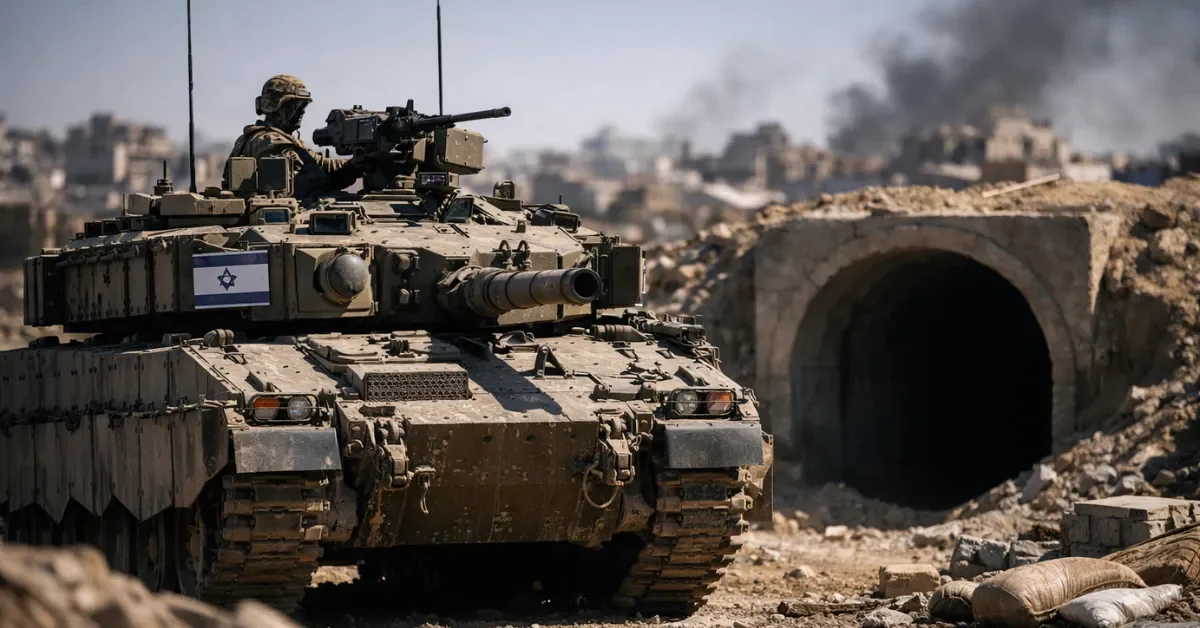
Israeli military forces killed four armed Palestinians in southern Gaza on Monday morning after the group reportedly emerged from an underground tunnel. The confrontation occurred in eastern Rafah when the individuals exited a tunnel shaft and opened fire on soldiers from the 7th Armored Brigade. The Israeli military described the incident as a blatant violation of the ceasefire agreement currently in place.
No Israeli casualties were reported following the exchange of fire. The Israel Defense Forces (IDF) stated that troops identified the gunmen as they emerged and responded with gunfire to eliminate the threat. This specific incident in Rafah is part of ongoing mop-up operations in the region, where the military believes dozens of operatives remain trapped underground on the Israeli side of the ceasefire line.
Heightened Tensions and Ceasefire Violations
The recent violence in Rafah has raised concerns about the stability of the U.S.-brokered ceasefire that began on October 10. While the Israeli military views the tunnel attack with the utmost gravity, Palestinian officials and media outlets have reported several other fatal incidents across the Gaza Strip on the same day. According to Gaza’s health officials, the total death toll from various actions reached at least six by Monday evening.
In a separate event, an Israeli airstrike targeted a residential apartment in the Al-Nasr neighborhood of western Gaza City. Medical sources reported that four people were killed in this strike, which also caused damage to nearby tents housing displaced families. Emergency teams transported the injured to Al-Shifa Hospital following the attack. The targeted building had reportedly been used as a refuge for those who lost their homes earlier in the conflict.
Ongoing Military Operations and Casualties
The Israeli military also reported a third incident on Monday involving a fatal shooting in northern Gaza. A Palestinian man was killed after crossing a designated security boundary known as the Yellow Line. The Gaza Division’s Northern Brigade stated the individual approached soldiers in a manner that posed an immediate threat, prompting them to open fire.
Discrepancies remain regarding the classification of those killed and the frequency of ceasefire breaches. Since the truce began in October, the Gaza Government Media Office claims there have been over 1,500 violations by Israeli forces. Health officials in Gaza report that 581 people have died and over 1,500 have been injured during this period. Conversely, the Israeli military maintains that its actions are responses to direct threats and security risks posed by militants operating from underground networks.
Broader Context of the Gaza Conflict
The incident in Rafah underscores the continuing challenge of managing the extensive tunnel networks beneath southern Gaza. Hamas military spokespeople referred to the tunnel engagement as an act of resistance, while Israel asserted that such fighters present a persistent security risk. The military has reported killing or capturing approximately 40 operatives in the eastern Rafah area over the last few months.
The current ceasefire remains fragile as both sides navigate the second phase of negotiations, which involve the governance and reconstruction of the territory. While the October agreement halted large-scale combat, localized skirmishes and airstrikes continue to result in casualties. International observers remain focused on whether these frequent violations will lead to a broader resumption of hostilities or if the diplomatic framework will hold.
