

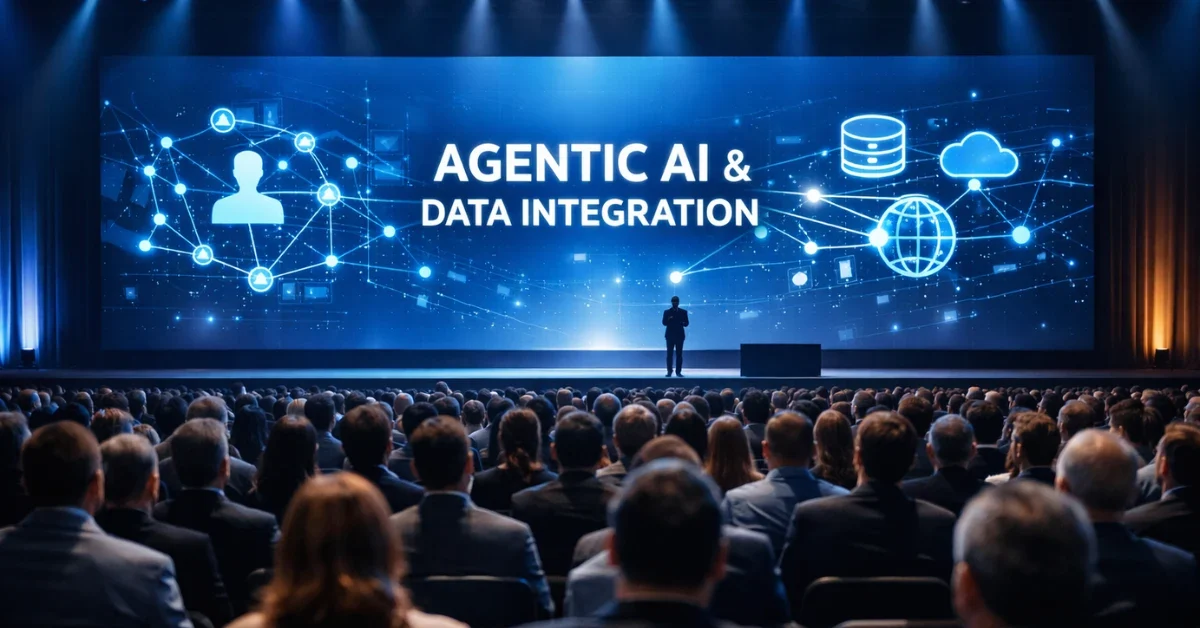
The landscape of artificial intelligence and big data is undergoing a massive transformation in early 2026. As the year kicks off, major technology gatherings like the ETSI AI and Data Conference and the Gartner Data and Analytics Summit are setting a new pace for how businesses adopt automation. These events are bringing together industry leaders to discuss the most critical trends of the year, including the rise of autonomous agents and the implementation of new regulatory standards for machine learning.
The focus of AI and data conferences 2026 is shifting toward the practical application of these technologies within the enterprise. Developers and business executives are looking beyond simple chatbots to find ways to integrate “agentic” AI into their daily workflows. With the introduction of new tools and standardized practices, the goal is to make artificial intelligence more reliable, scalable, and compliant with global laws.
Standardization and the European AI Act
One of the most significant events currently taking place is the ETSI AI and Data Conference in Sophia Antipolis, France. Running from February 10 to 12, 2026, this gathering is serving as a central hub for discussions regarding the European AI Act. Attendees are focusing on the crucial role of standardization in supporting the implementation of this legislation. The event emphasizes that for AI to flourish, there must be a clear framework that balances innovation with safety and data-driven ethics.
Participants at the ETSI event are exploring how data-driven innovation can be harmonized across different sectors. By establishing common technical standards, the industry aims to ensure that AI systems are interoperable and trustworthy. This focus on regulation is not just a legal necessity but is being viewed as a way to provide a stable environment for developers to build the next generation of intelligent tools.
The Rise of Agentic AI and Machine Learning
A major theme dominating the 2026 tech calendar is the transition from generative models to agentic AI. The Machine Learning and Agentic AI Summit is highlighting this shift by focusing on how to build and scale autonomous agents. Unlike earlier versions of AI that simply generated text or images, these new agents are designed to perform complex tasks and make decisions with minimal human intervention. This represents a significant step forward in automation for global enterprises.
Industry experts at these summits are discussing the technical requirements for scaling these autonomous systems. Building an AI agent involves more than just a powerful model; it requires a robust data infrastructure and the ability to manage complex workflows. The focus is now on “Agentic AI builders” who are creating systems capable of interacting with other software and handling end-to-end business processes autonomously.
Enterprise Transformation and Every Day AI
Gartner has expanded its Data and Analytics Summit agenda for 2026 to address what it calls the dual-track of AI adoption. The first track is “Everyday AI,” which focuses on improving productivity through tools that assist employees in their routine tasks. The second track is “Game-Changing AI,” which involves rethinking business models and creating entirely new value streams through advanced technology. This expansion reflects the growing need for leaders to manage both immediate efficiency gains and long-term strategic shifts.
The push for enterprise transformation is also being supported by new software updates from major cloud players. Snowflake recently introduced new features for its SnowConvert AI tool in February 2026. This technology is designed to speed up the migration of legacy code from systems like Teradata and Oracle into the Snowflake Data Cloud. By automating the conversion process, companies can move their data to more modern environments faster, allowing them to take advantage of advanced AI capabilities without being held back by outdated infrastructure.
Improving Decision Quality and Data Strategy
Data quality remains a top priority for organizations looking to succeed with artificial intelligence. Reflecting on the outcomes of major summits from the previous year, industry analysts are emphasizing that AI is only as good as the data that fuels it. Strategic and Competitive Intelligence Professionals (SCIP) recently announced an expansion of their platform to help enterprises improve decision quality. This update focuses on integrating competitive intelligence more deeply into the decision-making process, ensuring that leaders have accurate and timely insights.
The 2026 calendar also features the Databricks Data + AI Summit and the Snowflake Data Cloud Summit, which continue to be essential dates for data engineers and scientists. These events are centering their discussions on how to create a “data-ready” organization. This involves not only technical tools but also a cultural shift toward data literacy and governance. By ensuring data is clean, accessible, and secure, businesses are better positioned to deploy machine learning models that provide actual value.
Future Outlook for AI Development
As the tech community moves through February 2026, the emphasis remains on moving from experimentation to full-scale deployment. The various summits and conferences scheduled throughout the year are providing a roadmap for this journey. Whether it is through the development of agentic AI or the standardization of data practices, the industry is moving toward a more mature and regulated era of technology.
The collaborative efforts seen at these conferences suggest that the future of AI will be defined by how well organizations can integrate automation into their core strategies. With the right mix of standardization, advanced tools, and a focus on data quality, the potential for AI to transform every industry is becoming a reality. The insights shared at these early 2026 events will likely influence the direction of the global economy for years to come.
