

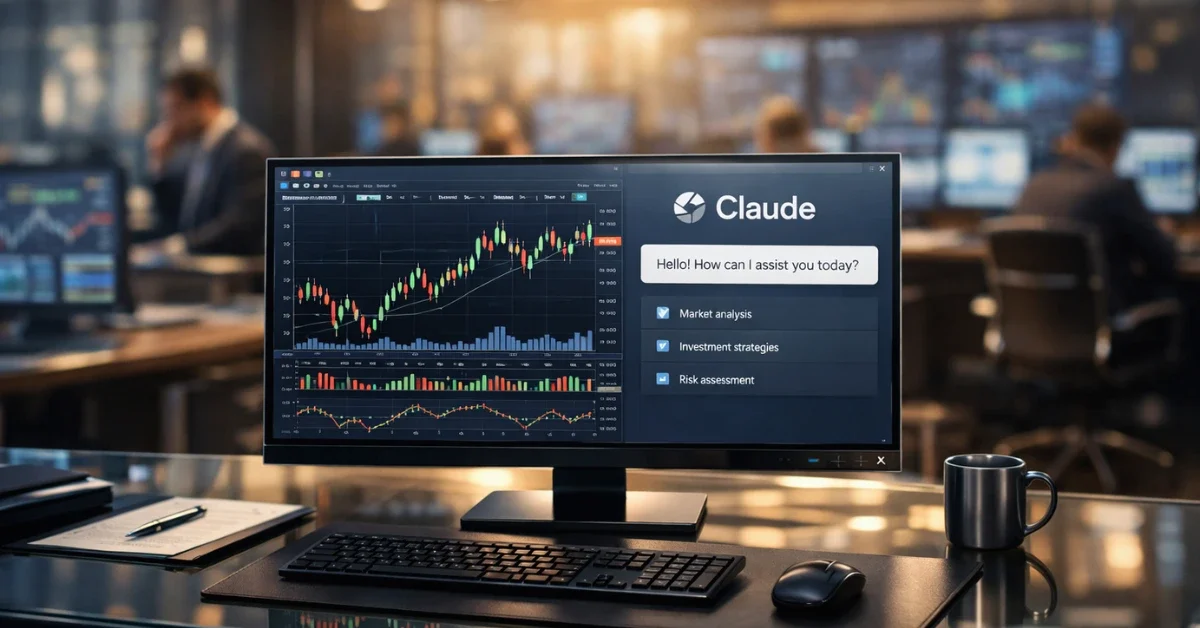
Goldman Sachs is officially moving beyond simple chatbots to deploy autonomous digital agents that can handle complex banking operations. The Wall Street giant has partnered with the artificial intelligence startup Anthropic to integrate advanced AI agents into its core financial workflows, specifically targeting trade accounting and client onboarding. This collaboration marks a significant shift in how investment banks use technology, moving from basic generative assistants to independent “digital co-workers” capable of logic-driven decision-making.
The initiative is part of a broader push to modernize the bank’s internal processes under its One GS 3.0 strategy. For the past six months, engineers from Anthropic have been embedded directly within Goldman Sachs’ technology teams to co-develop these tools. According to Goldman’s Chief Information Officer, Marco Argenti, the bank is currently in the early stages of rolling out these agents, which are powered by Anthropic’s Claude model. By embedding AI experts within the firm, Goldman has been able to tailor the technology to the specific, high-stakes requirements of global finance.
Automating the Back Office
The primary focus of the new Goldman Sachs Anthropic AI partnership is the automation of labor-intensive “back-office” functions that have historically required thousands of human hours. Two key areas have emerged as the first targets for this technology: trade and transaction accounting, and client vetting and onboarding. These roles involve processing millions of records annually, a task that has grown increasingly complex in the current regulatory environment.
In the realm of trade accounting, the autonomous agents are designed to perform transaction reconciliation and bookkeeping. They can match records across different systems and flag discrepancies far faster than traditional manual teams. This capability is expected to significantly reduce settlement delays and operational risks that can occur when global trades do not align perfectly. By automating these painstaking tasks, the bank aims to address challenges related to trade reconciliation more efficiently than ever before.
Client onboarding and vetting represent another major hurdle the agents are tackling. This process includes “Know Your Customer” (KYC) and Anti-Money Laundering (AML) regulatory monitoring. The AI agents can read through thousands of pages of policy documents and compare them against client data to ensure compliance. This streamlined approach is intended to expedite the time it takes to bring on new clients while maintaining the rigorous standards required by modern financial regulations.
The Rise of the Digital Co-Worker
Goldman Sachs leadership has described the transition to these agents as the birth of the “digital co-worker.” Unlike earlier AI tools that primarily assisted with writing software code, these agents are designed to handle process-heavy work involving structured judgment. Marco Argenti noted that the bank was surprised by how effectively the Claude model could be applied to accounting and compliance, where it must parse large volumes of data while following strict rules.
The technology behind these agents, particularly the Claude Opus 4.6 model, was chosen for its ability to perform step-by-step reasoning. This allows the AI to handle “exception handling”—identifying cases that do not fit the standard pattern and escalating them to human supervisors. These systems are not intended to act with total independence; rather, they operate within existing audit and compliance workflows where humans remain the final authority.
The bank’s internal AI platform is already seeing massive usage, reportedly processing over one million prompts per month as of early 2026. This infrastructure allows employees across various departments to access the power of large language models securely. As the partnership with Anthropic matures, the bank expects to expand these capabilities into other document-heavy areas, such as generating investment banking pitchbooks and monitoring internal employee communications.
Impact on the Financial Workforce
While the introduction of autonomous agents often sparks fears of job loss, Goldman Sachs executives have maintained a cautious stance on the future of their workforce. Argenti has stated that it would be “premature” to assume the technology will lead to immediate staff reductions in accounting or compliance departments. Instead, the bank is focusing on productivity gains that allow existing teams to handle more volume without the need for proportional hiring.
The shift is expected to impact third-party contractors and vendors before affecting full-time staff. By collapsing the time needed for essential tasks from days to mere hours, the bank hopes to remove operational friction and fund further growth. As the regulatory landscape continues to evolve under the current administration, the ability to scale compliance and accounting through AI is becoming a central pillar of Goldman’s competitive strategy on Wall Street.
