

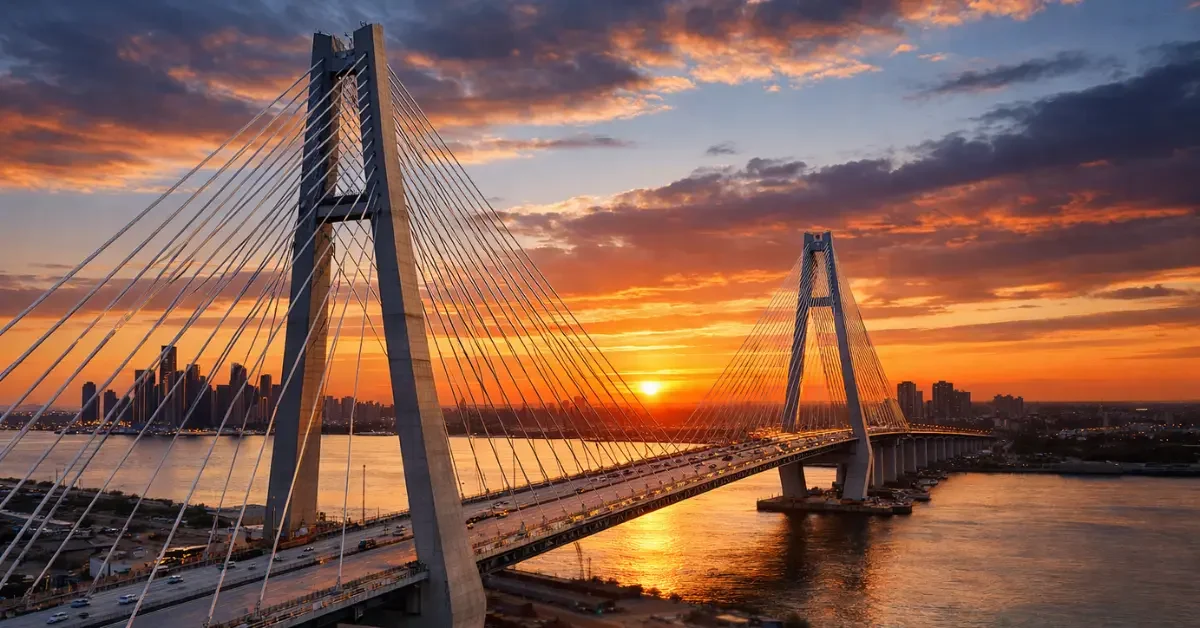
President Donald Trump has sparked a fresh diplomatic dispute with Canada by threatening to prevent the opening of the Gordie Howe International Bridge. The President claims the multibillion-dollar project, which connects Detroit, Michigan, and Windsor, Ontario, represents a “bad deal” for the United States. He has called for immediate negotiations with Canadian officials before the bridge is allowed to start operations.
In a series of social media posts, President Trump suggested that the bridge would remain closed unless the Canadian government agrees to new terms regarding border security and trade. This move has raised significant concerns among businesses and officials who rely on the Detroit-Windsor crossing, which is one of the busiest trade corridors in North America. The Gordie Howe International Bridge was designed to provide a modern alternative to the aging, privately-owned Ambassador Bridge.
Trump Demands New Terms for Detroit-Windsor Bridge
President Trump’s recent statements on Truth Social have cast doubt on the future of the nearly completed crossing. He described the bridge project as a “one-way street” and a “disaster” for American interests. While the bridge is located on the border between the two nations, the President argued that the United States is being “ripped off” by the current arrangement. He stated that he would use his authority to bar the bridge’s opening until he is satisfied with the terms of the agreement.
The President’s primary grievances appear to center on trade and immigration. He has indicated that the opening of the bridge should be tied to Canada taking more aggressive action to stop the flow of illegal migration and drugs across the northern border. Additionally, he has suggested that the United States should receive a larger share of the benefits or have more control over the facility. Trump has directed his administration to review all existing contracts and agreements related to the construction and operation of the span.
A Conflict Over Funding and Ownership
The Gordie Howe International Bridge is unique because the Canadian government is funding almost the entire project. This includes not only the bridge itself but also the massive ports of entry on both the Canadian and American sides of the river. The project, named after the legendary hockey player Gordie Howe, was intended to be a symbol of cooperation between the two neighbors. Canada agreed to pay the multibillion-dollar cost, with the intention of recovering its investment through tolls over several decades.
President Trump has criticized this arrangement, arguing that Canada’s ownership of a bridge leading into the United States is a security and economic risk. He has specifically questioned why the United States allowed a foreign government to build and control critical infrastructure on American soil. Despite the fact that the deal was negotiated and signed during previous administrations, Trump has signaled that he does not feel bound by those past commitments. He has called for the “Ottawa group” to come to the table and provide a better deal for American workers and taxpayers.
Private Interests and the Ambassador Bridge
The President’s threat comes amid long-standing tension involving the Ambassador Bridge, which is located just a few miles away. The Ambassador Bridge is a private crossing owned by the Moroun family, who have fought for years to prevent the Gordie Howe bridge from being built. The Morouns have long argued that a government-funded bridge would create unfair competition and harm their business.
Reports indicate that members of the Trump administration, including Commerce Secretary Howard Lutnick, have had discussions regarding the competitive landscape for bridges in the region. Some critics suggest that the President’s move to block the new bridge may be influenced by the interests of the private bridge owners. However, the administration maintains that the President is solely focused on ensuring that all international crossings meet his standards for national security and economic fairness.
Economic Stakes at the Northern Border
The Detroit-Windsor crossing is vital to the economies of both the United States and Canada. Roughly 25 percent of all trade between the two countries passes through this single point, supporting thousands of jobs in the automotive, agricultural, and manufacturing sectors. For years, officials have warned that the Ambassador Bridge is too old and lacks the capacity to handle modern trade volumes. The Gordie Howe International Bridge was designed to solve this problem by providing more lanes and direct connections to major highways.
Business leaders on both sides of the border have expressed alarm at the possibility of a delay. They argue that the bridge is essential for maintaining “just-in-time” delivery systems that are the backbone of the North American supply chain. If the bridge remains closed, it could lead to increased shipping costs and significant delays at the border. Canadian officials have responded by stating that the project is governed by international treaties and that they expect the United States to honor its obligations to open the crossing as planned.
