

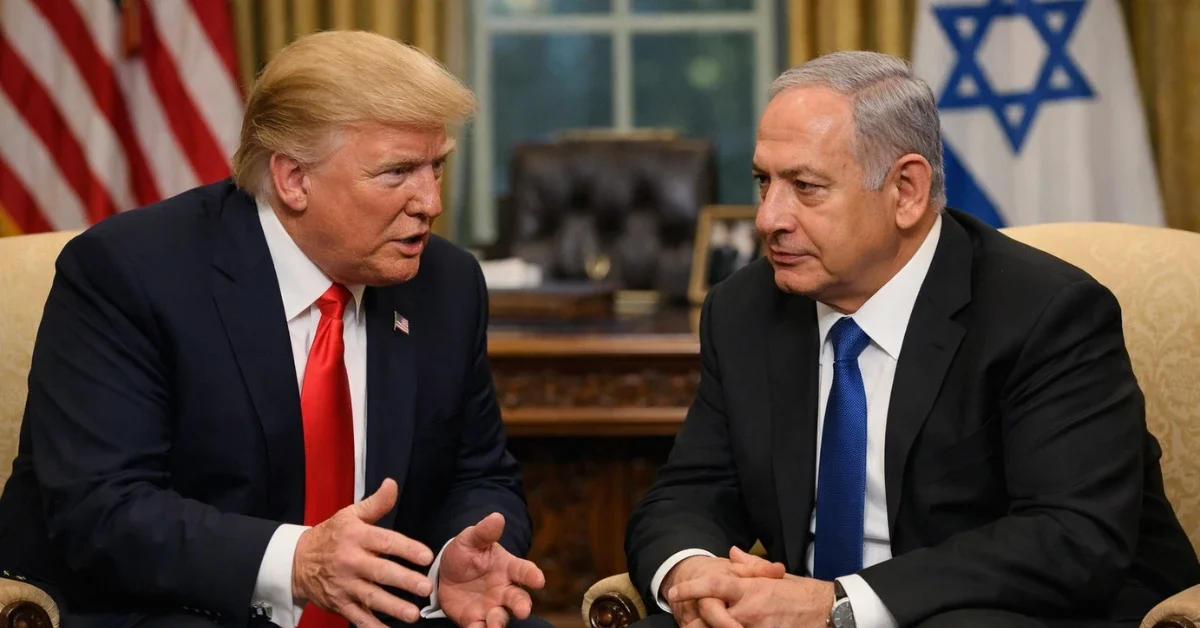
President Donald Trump and Israeli Prime Minister Benjamin Netanyahu concluded a series of high-stakes meetings this week without reaching a definitive agreement regarding Iran’s nuclear program. While the two leaders spent significant time discussing the future of regional security, the visit ended with a clear emphasis on continued diplomacy rather than a immediate shift in strategy. President Trump reportedly insisted that ongoing negotiations with Iran must proceed, highlighting a persistent focus on diplomatic channels that remains a central pillar of his administration’s foreign policy in early 2026.
The discussions in Washington were closely watched by international observers who expected a potential breakthrough or a significant hardening of the joint U.S.-Israeli stance. Instead, the outcome suggests a complex balancing act between the two allies. While the meetings were described as productive, officials confirmed that no final decisions were made on how to handle Iran’s nuclear ambitions or the specific parameters of a new nuclear deal. This lack of a definitive resolution comes at a critical time when regional tensions remain high and the international community is seeking clarity on the next steps for Middle East stability.
Trump maintains focus on diplomatic path
During the meetings, President Trump was vocal about his preference for keeping the lines of communication open with Tehran. He urged Prime Minister Netanyahu to allow the current diplomatic efforts to play out, suggesting that a negotiated settlement remains the most viable path forward. This stance reflects the administration’s broader strategy of using economic and diplomatic leverage to bring Iran back to the table for a more comprehensive agreement. Trump’s insistence on continuing the talks signals a desire to avoid direct military escalation while pursuing a long-term solution to the nuclear issue.
The President’s approach appears to be rooted in the belief that a better deal is possible through persistence. By maintaining the diplomatic track, the U.S. aims to address not only nuclear enrichment but also Iran’s missile program and its influence across the region. However, this preference for dialogue has met with varying degrees of skepticism from different quarters of the Israeli government, which views the timeline for such negotiations with a sense of extreme urgency.
Netanyahu highlights Israel’s security requirements
Prime Minister Netanyahu arrived in Washington with a primary goal of emphasizing Israel’s immediate security needs. Throughout the visit, he stressed that any diplomatic effort must be backed by a credible threat of action and should not allow Iran to continue its nuclear progress under the guise of negotiations. Netanyahu argued that the security of the Israeli state is non-negotiable and that the window for stopping Iran from reaching a critical nuclear threshold is closing.
While the Prime Minister acknowledged the importance of the alliance with the United States, he remained firm on the necessity of strict oversight and immediate consequences for any Iranian violations. His rhetoric during the visit underscored a concern that a prolonged diplomatic process might provide Iran with the time it needs to further its nuclear capabilities. The Prime Minister’s focus remained on the technical aspects of enrichment and the potential for a rapid breakout, which Israel views as an existential threat that requires a more robust response than what is currently being offered.
Regional tensions and the Gaza situation
The meetings between Trump and Netanyahu were not limited to the Iranian nuclear file. The ongoing situation in Gaza also featured prominently in their discussions, as the leaders reviewed the current security landscape and the efforts to maintain a fragile peace. Both leaders acknowledged that the stability of the region is interconnected, with the actions of Iran and its proxies often influencing the dynamics on the ground in Gaza and along Israel’s northern borders.
The inclusion of Gaza in the talks highlights the multifaceted nature of the U.S.-Israel partnership. While the nuclear issue is a global concern, the immediate tactical challenges facing the Israeli military were given significant weight. The two leaders discussed ways to enhance intelligence sharing and defense cooperation to ensure that Israel remains capable of defending itself against a variety of threats while the broader diplomatic strategy regarding Iran is refined.
Future of the nuclear negotiations
As the visit concludes, the primary takeaway is that the status quo of “talks over action” will persist for the time being. The absence of a definitive agreement means that the international community will continue to monitor the progress of the nuclear negotiations with a mix of hope and caution. President Trump’s administration is expected to continue its outreach, while the Israeli government will likely maintain its high-alert status and continue to advocate for more stringent measures.
The road ahead remains uncertain, as the discrepancies between the American preference for diplomacy and the Israeli focus on immediate security have not been fully reconciled. For now, the partnership remains intact, but the pressure to deliver a concrete result is increasing. The world now waits to see if the continued talks will yield the “better deal” the Trump administration has promised or if the security concerns raised by Netanyahu will eventually necessitate a change in course.
