

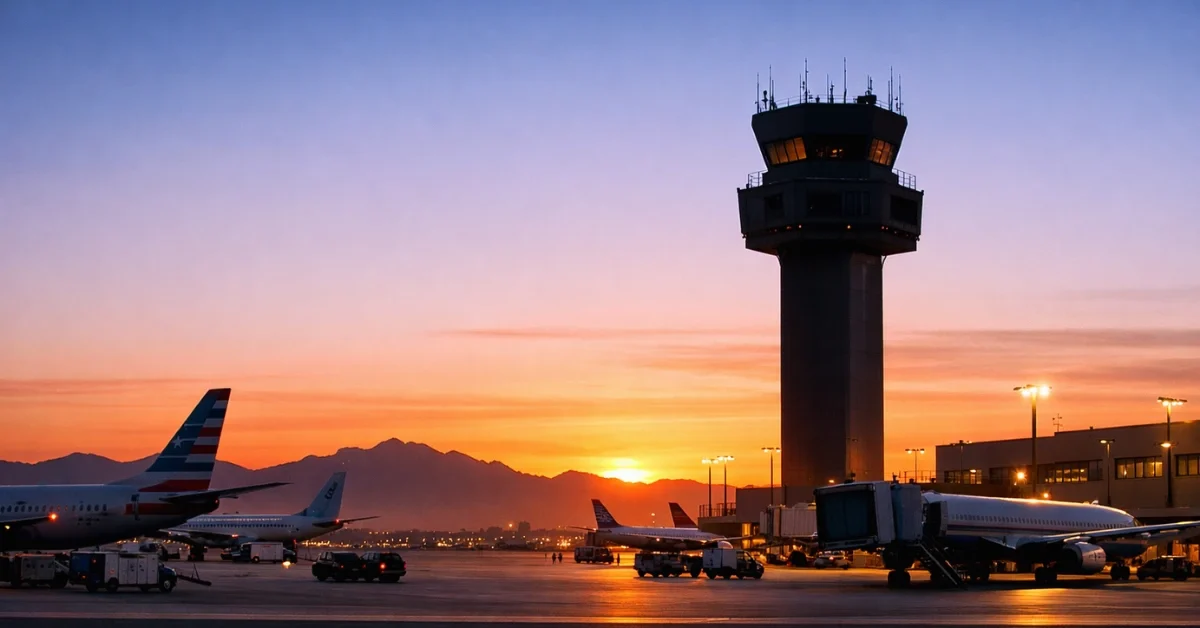
El Paso International Airport has officially resumed full flight operations following a 10-day shutdown that paralyzed the region’s air travel network. The El Paso airspace closure, which first took effect on February 1, 2026, was mandated by the Federal Aviation Administration under strict national security directives. The reopening on February 11 brings an end to a period of unprecedented domestic flight restrictions that left thousands of passengers stranded and sparked intense debate over border security protocols.
The Trump administration defended the drastic measure by pointing to what it described as a coordinated infiltration of drones by Mexican drug cartels. President Donald Trump, who took office for his second term in January 2025, explained that the El Paso airspace closure was necessary to protect American citizens from border-related security threats. According to Department of Homeland Security officials, high-tech unmanned aerial vehicles were detected performing surveillance maneuvers over sensitive infrastructure in the El Paso area, prompting an immediate grounding of all civilian aircraft.
National Security and the Drone Threat Allegations
Government officials maintained throughout the ten-day period that the threat from these incursions was both credible and sustained. Reports from federal agencies suggested that the drones were part of a “swarm” strategy designed to test United States air defense capabilities and monitor law enforcement movements along the border. These reports alleged that the cartels have significantly upgraded their aerial technology, using sophisticated devices that are difficult for traditional radar systems to track effectively. The administration argued that the risks of a potential mid-air collision or a targeted attack on ground facilities left the FAA with no viable alternative but to clear the skies entirely.
However, the nature of these security concerns has been a point of significant contention between federal and local authorities. While the White House focused on the narrative of cartel aggression, local law enforcement in El Paso reported that they did not observe large-scale drone activity that would typically justify a total airspace shutdown. This discrepancy led to growing frustration among city leaders and airport officials, who sought more transparency regarding the specific intelligence that prompted the FAA to issue its restrictive notices to air missions. Critics pointed out that the lack of public evidence regarding the “swarm” made it difficult for the public to understand the severity of the situation.
Conflicting Reports and the Anti-Drone Laser Incident
As the closure dragged into its second week, alternative explanations for the security alert began to surface in various reports. One particularly notable account indicated that the incident may have been exacerbated by a technological failure or a misidentification during a military response. According to some technical assessments, a newly deployed military anti-drone laser system was used to intercept an object that was initially identified as a hostile threat. Subsequent analysis suggested the object was actually a stray party balloon that had drifted into the restricted flight path.
The potential use of such high-powered energy weapons near a major commercial airport raised immediate safety concerns among aviation experts. If a laser system was indeed activated in the vicinity of El Paso International, the risk of accidental damage to civilian aircraft or the possibility of blinding pilots would have necessitated an immediate halt to all traffic. While the administration has not officially confirmed the details of the “party balloon” incident, it continued to emphasize that the primary motivation for the closure remained the broader and more complex threat posed by cartel-operated technology.
Impact on Travelers and the Border Economy
The human and economic cost of the El Paso airspace closure was felt immediately across the Southwest. During the ten days of silence on the runways, an estimated 50,000 passengers saw their travel plans disrupted or canceled. Major airlines were forced to scrap hundreds of flights daily, with many travelers attempting to reach their destinations by flying into nearby cities like Las Cruces, New Mexico, or making long drives from larger hubs in Phoenix and Dallas. The sudden halt in service created chaotic scenes at terminal counters as staff struggled to rebook passengers with no clear timeline for reopening.
The economic ripple effects extended far beyond the airport terminals and into the heart of the regional economy. El Paso and its sister city, Ciudad Juárez, form one of the world’s largest binational metropolitan areas, relying heavily on the constant flow of people and high-value goods. Business leaders noted that the lack of air connectivity hindered “just-in-time” manufacturing processes and delayed the movement of corporate executives who manage the sprawling industrial complexes on both sides of the border. Local hotels, car rental agencies, and restaurants also reported a sharp decline in revenue as tourism and business travel evaporated during the peak of the security crisis.
Restoring Operations and Looking Ahead
The reopening process on February 11 was met with both relief and caution from the public. Airlines worked around the clock to clear the massive backlog of passengers, adding extra flights to accommodate those who had been waiting for over a week to return home or reach their business destinations. FAA officials stated that while the immediate threat had subsided enough to allow for commercial traffic, enhanced monitoring of the El Paso airspace would remain in place for the foreseeable future to prevent further incursions.
This incident has highlighted the growing complexities of managing civil aviation in a region characterized by intense security focus and evolving technology. The Trump administration has signaled that it may implement more permanent drone-detection systems and stricter flight regulations along the U.S.-Mexico border to prevent a similar occurrence in other cities. As travelers finally return to the skies over West Texas, the debate over how to balance national security requirements with the needs of a modern transportation system continues to unfold.
