

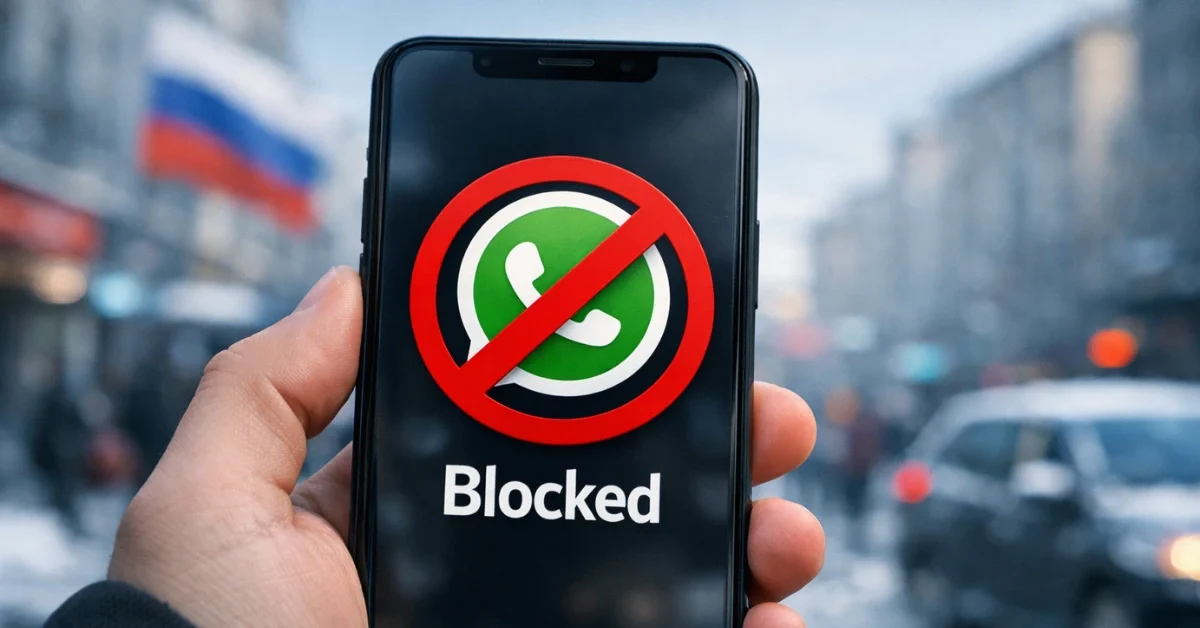
Russia has confirmed that WhatsApp has been blocked in the country, with the Kremlin urging people to use a state-backed messaging alternative called Max instead.
The move is part of a wider push that has also involved pressure on other major messaging services, while officials and regulators argue the restrictions are tied to compliance with Russian law and online safety rules.
Kremlin points users to Max
Kremlin spokesperson Dmitry Peskov told journalists that WhatsApp’s owner, Meta, had not complied with Russian legislation and said that was why the decision was taken and enforced.
Peskov encouraged Russians to switch to Max, describing it as “an accessible alternative,” “a developing messenger,” and a “national platform” available to citizens.
CNN also reported that Russia’s confirmation of the WhatsApp block came as reports circulated that access to Telegram had been limited, and noted that Telegram is used by millions in the country, including military personnel and senior officials.
WhatsApp says Russia tried to “fully block” it
WhatsApp said the Russian government was attempting to “fully block” the messaging app in an effort to push users toward Max, which the company described as a “state-owned surveillance application.”
In a statement posted on X and reproduced by The Moscow Times, WhatsApp said: “Trying to isolate over 100 million users from private and secure communication is a backwards step and can only lead to less safety for people in Russia.”
In the same statement, WhatsApp added that it would continue doing what it can to keep users connected.
The Moscow Times reported that WhatsApp did not explain exactly how access to the platform was being restricted or what specific steps it was taking to maintain service in Russia.
The Moscow Times also said Russia’s state media regulator, Roskomnadzor, did not immediately respond to WhatsApp’s accusations.
Regulator claims apps broke rules
CNBC reported that Russia’s telecom regulator, Roskomnadzor, has accused messaging apps such as WhatsApp and Telegram of failing to comply with Russian requirements, including rules tied to how user data is handled and measures meant to prevent criminal or terrorist use.
CNBC also reported that Roskomnadzor accused Telegram of not preventing illegal activity on its platform, failing to protect user data, and violating Russian regulations, and said restrictions would continue to be applied to ensure compliance with Russian law and protect citizens.
DW described the WhatsApp move as part of a broader effort by Moscow to tighten control over foreign technology and media, with WhatsApp saying Russia was attempting to steer users toward a state-backed “national messenger.”
What’s known about Max
Max is the state-backed alternative Russian officials have promoted as WhatsApp is blocked and pressure increases on foreign-owned communications services.
WhatsApp has characterized Max as a surveillance-focused product, while CNBC and DW both noted that critics have argued the state-backed alternative could be used to monitor users, and that those claims have been dismissed as unfounded by state media according to DW.
The Kremlin’s public messaging has focused on positioning Max as a practical replacement that citizens can download and use, even as WhatsApp warns the shift could reduce access to private, secure communication.
