

OpenAI has hired Peter Steinberger, the creator of the popular open-source AI agent framework OpenClaw, in a strategic move to accelerate its development of autonomous personal AI agents. The high-profile acquisition, confirmed by OpenAI CEO Sam Altman, signals a major shift for the company as it transitions from chatbots to agents capable of executing complex tasks independently. According to reports, Steinberger will join the organization specifically to drive the next generation of agentic AI, while his creation, OpenClaw, will be preserved as an independent foundation.
The hiring of Steinberger addresses one of the most competitive frontiers in artificial intelligence: the race to build “agents” that can operate autonomously on behalf of users. While current large language models excel at generating text and code, the industry is aggressively pivoting toward software that can actively use computers, manage workflows, and perform multi-step actions without constant human supervision. By bringing the developer of one of the most successful open-source agent frameworks in-house, OpenAI is positioning itself to lead this new category of “personal AI agents.”
A New Chapter for Autonomous Agents
Sam Altman confirmed the news on X (formerly Twitter), stating that Steinberger is joining OpenAI to “drive the next generation of personal agents.” This aligns with recent industry trends highlighted by financial and technology news outlets, which describe a broader “push toward autonomous agents” within the sector. The goal is to move beyond the conversational interface of ChatGPT and create systems that function as capable, autonomous assistants—effectively turning AI into a tool that does work rather than just talking about it.
Steinberger’s role will focus on translating the agentic capabilities demonstrated by OpenClaw into OpenAI’s proprietary products. Reports from Business Insider and SiliconANGLE suggest that this “agent push” is a core part of OpenAI’s roadmap for 2026. The integration of Steinberger’s expertise is expected to help the company solve complex challenges related to reliability, planning, and tool use, which are critical for agents that operate with a high degree of independence.
OpenClaw to Become an Open-Source Foundation
A primary concern for the developer community following the acquisition was the fate of OpenClaw itself. Often, when tech giants hire the founders of viral open-source projects, the tools are either shut down or absorbed into closed ecosystems. However, Reuters reports that OpenClaw will not be shuttered. Instead, the “open source bot becomes foundation,” ensuring its continued existence and availability to the public.
This foundation model allows OpenClaw to remain a community-driven project while Steinberger focuses his professional efforts on OpenAI’s closed-source advancements. By establishing a foundation, the project can maintain its neutrality and continue to serve as a platform for developers experimenting with local, open-source agents. This decision likely aims to maintain goodwill with the developer community that propelled OpenClaw (previously known as Clawdbot) to popularity.
The Rise of the AI Agent
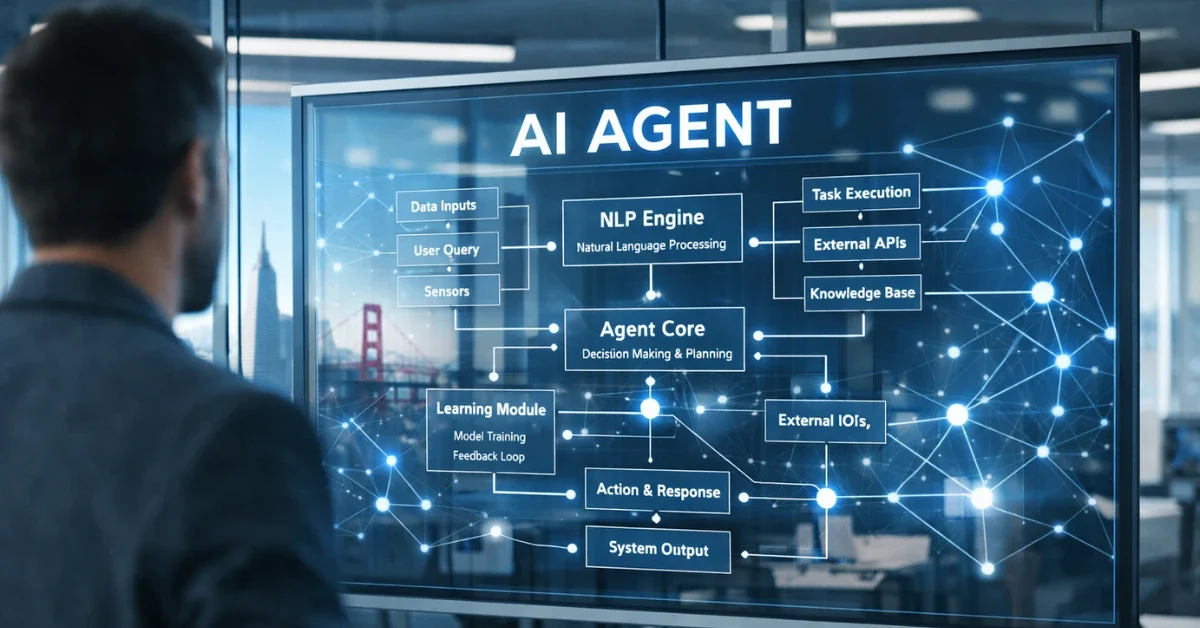
The recruitment of Steinberger comes at a time when the distinction between a “chatbot” and an “agent” is becoming the defining battleground for AI companies. As noted in coverage by Bloomberg and Investing.com, the “AI agent push” is attracting significant investment and talent. Unlike standard chatbots, which wait for a prompt to produce an answer, autonomous agents are designed to pursue goals. They can plan a sequence of actions, browse the web, interact with other software, and correct their own errors to achieve a specific outcome.
For OpenAI, the ability to deploy reliable personal agents would represent a massive leap in utility for its user base. Such agents could handle personal logistics, automate business processes, and act as a true digital extension of the user. Steinberger’s work with OpenClaw demonstrated that there is a massive appetite for this kind of functionality, and his move to OpenAI suggests that the company is ready to bring these capabilities to a mass market.
