

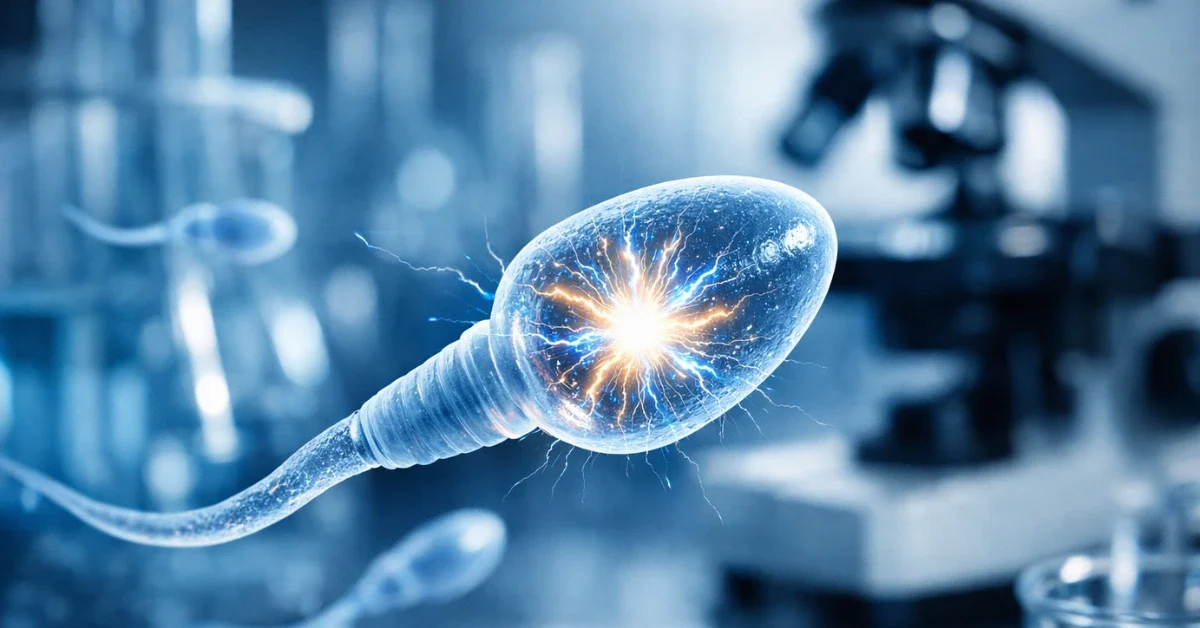
Scientists have identified a critical molecular “switch” that could fundamentally change the future of reproductive health. A research team at Michigan State University (MSU) recently discovered the specific mechanism that powers sperm for their final, high-energy sprint toward an egg. This finding holds massive potential for developing a new class of nonhormonal male birth control and improving infertility treatments.
The discovery centers on how sperm manage energy. For the first time, researchers have mapped the exact process sperm use to convert sugar into the burst of power needed for fertilization. By pinpointing an enzyme called aldolase, the team revealed how dormant cells suddenly shift into overdrive. This metabolic breakthrough offers a promising alternative to current contraceptive options, which often rely on hormones and come with significant side effects.
The Science of the Sprint
Sperm are unique cells with a singular purpose: fertilization. To achieve this, they must travel a long and demanding distance through the female reproductive tract. According to Melanie Balbach, an assistant professor at MSU and senior author of the study, sperm metabolism is specialized entirely for this goal.
Before ejaculation, sperm exist in a low-energy state, effectively waiting in reserve. However, once they enter the reproductive tract, they undergo a dramatic transformation. They begin to swim forcefully and alter their outer membranes to prepare for contact with an egg. This shift requires a massive and sudden surge in energy.
For years, scientists understood that this energy boost happened, but the “how” remained a mystery. The MSU team, working with collaborators from Memorial Sloan Kettering Cancer Center and the Van Andel Institute, finally solved the puzzle. They found that the enzyme aldolase acts as a key regulator, converting glucose (sugar) from the sperm’s environment into usable fuel. Other enzymes function like traffic controllers, directing this fuel through specific metabolic pathways to ensure maximum efficiency.
Tracking the “Pink Car”
To understand this complex biological process, the researchers had to see it in action. They developed a novel method to track how sperm process nutrients. Balbach used a vivid analogy to explain their technique. She compared the process to painting the roof of a car bright pink and then using a drone to track that specific car through heavy traffic.
In the laboratory, the “pink car” was glucose. By following the chemical path of glucose inside the cell, the team could see exactly where the fuel went and how it was used. They observed distinct differences between inactive sperm and those that had been activated. The activated sperm moved much faster and preferred specific metabolic routes. The researchers could even identify the “intersections” where the fuel tended to get stuck or diverted.
Using advanced technology at MSU’s Mass Spectrometry and Metabolomics Core, the team built a detailed map of this high-energy process. They discovered that sperm do not just rely on the glucose they find in their environment; they also draw on internal energy reserves stored before their journey began.
A New Path for Male Birth Control
The implications of this discovery for male birth control are profound. Historically, efforts to create male contraceptives have focused on stopping the production of sperm entirely. While effective, this strategy has major drawbacks. It can take months to become effective and months to reverse. Furthermore, many of these experimental methods rely on hormones, which can cause unwanted side effects similar to those experienced by women on hormonal birth control.
Balbach’s work suggests a completely different approach: disabling sperm function instead of stopping their creation. By targeting the metabolic “switch” with an inhibitor, scientists could theoretically prevent sperm from generating the energy needed to swim. This would render them temporarily infertile on demand.
This nonhormonal approach would offer men more agency over their reproductive health without the long waiting periods or hormonal risks associated with other methods. Balbach noted that about 50 percent of all pregnancies are unplanned. providing men with reliable, on-demand options would not only help prevent unplanned pregnancies but also relieve the burden on women, who currently rely on hormone-based methods that are prone to side effects.
Hope for Infertility Treatments
Beyond contraception, this research offers new hope for the one in six people worldwide affected by infertility. Understanding exactly how sperm generate energy could lead to better diagnostic tools. If a patient’s sperm cannot “flip the switch” to high energy, doctors could identify the specific metabolic roadblock.
This knowledge could also improve assisted reproductive technologies. By ensuring sperm have the right fuel and enzymatic support, fertility specialists might be able to boost the chances of successful fertilization.
Balbach, who joined MSU in 2023 to expand her work on sperm metabolism, plans to continue investigating how these cells use different fuel sources, such as fructose. Her previous work at Weill Cornell Medicine already demonstrated that blocking a critical sperm enzyme could cause temporary infertility in mice. Now, with a clearer picture of the human sperm’s energy engine, the path toward clinical applications is clearer than ever.
The study, published in the Proceedings of the National Academy of Sciences, represents a major step forward. By revealing the fuel source behind sperm’s rapid transformation, scientists have opened the door to a future where reproductive health is more precise, more equitable, and safer for everyone.
