

A massive, multi-billion dollar agreement to construct one of the world’s largest artificial intelligence data campuses in the United Arab Emirates has hit a significant roadblock. According to reports, the deal between the UAE and U.S. technology firms remains far from finalized due to persistent national security concerns from Washington.
The stalled project, which involves UAE state-linked technology firm G42 and a coalition of U.S. tech giants, aims to position the Gulf state as a global hub for advanced AI development. However, U.S. officials have yet to approve the necessary conditions for exporting sensitive technology, leaving the ambitious initiative in limbo.
Security Hurdles and Strategic Doubts
The primary obstacle delaying the agreement is the apprehension among U.S. officials regarding the protection of advanced American technology. Sources familiar with the negotiations indicate that Washington has not yet determined the specific security conditions required to allow the export of high-powered AI chips to the region.
Concerns focus heavily on the UAE’s historical and strategic ties with China. Despite Abu Dhabi’s pledge to align its national security regulations with U.S. standards and implement safeguards against the diversion of technology, American officials remain cautious. Doubts persist across both Republican and Democratic lines about whether the UAE can effectively enforce these protections and prevent sensitive U.S. intellectual property from reaching adversaries.
The Biden administration and the current Trump administration have both raised similar issues, questioning the Gulf state’s reliability as a partner in such sensitive technological exchanges. Sources noted that these concerns are not new but remain unresolved, citing the UAE’s previous deployment of Huawei 5G technology despite American objections.
The “Stargate UAE” Project
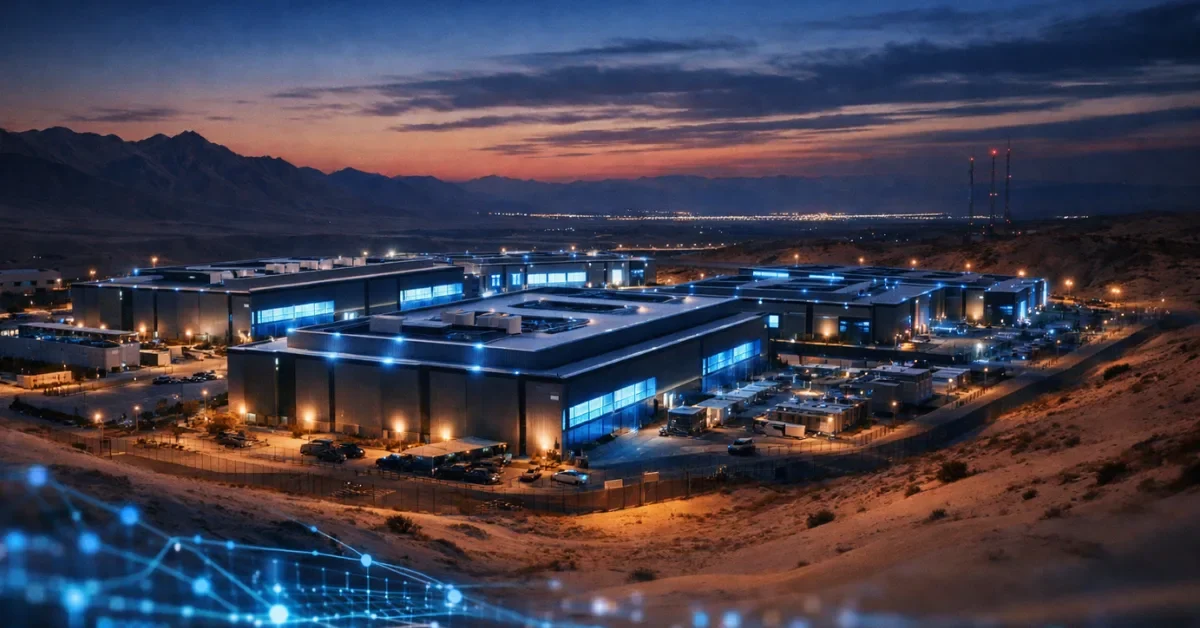
The centerpiece of this stalled deal is a project known as “Stargate UAE.” Planned as a 10-square-mile (26-square-kilometer) site, the campus is designed to house a cluster of powerful data centers. The initiative is funded by G42, which is driving the UAE’s push into the artificial intelligence sector.
The project’s first phase is scheduled to go online in 2026 and aims to deploy approximately 100,000 advanced Nvidia chips. Specifically, the site plans to utilize Nvidia’s Grace Blackwell GB300 systems, which are among the most advanced AI servers currently available.
Major industry players are involved in the collaboration. In addition to Nvidia, the project lists OpenAI, Cisco, Oracle, and Japan’s SoftBank as partners working with G42. The facility is expected to start with a 1-gigawatt capacity, with long-term plans to expand to 5 gigawatts of data center capacity.
Strict Controls and Future Uncertainty
Negotiations over the deal’s final terms suggest that any approval will come with strict stipulations. Sources state that likely U.S. controls would prohibit the use of Chinese technology at the site and restrict the employment of Chinese nationals within the “AI campus.”
The Trump administration has emphasized that American companies would need to operate the data centers and provide “American-managed” cloud services throughout the region to ensure security. However, no clear timeline exists for finalizing these terms. The UAE may request amendments to the proposed controls, which could further prolong the process.
While G42 has taken steps to alleviate U.S. concerns—such as divesting from Chinese investments and removing Chinese hardware to secure a $1.5 billion investment from Microsoft—skepticism remains. Reports indicate that Chinese firms like Huawei and Alibaba Cloud are still active in the UAE, and illicit networks smuggling AI chips to China have been traced to the region.
As negotiations continue without a resolved timeline, the future of the Stargate UAE project hangs in the balance, caught between the Gulf state’s technological ambitions and Washington’s national security imperatives.
