

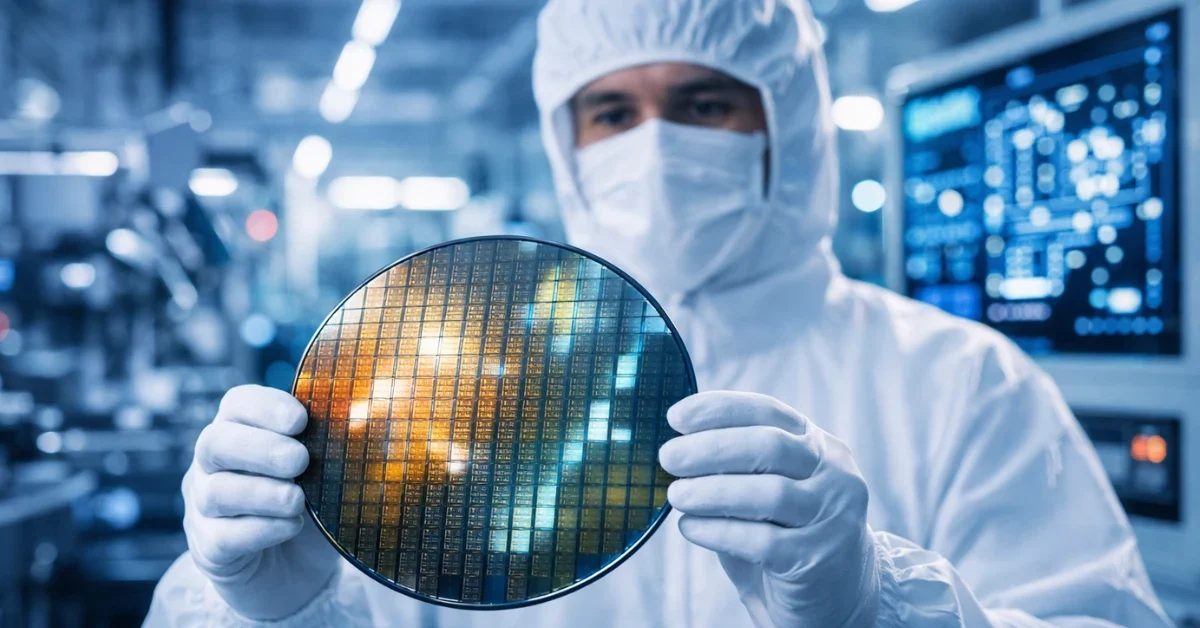
Toronto-based chip startup Taalas announced Thursday it had secured $169 million in new investment, bringing its total fundraising to $219 million. The company is making a bold play in the AI hardware market, claiming its custom chips can outperform conventional solutions in both speed and cost.
Investors backing the company include Quiet Capital, Fidelity, and Pierre Lamond, a seasoned venture capitalist with deep roots in the chip industry.
Hardwiring AI Models Into Silicon
What sets Taalas apart is how it designs its chips. Rather than building a general-purpose processor, the company etches portions of a specific AI model directly into the silicon, producing a chip tailored for one particular application — such as a smaller version of Meta’s Llama model. These purpose-built chips are paired with large quantities of on-chip static random-access memory, or SRAM, a fast but expensive type of memory that keeps critical data close to the processor without requiring external retrieval during inference.
CEO Ljubisa Bajic says this tight integration is the key to Taalas’ speed advantage. “This hardwiring is partly what gives us the speed,” he said. By eliminating the gap between inference and computation that most general-purpose GPUs deal with, Taalas aims to lower both latency and operating costs for companies running AI workloads at scale.
The HC1 Chip and a Two-Month Build Time
Taalas has already built its first chip, the HC1, designed around Meta’s Llama 3.1 model. Manufacturing is handled by TSMC, one of the semiconductor industry’s most trusted foundries.
The fabrication process is unusually fast. Taalas assembles a nearly complete chip with roughly 100 layers and then finalizes the model-specific customization across just two of those metal layers. TSMC can produce a tailored chip in about two months — a sharp contrast to the roughly six months required to manufacture a chip like Nvidia’s Blackwell. That speed advantage makes custom AI hardware a more practical option for businesses that previously could not wait out a standard semiconductor development cycle.
Plans to Support Frontier AI Models
Taalas is not limiting its ambitions to smaller models. The company plans to deliver its first HC1 chips to early customers in the near term, with broader commercial rollouts expected throughout 2026. Under an HC2 framework, Taalas is aiming to have a chip capable of running a cutting-edge model such as GPT-5.2 by the end of this year. Those real-world deployments will mark the first genuine test of whether Taalas’ performance and cost claims hold up against established alternatives.
A Crowded But Energized Market
The timing of Taalas’ announcement matters. It arrived weeks after Nvidia agreed to license intellectual property from chip startup Groq for $20 billion — a deal that refreshed investor appetite for specialized AI inference technologies across the industry.
Taalas enters a competitive field. Groq’s first-generation chip also leaned heavily on an SRAM-based design. Cerebras, a startup pursuing a similar strategy, signed a cloud computing deal with OpenAI in January. Startup d-Matrix is working with a comparable architecture as well. What Taalas claims as its distinction is the direct embedding of model parameters into the chip itself — a level of hardware-model integration that goes beyond what broader inference accelerators typically offer.
A Team With Chip Industry Pedigree
The people building Taalas have done this before. CEO Ljubisa Bajic previously co-founded Tenstorrent, a well-regarded name in AI chip development. Fellow co-founders Ago Ignatovic and Lejla Bajic were also early engineers at Tenstorrent, giving the founding team direct experience in developing complex AI processors from the ground up.
The company has grown to 25 employees, predominantly engineers with backgrounds at major technology and semiconductor firms. Paresh Kharya, who previously served as director of infrastructure product at Google — where he oversaw GPU and TPU hardware along with their software frameworks — has joined Taalas as vice president of products.
With $219 million raised, a manufacturing partnership with TSMC, and a first chip already in hand, Taalas is moving aggressively to carve out its share of a market long dominated by Nvidia.
