

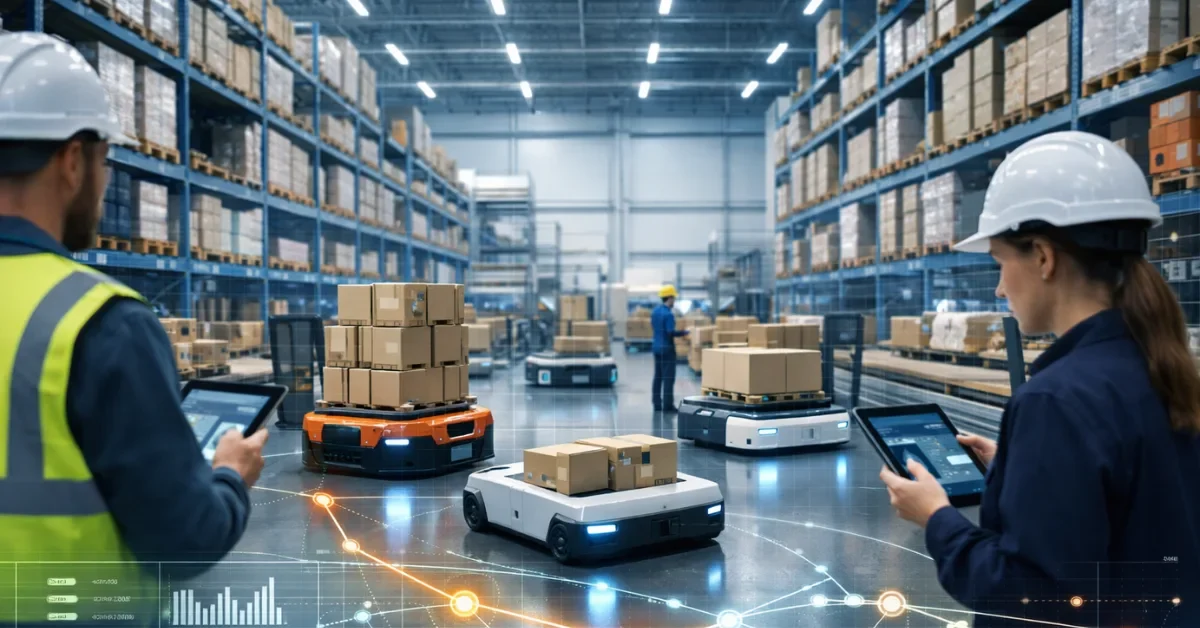
The integration of artificial intelligence into logistics and retail operations is fundamentally reshaping how businesses manage their supply chains. Companies are increasingly turning to AI to solve complex problems, from reducing operational costs to enhancing the customer experience. Industry leaders and experts suggest that the technology acts as a significant tailwind for organizations that adopt it early, offering competitive advantages in efficiency and productivity.
A major area of impact is the reduction of logistics costs. In India, for example, experts estimate that the country could save approximately Rs 15,000 crore annually by implementing AI-driven solutions. These savings are expected to come from optimizing routes, managing inventory more effectively, and reducing waste in the supply chain. By leveraging data to make smarter decisions, businesses can streamline their operations and remove inefficiencies that have historically plagued the logistics sector.
Enhancing Retail Through Human-Centric AI
The retail sector is witnessing a parallel transformation where AI is being used to foster growth rooted in human experience. The next chapter of retail involves using technology not just for automation, but to create more personalized and responsive interactions. Retailers are moving away from purely transactional models to relationship-based approaches, where AI helps understand consumer needs better.
This shift means that AI tools are analyzing vast amounts of data to predict trends and manage stock levels, ensuring that products are available when and where customers want them. This predictive capability reduces the likelihood of overstocking or stockouts, which directly impacts profitability. Furthermore, the technology supports a more seamless shopping experience, bridging the gap between digital and physical storefronts.
The Role of Generative AI in Reverse Logistics
One specific application gaining traction is the use of Generative AI in reverse logistics. This area, often overlooked, deals with product returns and the circular economy. Traditional reverse logistics processes are frequently inefficient and costly. However, Generative AI offers new ways to handle returns by automating decision-making processes regarding whether an item should be restocked, refurbished, or recycled.
By analyzing the condition of returned goods and market demand, AI systems can determine the most value-generating path for each item. This not only recovers potential revenue but also supports sustainability goals by reducing landfill waste. The technology’s ability to process unstructured data, such as customer feedback and product images, allows for more nuanced handling of returns compared to rigid, rule-based systems.
Strategic Advantages for Early Adopters
Executives in the technology sector emphasize that AI serves as a powerful accelerator for companies willing to transition early. Rather than being a mere tool for cost-cutting, AI is viewed as a strategic asset that drives innovation. Organizations that integrate these technologies into their core workflows are seeing improvements in speed and agility.
For instance, automated workflows can handle repetitive administrative tasks, freeing up human workers to focus on higher-value activities like strategy and customer relationship management. This division of labor allows businesses to scale their operations without a linear increase in headcount. The consensus among industry leaders is that waiting to adopt these technologies could result in falling behind competitors who are already leveraging AI to optimize their supply chains.
Future Trends in Supply Chain Management
Looking ahead to 2026 and beyond, the trends indicate a deepening reliance on AI for logistics and supply chain visibility. The focus is shifting towards “predictive” rather than “reactive” management. Instead of responding to disruptions after they occur, AI systems are being designed to foresee potential bottlenecks—such as weather delays or supplier shortages—and suggest alternative courses of action before the supply chain is impacted.
Manifest 2026 and other industry gatherings highlight the continued interest and investment in these technologies. The conversations are evolving from “what is AI” to “how can AI be deployed specifically” for tangible ROI. Key use cases include autonomous warehousing, where robots work alongside humans to speed up fulfillment, and advanced analytics that provide real-time visibility into the movement of goods across the globe.
In conclusion, the convergence of AI with logistics and retail is creating a more resilient and efficient commercial ecosystem. From saving billions in logistics costs to redefining how returns are handled, the technology is proving to be an essential component of modern business strategy. As companies continue to navigate a complex global market, those that successfully harness the power of AI will likely lead the way in operational excellence and customer satisfaction.
