

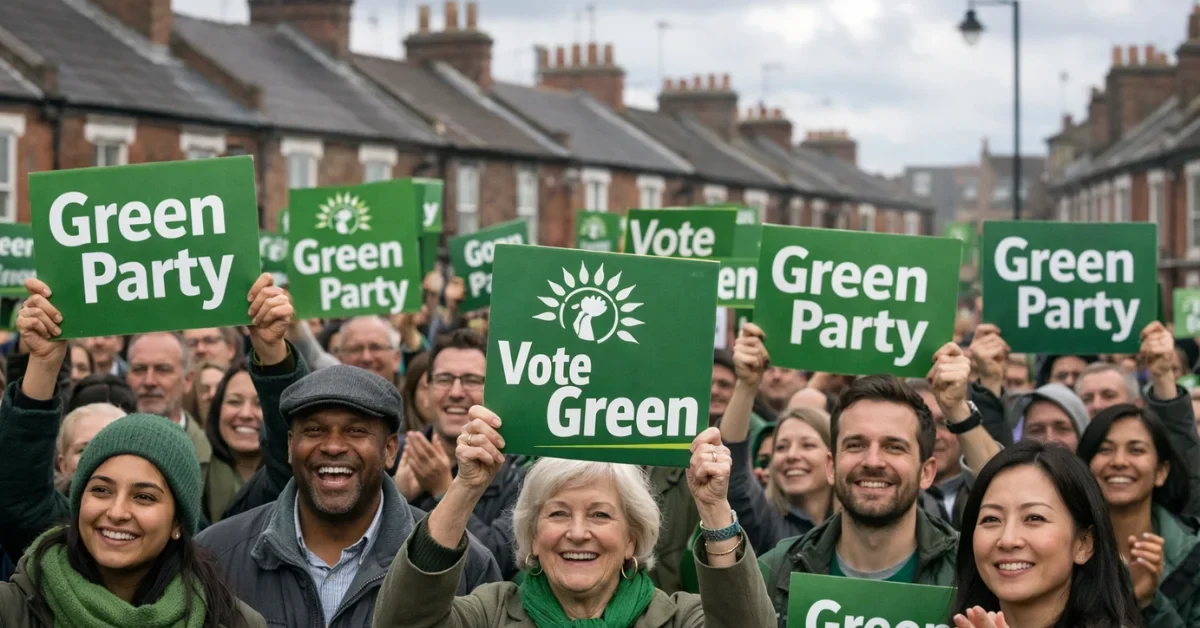
The Green Party has captured a significant political victory, winning the Gorton and Denton parliamentary by-election in a major upset against the governing Labour Party. This result deals a considerable blow to Prime Minister Keir Starmer, marking the loss of a seat Labour has held for decades. The outcome highlights growing voter dissatisfaction in areas traditionally considered safe Labour strongholds.
The by-election in Greater Manchester saw Green Party candidate Andrew Gwynne secure the seat, overturning a substantial Labour majority. This victory brings the Green Party’s total representation in the House of Commons to five Members of Parliament, their highest number ever. The result underscores a shifting political landscape where smaller parties are successfully challenging established political forces.
A Direct Challenge to Labour’s Dominance
Labour has represented the Gorton and Denton area, and its predecessor constituencies, without interruption since before the Second World War. The loss of such a historically secure seat raises serious questions about the current government’s standing among its core supporters. Political analysts suggest this defeat indicates deepening frustration with Starmer’s administration, particularly regarding its approach to environmental policies, the cost of living, and its stance on the conflict in the Middle East.
The Green Party campaign capitalized on this discontent, presenting themselves as a progressive alternative to a Labour government that many local voters feel has moved too far to the political center. Gwynne’s platform focused heavily on local issues, environmental protection, and a demand for more robust action on social justice, resonating with an electorate seeking a clearer left-leaning agenda.
Shifting Alliances in Key Demographics
The Gorton and Denton constituency is characterized by its diversity, including a significant student population and a large Muslim community. Reports indicate that these demographic groups played a crucial role in the Green Party’s success.
Many Muslim voters have expressed profound dissatisfaction with the Labour Party’s initial response to the war in Gaza, viewing the leadership’s stance as inadequate or overly supportive of Israel. The Green Party’s clear call for an immediate ceasefire and strong criticism of the conflict appears to have drawn substantial support from this community, fracturing the traditional Labour voting coalition.
Furthermore, younger voters and students in the area, often highly motivated by environmental concerns, mobilized strongly behind the Green candidate. The combined impact of these shifting voter allegiances proved insurmountable for the Labour campaign.
Implications for Keir Starmer’s Leadership
This defeat adds to the mounting pressure on Prime Minister Keir Starmer. While Labour maintains a large majority in Parliament following their general election victory, losing a historically safe seat in a by-election serves as a stark warning. It suggests that the “honeymoon period” for his government may be definitively over, replaced by a growing impatience for tangible results and clearer ideological direction.
The result will likely embolden critics within the Labour Party who argue that Starmer’s cautious, centrist approach alienates progressive voters. The leadership now faces the challenge of addressing these concerns and preventing further erosion of support in similar constituencies, particularly with local elections approaching.
The Rise of Alternative Political Voices
The Green Party’s triumph in Gorton and Denton is part of a broader trend of voters seeking alternatives outside the traditional two-party system. While the Conservative Party, the official opposition, struggled to make a significant impact in this by-election, the Greens successfully positioned themselves as the primary vehicle for protest and progressive change.
This victory not only increases the Green Party’s parliamentary influence but also provides them with significant momentum. It demonstrates their capacity to win outside their traditional strongholds, signaling their emergence as a more potent force in British politics. The coming months will reveal whether Labour can regain the trust of these disenchanted voters or if this by-election marks a lasting realignment in the UK’s political landscape.
