

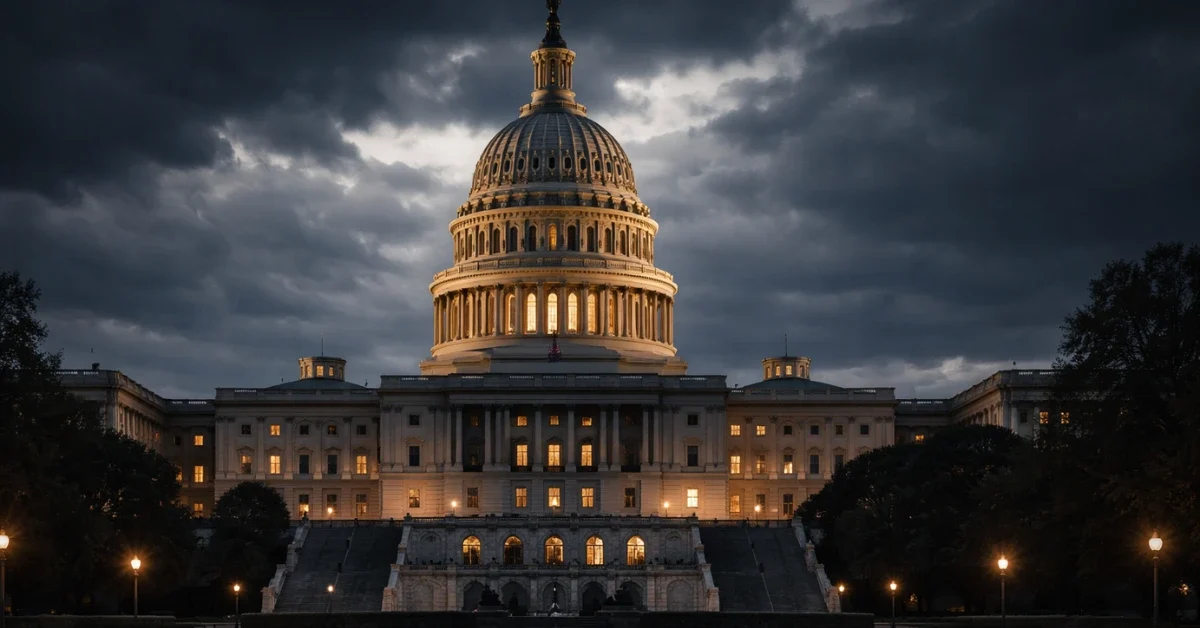
The United States Congress has formally declined to halt ongoing military operations in the Middle East . In consecutive votes this week, lawmakers in both chambers rejected an Iran war powers resolution designed to require President Donald Trump to secure explicit congressional authorization for the current conflict . The legislative defeats remove a major roadblock, clearing the path for the administration to continue an expanding military campaign against Iran .
The consecutive failures of the war powers legislation arrive as senior administration officials confirm that American military actions are accelerating . This signals that Republican lawmakers are publicly standing behind the president’s strategy in Iran, despite rising casualties and an indefinite timeline for the conflict .
House Dismisses Bipartisan Withdrawal Measure
On Thursday, the House of Representatives narrowly voted down a bipartisan war powers resolution by a margin of 212 to 219 . The proposal, spearheaded by Representative Thomas Massie, a Republican from Kentucky, and Representative Ro Khanna, a Democrat from California, demanded an immediate withdrawal of American forces from the conflict .
The defeat in the House was secured when lawmakers broke from established party lines . Massie and Representative Warren Davidson, a Republican from Ohio, diverged from their party to support the measure . Conversely, four Democrats went against their own leadership to oppose it . Representatives Henry Cuellar, Jared Golden, Greg Landsman, and Juan Vargas contributed directly to the bill’s demise .
Following the vote, Khanna took to the social media platform X to express his frustration, stating that instead of sending billions of dollars overseas, the government should invest in domestic jobs, healthcare, and education .
Senate Rejects Effort to Limit Hostilities
The House vote followed a similar defeat in the Senate just one day prior . On Wednesday, the Senate voted 47 to 53 against a companion measure introduced by Democratic Senators Chuck Schumer, Adam Schiff, and Tim Kaine .
The Senate motion sought to pull military resources out of the Middle East and reassert the constitutional power of the legislative branch over war declarations . Voting largely followed party loyalties, with two notable exceptions . Republican Senator Rand Paul broke ranks to support the withdrawal effort, while Democratic Senator John Fetterman voted against it .
Schumer framed the roll call as a way to force senators to declare their allegiances on the record . He challenged his colleagues to choose between standing with citizens exhausted by endless Middle Eastern conflicts or supporting the administration as it heads into another war .
Conversely, Senate Majority Leader John Thune and most Republican senators argued that the initial strikes in Iran were pre-emptive and defensive . Thune asserted that the president has the necessary authority to conduct the ongoing operations in the best interest of national security .
Lawmakers Debate Constitutional Authority
Proponents of the failed resolutions expressed deep concerns that Congress is willingly relinquishing its constitutional duty to declare war . House Minority Leader Hakeem Jeffries questioned the administration’s evolving justifications, asking how the military action will end and why the president has not presented his case directly to the American public .
Representative Davidson, an Army veteran, cautioned his colleagues on the House floor that America was founded as a republic, not an empire . He noted that the America First platform was initially intended to reject globalist military interventions, emphasizing the need to restore constitutional limits .
Opponents of the resolutions argued that debating legality distracts from supporting active troops . Representative Mike Rogers of Alabama insisted that Congress must ensure warfighters have the resources they need to succeed, warning that prematurely ending the operation would unnecessarily jeopardize the lives of American service members and allied forces .
Accelerating Military Campaign
The legislative debates occurred against the backdrop of an expanding military offensive . Defense Secretary Pete Hegseth confirmed on Wednesday that the war is accelerating, with American and Israeli forces widening air operations into Iranian territory . U.S. Central Command recently released evidence showing an American submarine sinking an Iranian warship .
Administration officials have described the extensive campaign as a targeted effort to dismantle Tehran’s missile capabilities . They maintain that the goal is not overall regime change, though that message became complicated when President Trump pledged to influence the selection of Iran’s next leader following the death of Ayatollah Ali Khamenei during the initial strikes .
The conflict has resulted in severe human costs . At least six American service members have been killed, while rights groups report that civilian casualties in Iran surpassed 1,000 by the fourth day of the conflict .
Despite admitting the conflict could extend indefinitely, President Trump expressed high confidence in the mission . Speaking at a White House event on Wednesday, he stated that the military is doing very well, rating the operation a 15 out of 10 .
Alternative Legislative Strategies
With the immediate withdrawal measures defeated, alternative proposals are surfacing . On Tuesday, a group of centrist House Democrats introduced a separate resolution that would give the administration a 30-day window to justify the hostilities before halting military operations .
Republicans previously blocked a similar vote in January regarding a mission to capture Venezuelan President Nicolás Maduro, signaling a consistent strategy to protect executive military authority .
