

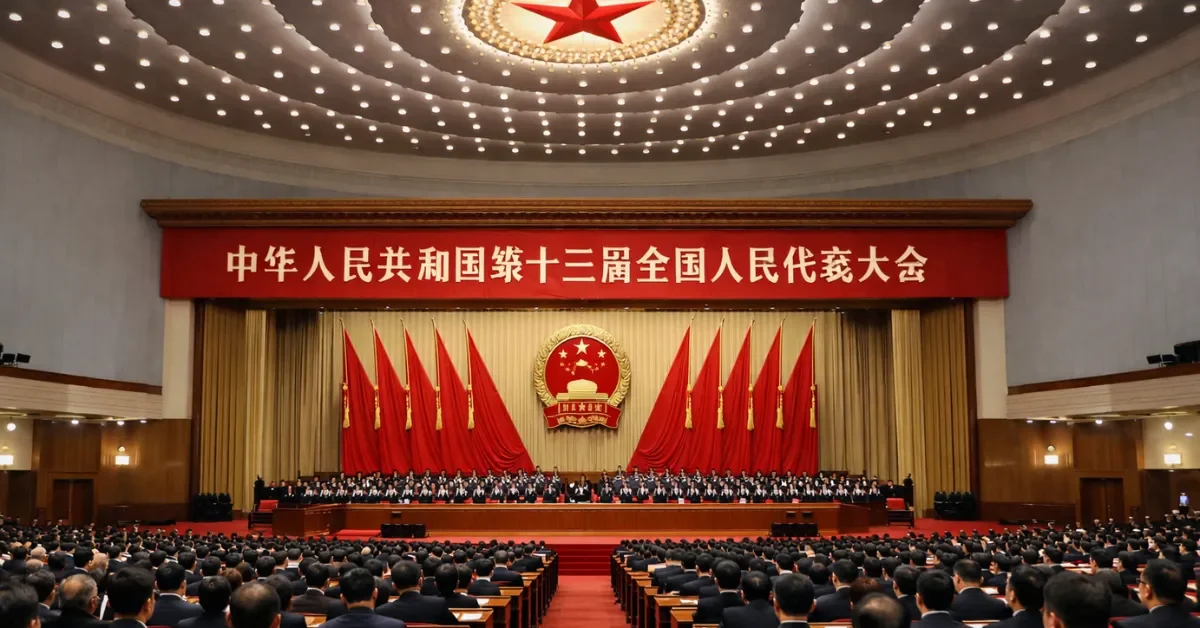
Amid escalating global turbulence, China is using its 2026 annual legislative meetings to project an image of steady continuity. As international focus shifts toward rising conflicts in the Middle East and shifting U.S. policies under President Donald Trump, Beijing is prioritizing China global stability to act as a reliable anchor. During the National People’s Congress, Chinese leaders emphasized a sustained commitment to domestic economic growth, technological innovation, and cautious diplomacy.
State media outlets, including the People’s Daily, have prominently described the nation’s steadfast approach to economic development as a crucial stabilizing force. According to official commentaries, a stable and developing China injects certainty into a world currently fraught with upheaval. This message of resilience arrives as the post-World War II global order faces pressure from expanding military conflicts and aggressive tariff strategies.
Trimming Targets and Boosting Fiscal Support
In a move reflecting pragmatic flexibility, Premier Li Qiang outlined a slightly softened gross domestic product (GDP) growth target of 4.5 to 5 percent for 2026. This marks the first reduction in the national growth goal since 2023. Despite the trimmed target, government officials maintain that the nation possesses a solid foundation to achieve its objectives through scale, innovation, and risk management.
To stimulate domestic demand and counter external volatility, financial leaders announced targeted fiscal measures. Finance Minister Lan Foan revealed the creation of a 100 billion yuan fiscal-financial coordination fund designed to encourage consumption and private investment. Additionally, the government allocated a special treasury bond quota of 250 billion yuan specifically for a consumer goods trade-in initiative.
The People’s Bank of China (PBOC) is also preparing to deploy monetary policy tools to bolster the economy. PBOC Governor Pan Gongsheng stated that the central bank will flexibly and effectively implement adjustments to the reserve requirement ratio and interest rates. These measures aim to sustain supportive financing conditions and ensure abundant liquidity, particularly as foreign exchange markets experience heightened risk aversion due to the ongoing U.S.-Israeli conflict with Iran.
Prioritizing Technology in the Five-Year Plan
At the core of the government’s long-term strategy is a newly approved five-year plan that places technological advancement at the forefront of national development. Lawmakers formally endorsed the blueprint, which heavily backs investments in artificial intelligence and robotics. Rather than relying on rapid, broad consumer stimulus, the government is doubling down on transforming its economy to lead the 21st-century tech landscape.
The strategy also features a cautious approach to environmental goals. The newly established climate targets are tied directly to the size of the economy rather than capping total emissions. Furthermore, lawmakers passed an ethnic minorities law, which critics argue is designed to cement a push toward cultural assimilation.
Enacting Cross-Border Anti-Corruption Laws
Legislative focus extends beyond economic and technological boundaries. According to the top legislature’s work report, China will enact a new law this year aimed at combating cross-border corruption. This legislation is designed to advance the national legal framework overseeing anti-graft measures, regulating the integrity of Chinese businesses engaged in international commercial activities.
The push for enhanced legal oversight coincides with a sweeping domestic anti-corruption campaign that continues to impact the upper echelons of the military. Alongside the anti-corruption law, the National People’s Congress Standing Committee intends to revise existing regulations for the central bank and the broader banking sector while strengthening research into future artificial intelligence legislation.
Cautious Diplomacy in an Unpredictable Era
As global supply chains realign and geopolitical tensions mount, Beijing is maintaining a measured diplomatic tone. Official statements and commentaries deliberately omitted direct references to President Donald Trump, whose use of military force and tariffs have disrupted international relations. Instead, China publicly defends the existing global system while advocating for reforms that better reflect the interests of both developing and wealthy nations.
Diplomatic positioning remains careful ahead of an expected visit to China by Donald Trump later in March. While military spending was notably scaled back in the recent budget, leaders continue to emphasize the nation’s strength and readiness. As Foreign Minister Wang Yi stated during an annual news conference, the country is forging ahead at full speed in building a great nation, ensuring that China remains a force for certainty amid international uncertainty.
