

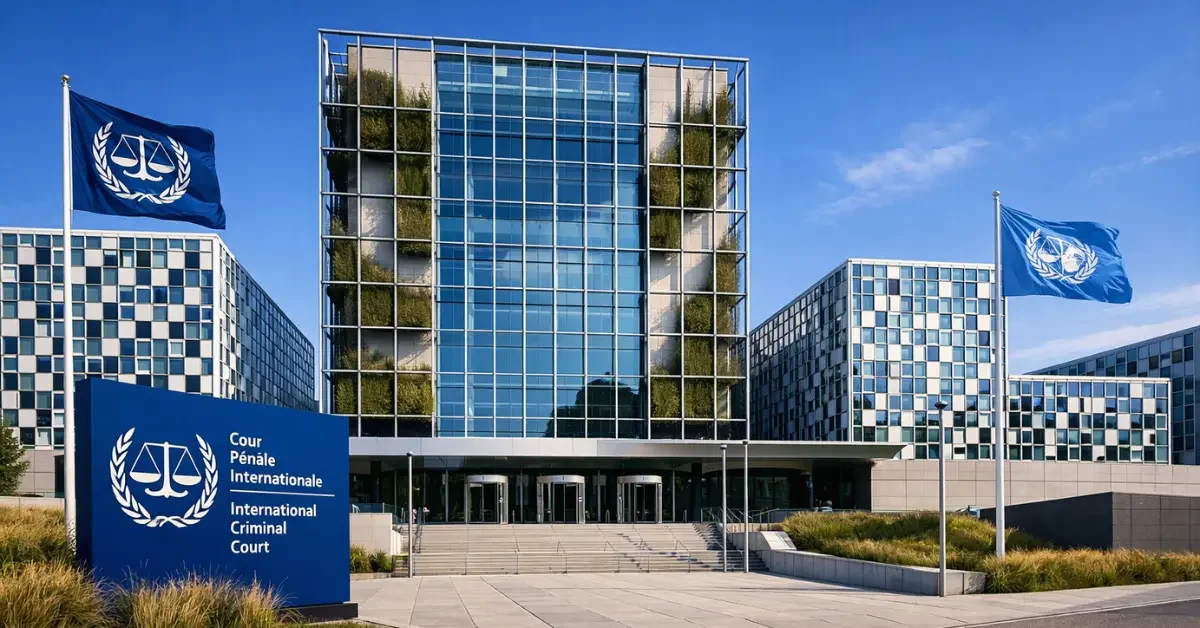
The International Criminal Court has officially launched an investigation into the Belarusian government over alleged crimes against humanity. The inquiry, announced by prosecutors in Amsterdam on Thursday, focuses on the forced deportation and persecution of political opponents. Although Belarus is not a member state of the international tribunal, the case is proceeding because the alleged offenses occurred partially on the territory of Lithuania, which is a member. This legal action marks a significant escalation in international efforts to address the ongoing crackdown on democratic dissent by Belarusian authorities.
By opening an ICC probe into Belarus, the court aims to directly address claims of systematic attacks directed at the civilian population. Prosecutors have gathered information suggesting that the regime deliberately targeted actual or perceived critics through coercive deportations. These actions were reportedly executed on a massive scale, affecting a large number of victims through highly organized operations. The investigation follows a formal referral submitted by the Lithuanian government in September 2024, which requested the court to examine the cross-border nature of these alleged crimes.
Establishing Legal Jurisdiction
The legal foundation for the investigation relies heavily on the cross-border impact of the alleged crimes. Because Belarus never signed or ratified the Rome Statute, the court ordinarily would not have authority to investigate internal matters solely within the country. However, international legal provisions allow the court to intervene if crimes spill over into the jurisdiction of a member state. Since Lithuanian borders were crossed during the forced removals of political dissidents, prosecutors concluded they have a reasonable basis to assert authority. The Lithuanian justice minister expects this legal process could eventually result in international arrest warrants, pending approvals from the tribunal’s judges. Meanwhile, the Belarusian embassy in the Netherlands has not provided any comment regarding the newly announced investigation.
Systematic Attacks on the Civilian Population
According to the prosecutor’s office, the investigation involves serious allegations of political persecution combined with forced exile. Investigators detailed that the coercive measures utilized by the state constitute a widespread and systematic attack against its own people. By categorizing the actions under this severe legal framework, the court emphasizes the coordinated nature of the government’s approach to neutralizing domestic opposition. The official charges point directly toward policies designed to intimidate and physically remove individuals who disagree with long-serving President Alexander Lukashenko.
The 2020 Protests and the Exodus to Lithuania
The roots of the current international legal scrutiny trace back to the aftermath of the contested 2020 presidential elections. Following widespread protests challenging Lukashenko’s prolonged rule, the government initiated a severe and violent crackdown on public demonstrations. Consequently, tens of thousands of citizens were forced to flee their homeland, seeking sanctuary in neighboring Lithuania. Human rights organizations continue to monitor the dire situation inside the country. The Viasna rights group recently reported that there are currently 1,139 recognized political prisoners detained within Belarusian borders. Furthermore, dissidents who escaped into exile continue to face ongoing threats and intimidation from the Belarusian KGB security services while living abroad.
High-Profile Cases of Forced Deportation
The ongoing investigation will scrutinize several specific instances of political figures being forcibly expelled. Belarusian authorities have repeatedly taken political prisoners directly from incarceration facilities and pushed them across the border into Lithuania. One prominent example occurred in December, when authorities deported Ales Bialiatski, the renowned human rights activist and Nobel Prize laureate. Another major incident took place in September, involving the well-known opposition figure Mikola Statkevich. Officials attempted to force Statkevich into Lithuania against his will. When he adamantly refused to cross the border and chose to remain in his home country, he was immediately sent back to a Belarusian prison. Authorities eventually released him last month, citing declining health reasons.
Belarusian Opposition Leaders Respond
The announcement of the formal inquiry was met with strong support from prominent exiled political figures. Sviatlana Tsikhanouskaya, a leading Belarusian opposition leader, publicly welcomed the prosecutor’s decision to move forward with the case. In a released statement, she highlighted the immense suffering endured by hundreds of thousands of her fellow citizens due to the regime’s continuous oppressive actions. Tsikhanouskaya emphasized that Lukashenko’s policies do not just harm internal populations but also generate significant security threats for neighboring nations. She expressed optimism about the future, noting that the tribunal’s decision restores crucial hope for accountability. According to her statement, the victims of the government’s crackdown will finally have an opportunity to see justice prevail, ensuring that those responsible are properly held to account.
