

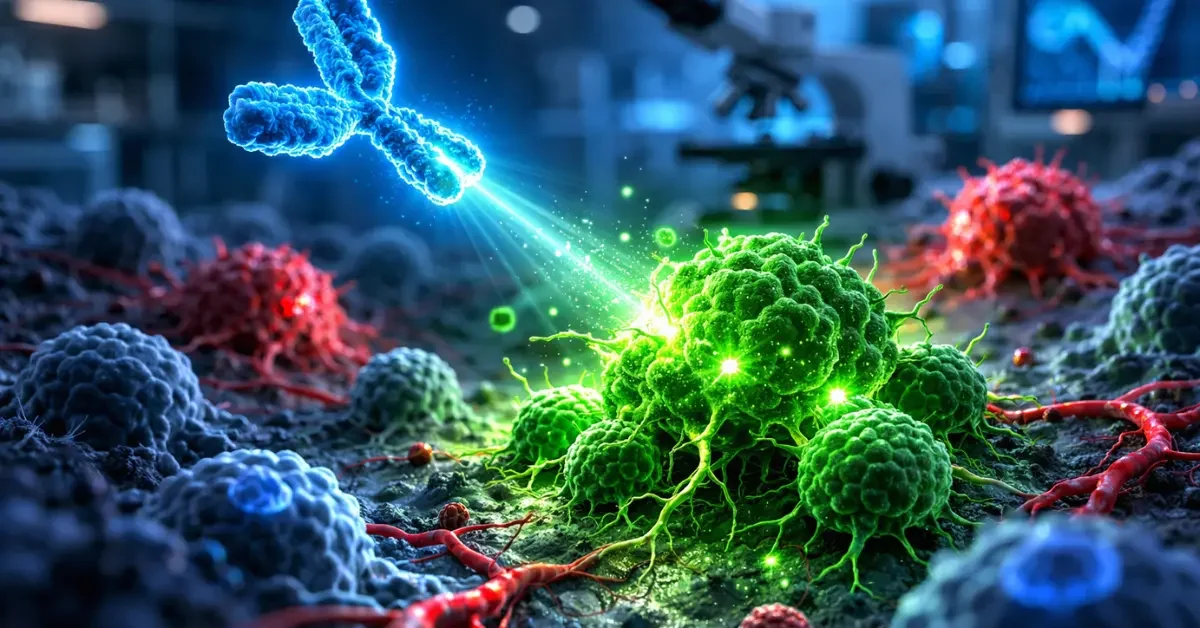
Researchers at the University of Missouri are developing a new “cancer flashlight” method to determine which cancer patients are most likely to benefit from targeted therapies . The scientists have successfully engineered this novel technique to physically illuminate cancer tumors during routine medical scans . The driving force behind this discovery is Barry Edwards, an associate professor of biochemistry in the School of Medicine who also holds an appointment in the College of Arts and Science . Using advanced imaging technology at Mizzou’s Molecular Imaging and Theranostics Center, Edwards designed a very small antibody that functions as a specialized seeker .
The Limitations of Traditional Testing
Medical professionals are constantly searching for better and less invasive ways to understand cancer . Currently, doctors largely rely on traditional methods like biopsies and magnetic resonance imaging (MRI) scans to evaluate tumors in patients . While these techniques remain the standard practice in the medical field, they come with several significant drawbacks . For one, procedures like biopsies can be highly invasive and physically taxing for individuals undergoing evaluation . Furthermore, standard MRI scans and biopsy tests typically require a significant amount of time to process before results are finalized . Perhaps most crucially, these established tools frequently provide only limited insight into the exact proteins that are operating within a patient’s cancer cells .
How the Glowing Antibody Works
This newly developed tiny antibody specifically seeks out EphA2, which is a protein that is frequently present in cancer tumors . Once the design of this small antibody was complete, Edwards took the critical next step of attaching a specialized radioactive marker to the molecule . When introduced into the subject, this specific radioactive marker is what makes the antibody highly visible during a positron emission tomography (PET) scan . Because of its unique ability to make tumors glow brightly on a medical screen, this new tool effectively acts as a cancer-detecting flashlight .
The effectiveness of this antibody flashlight has already been clearly demonstrated in initial animal testing . In recent experiments using mice, Edwards showed that this diagnostic tool successfully illuminated the specific tumors that produced the EphA2 protein . The positive results suggest that tagging the antibody in this manner could help doctors easily detect cancers that contain this specific protein marker . Furthermore, it can rapidly help determine which patients might respond well to therapies specifically designed to target EphA2-positive tumor cells . These targeted therapies are highly beneficial because they attack the cancer directly while leaving the patient’s healthy tissue completely unharmed .
Faster Results and Precision Medicine
“By finding out which patients have high or low amounts of EphA2, we can determine who is most likely to benefit from a targeted cancer treatment,” Edwards stated . He noted that there is absolutely no sense in giving a medical treatment that will not work to a patient . Therefore, this new glowing antibody process saves both valuable time and money while simultaneously advancing the growing field of precision medicine .
Beyond improving accuracy, this new targeted diagnostic approach is entirely noninvasive compared to traditional methods . The speed of the new method is also a dramatic improvement over current medical evaluations . Medical teams and patients can now get results from the imaging in a matter of hours rather than waiting several days . Edwards emphasized that this rapid turnaround time can be a huge advantage for patients who are traveling long distances to seek their cancer treatment . “By making the process easier and faster for both patients and clinicians, we’re showing that precision medicine is a win-win,” he said .
Moving Toward Human Clinical Trials
While the technology is currently in the preclinical stage, the research team has clear plans for its future application . Edwards hopes to officially advance this imaging technique from the current preclinical studies to human clinical trials within the next seven years . The full study, titled “Preclinical evaluation of anti-EphA2 minibody-based immunoPET agent as a diagnostic tool for cancer,” was recently published in the scientific journal Molecular Imaging and Biology . The research was authored by Peggy A. Birikorang, H. E. G. Wedaarachchi, Jordan A. Smith, Gary Kohanbash, and W. Barry Edwards . Together, their collaborative work could soon help doctors spot the right cancers and prescribe the right treatments much faster than before .
