

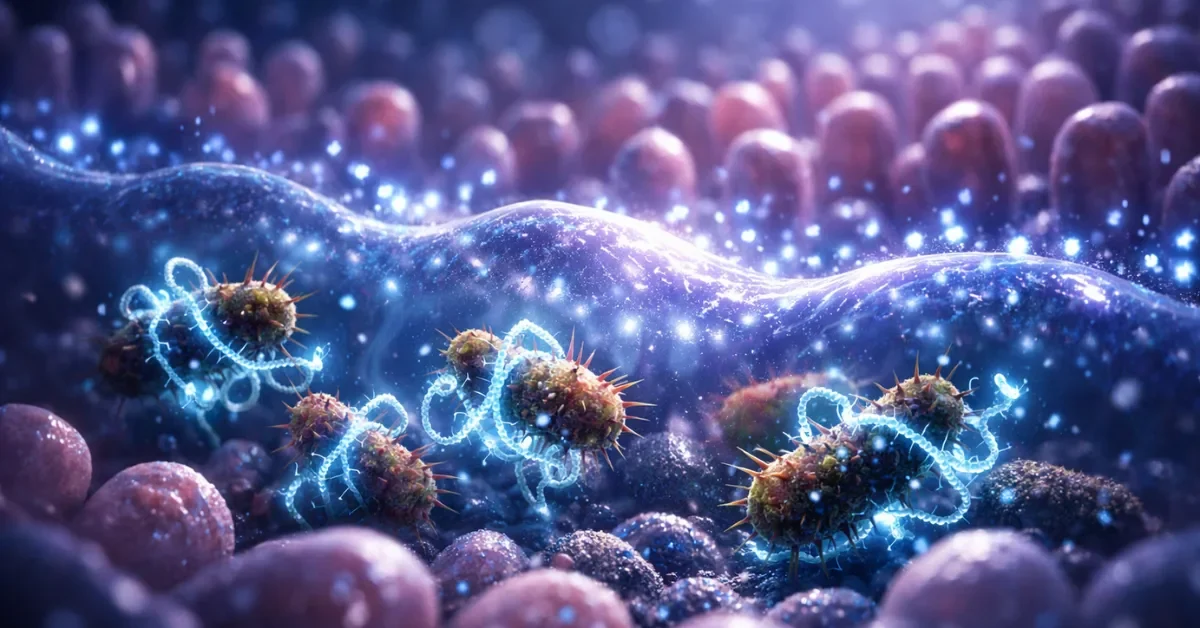
Researchers at the Massachusetts Institute of Technology have uncovered a powerful new defense mechanism within the human body . A newly studied gut protein called intelectin-2 plays a critical dual role in protecting the gastrointestinal tract . It works by strengthening the intestinal mucus barrier and directly neutralizing dangerous, antibiotic-resistant bacteria .
Published in the journal Nature Communications on March 16, 2026, the study reveals how this multifunctional immune protein traps harmful microbes . By binding to specific sugar molecules, intelectin-2 not only fortifies the gut lining but also actively destroys invading pathogens . This major breakthrough could pave the way for innovative treatments targeting inflammatory bowel disease and the escalating global crisis of antimicrobial resistance .
A Two-Layer Defense System
The moist linings of the human body contain specialized molecules designed to ward off infections and inflammation . Among these essential defenders are lectins, a class of carbohydrate-binding proteins responsible for immune defense and cellular communication . The human genome encodes over 200 different lectins, but scientists have recently focused their intense attention on the intelectin family .
While previous research identified a related protein called intelectin-1, its exact biological functions remained largely unclear to the scientific community . Now, MIT researchers have conclusively demonstrated that its closely related counterpart, intelectin-2, possesses robust antimicrobial properties . The protein acts as a sophisticated, two-layer security system for the gastrointestinal tract . First, it binds to a specific sugar molecule called galactose, which is highly abundant in mucins . Mucins are the primary molecular building blocks of mucus . By linking these mucins together, the gut protein actively reinforces and stabilizes the protective barrier covering the intestinal walls .
If invading bacteria manage to breach this initial barricade, intelectin-2 immediately initiates its second line of defense . The exact same galactose sugars are frequently displayed on the exterior membranes of certain bacterial cells . The protein attaches tightly to these microbial sugars, physically trapping the pathogens and severely restricting their ability to multiply and spread .
Neutralizing Antibiotic-Resistant Pathogens
This biological trapping mechanism does much more than just slow down bacterial growth . Over time, the trapped microbes physically begin to break apart . This structural breakdown indicates that intelectin-2 successfully disrupts their cellular membranes, ultimately leading to their complete destruction .
Remarkably, this powerful antimicrobial effect works against a very broad spectrum of harmful bacteria . The researchers noted that intelectin-2 successfully neutralizes notorious pathogens such as Staphylococcus aureus and Klebsiella pneumoniae . Both of these dangerous bacterial strains are frequently responsible for severe gastrointestinal infections . Furthermore, they are notoriously difficult for doctors to treat due to their high resistance to standard commercial antibiotics .
According to Laura Kiessling, the Novartis Professor of Chemistry at MIT and the study’s senior author, the protein’s ability to operate in complementary ways is highly effective . Kiessling explained that the protein stabilizes the fragile mucus layer first, but if that boundary fails, it directly restrains the escaping bacteria from causing further harm .
Potential Treatments for Intestinal Diseases
The discovery of this versatile gut protein offers promising new avenues for treating chronic digestive conditions . In individuals suffering from inflammatory bowel disease, the natural levels of intelectin-2 often become dangerously imbalanced .
When the protein levels drop too low, the intestinal mucus barrier can severely weaken, leaving the gut highly vulnerable to continuous infection and chronic inflammation . Conversely, an overabundance of the protein might mistakenly eliminate the beneficial bacteria necessary for healthy, everyday digestion . The research team strongly suggests that developing targeted therapies to restore properly balanced levels of this protein could provide significant, long-term relief for patients battling inflammatory bowel diseases .
In humans, intelectin-2 is consistently produced by Paneth cells located directly in the small intestine . In mice, however, it is secreted by mucus-producing Goblet cells in direct response to acute inflammation or specific parasitic infections . Understanding these distinct production pathways is a critical step toward developing accurate, targeted medical interventions .
A New Strategy Against Antimicrobial Resistance
Beyond treating inflammatory conditions, the broad-spectrum capabilities of intelectin-2 represent a fundamentally new approach to fighting drug-resistant superbugs . Instead of relying heavily on traditional antibiotics, which increasingly fail against rapidly evolving pathogens, medical professionals could soon utilize the body’s own built-in defensive tools .
Kiessling emphasized that harnessing human lectins to combat antimicrobial resistance draws directly on our innate immune defenses . Using proteins that the human body already naturally employs to protect itself against pathogens is a highly compelling strategy that the MIT research team plans to pursue further .
The comprehensive research was spearheaded by former MIT research scientist Amanda Dugan alongside MIT PhD student Deepsing Syangtan . Valuable additional contributions came from experts at Harvard Medical School, the Broad Institute, and the University of California at Davis School of Medicine . Crucial funding for the study was provided by multiple esteemed organizations, including the National Institutes of Health and the National Science Foundation . Looking ahead, the scientific community is highly optimistic about transforming these foundational laboratory discoveries into viable, life-saving clinical treatments for patients worldwide .
