

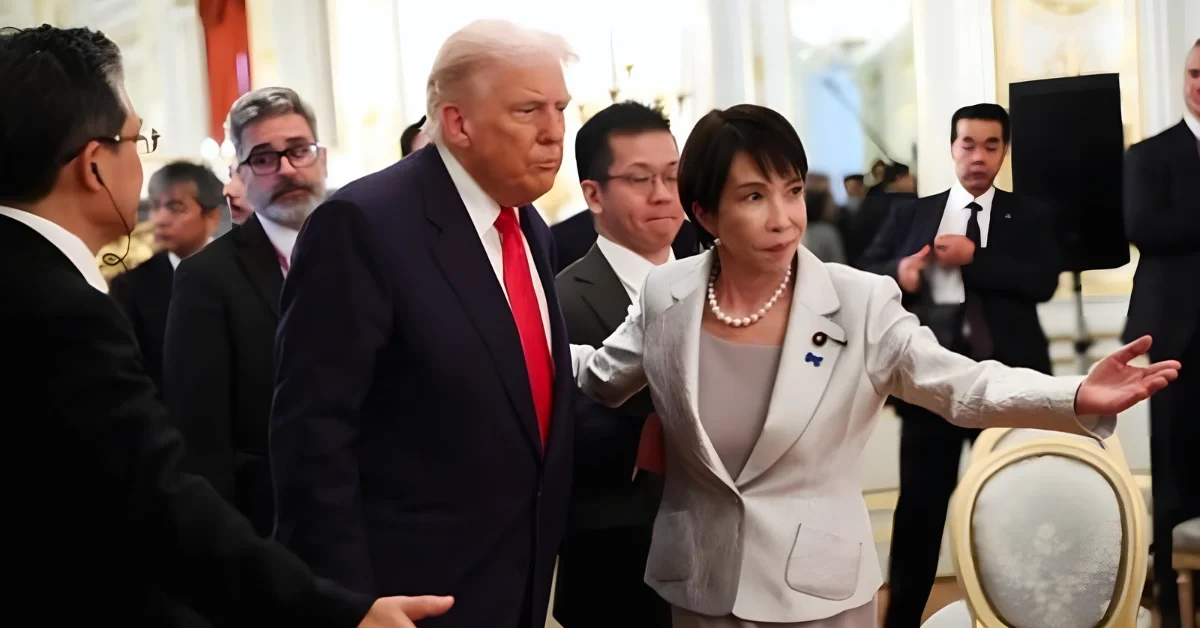
President Donald Trump’s recent diplomatic meeting with Japanese Prime Minister Sanae Takaichi took an unexpected and tense turn following a controversial historical comparison. During a press briefing at the White House, a Trump Pearl Harbor remark regarding the ongoing military conflict with Iran left the Japanese delegation noticeably uncomfortable and sparked immediate unease overseas.
The incident unfolded on Thursday inside the Oval Office during Takaichi’s first official visit to Washington D.C. as prime minister. While taking questions from reporters, a Japanese journalist asked the president why his administration failed to provide advance notice to key strategic allies in Europe and Asia, including Japan, prior to launching the joint American and Israeli air campaign against Iran on February 28.
A Tense Oval Office Exchange
In his response, the president explained that his administration kept the military action a closely guarded secret because they desired an element of surprise. He then directly addressed Takaichi with an unexpected historical parallel. According to reporters in the room, Trump stated that they wanted surprise, adding that no one knows more about surprise than Japan. He continued by asking why they did not inform him about Pearl Harbor, suggesting that Japan believes in the concept of surprise much more than the United States.
The sudden historical reference drastically shifted the mood in the Oval Office. While the spontaneous comment initially drew scattered laughter from some individuals in the room, the laughter quickly faded into silence.
Prime Minister Takaichi, seated beside the president, appeared visibly surprised and taken aback by the sudden remark. Observers in the room noted that her eyes widened and she shifted uncomfortably in her seat. Rather than responding verbally to the controversial statement, she allowed the awkward moment to pass, rolling her eyes and glancing toward her government ministers who were seated nearby.
Backlash and Unease in Japan
The comparison to the 1941 attack immediately triggered a strong reaction in Japan. Across the country, the president’s words generated a widespread wave of embarrassment, confusion, and discomfort. Many Japanese citizens took to social media platforms to voice their frustration, with numerous users describing the offhand joke as rude and ignorant.
Some domestic critics in Japan argued that the comment highlighted a fundamental failure to treat their nation as an equal strategic partner. The public backlash has even prompted several voices to demand that the Japanese government step forward and file a formal diplomatic protest in response to the president’s statements.
The Historical Weight of Pearl Harbor
High-ranking diplomats and officials from both the United States and Japan typically handle the subject of Pearl Harbor with extreme caution due to its deeply painful legacy. The Imperial Japanese Navy launched the surprise assault on the American naval base in Hawaii on December 7, 1941. The devastating attack claimed the lives of 2,390 Americans and immediately thrust the United States into World War II.
Following the attack, former President Franklin D. Roosevelt famously labeled the day as a date that will live in infamy as he urged Congress to declare war. The subsequent global conflict only concluded in August 1945, shortly after the United States dropped atomic bombs on the Japanese cities of Hiroshima and Nagasaki. Those bombings resulted in massive civilian casualties and eventually led to Japan’s surrender.
Pressuring Allies on the Iran War
Beyond the historical controversy, the primary focus of the Oval Office dialogue was to persuade Japan to back the ongoing military actions in the Middle East. Trump used the diplomatic visit to press the visiting prime minister for increased logistical and strategic support. Specifically, he communicated his expectation that the Japanese government should enhance its efforts to help secure the Strait of Hormuz amid the continuing military operations against Iran.
Throughout the week leading up to the meeting, the president had repeatedly expressed his dissatisfaction with international allies both on camera and online. He criticized partners, including Japan, for their lack of immediate assistance in the region following the initial military strikes. Although he stated on Thursday that their help was not strictly required, he made it clear that he believes it is appropriate for allied nations to step up and contribute to the security of the strategic waterway.
Additionally, during the press conference, Trump complimented Takaichi’s command of the English language, noting that he had not yet learned Japanese himself. The comment added another unexpected layer to a meeting that was originally supposed to be a routine diplomatic affair. Furthermore, when reporters asked the president the previous day if he planned to deploy more troops to Iran, he maintained his stance on secrecy, replying that if he were planning to do so, he certainly would not disclose that information to the press.
