

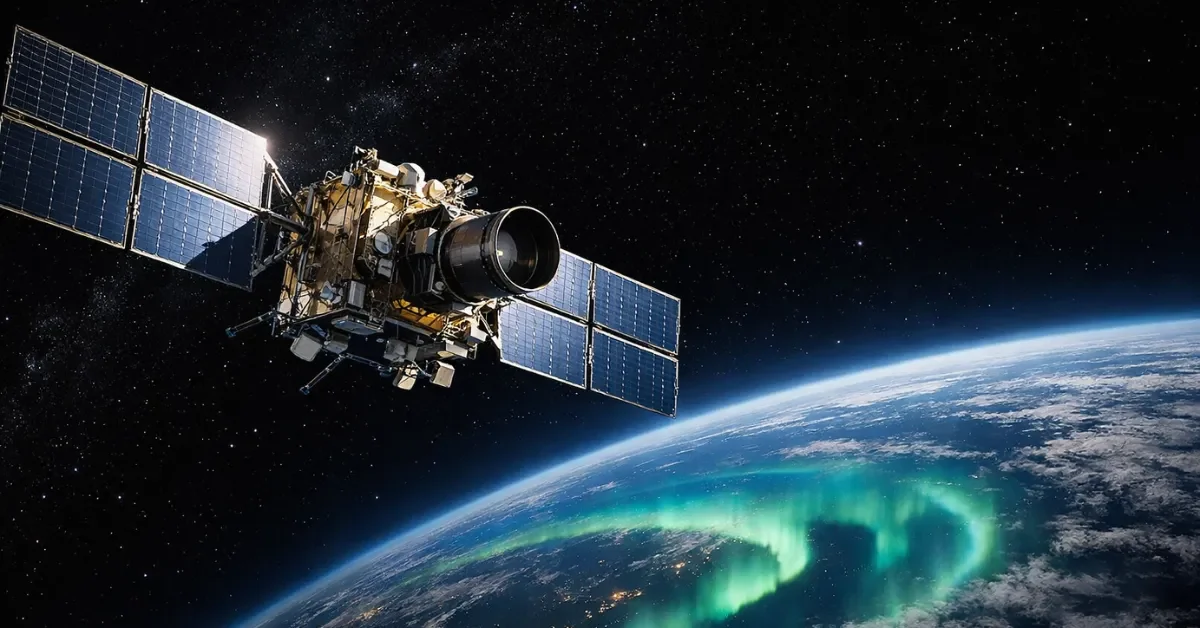
The upcoming SMILE mission launch marks a significant milestone in space exploration and international scientific collaboration. The Solar wind Magnetosphere Ionosphere Link Explorer, widely known as SMILE, is a joint venture between the European Space Agency and the Chinese Academy of Sciences. This pioneering satellite will provide humanity with its first comprehensive look at how Earth responds to bursts of radiation and streams of particles emanating from the sun.
Anticipation for the SMILE mission launch is high, though reports present conflicting timelines for when the satellite will actually leave Earth. According to Phys.org, the launch window is scheduled for April 8 through May 7, 2026, with a specific target date of Thursday, April 9. Conversely, according to the Arctic Portal, the mission was previously expected to launch in late 2025. Neither organization has officially resolved this scheduling discrepancy, leaving two distinct launch timeframes on the public record.
Launch Preparations and Flight Sequence
Preparations for the journey are currently advancing at Europe’s Spaceport in Kourou, French Guiana. According to Phys.org, the spacecraft and all necessary rocket components have arrived at the facility. The four stages of the Vega-C launch vehicle are already stacked on the launch pad, waiting to carry the satellite into orbit.
Once liftoff occurs, the flight sequence will follow a precise schedule. The first, second, and third stages of the Vega-C rocket will detach sequentially. The satellite will finally separate from the fourth upper stage exactly 57 minutes after the initial launch. A critical milestone determining the success of the launch will happen roughly six minutes later, when the spacecraft unfolds its solar panels. These arrays are essential for collecting the sunlight required to power the scientific instruments and onboard systems.
Following the initial deployment into a low-Earth orbit, the satellite will rely on its own propulsion module to reach its final destination. The chosen path is a highly elliptical and highly inclined orbit. At its farthest point, known as the apogee, the spacecraft will travel 121,000 kilometers above the North Pole. This distance is roughly one-third of the way to the Moon. The satellite will then swing back down to a perigee of 5,000 kilometers above the South Pole to transmit its gathered data to ground stations.
Investigating Space Weather and the Magnetosphere
The unique orbital path is designed to keep the satellite at a high altitude for about 80 percent of its journey. This positioning allows the equipment to continuously observe the Earth’s magnetic boundaries for more than 40 hours per orbit. It also protects the satellite by limiting the time it spends navigating through the planet’s high-radiation zones.
By observing these regions, scientists hope to answer fundamental questions about space weather. The project aims to understand the basic modes of interaction between the solar wind and the dayside of Earth’s magnetosphere. Researchers also want to define the substorm cycle and discover how storms driven by coronal mass ejections originate. Ultimately, the mission will trace how solar wind injects into the magnetosphere and affects the charged particles that create the northern lights.
Advanced Payload Instruments
To achieve these scientific goals, the spacecraft carries a highly specialized payload featuring four primary instruments. These tools were developed through extensive international cooperation to ensure maximum data collection.
The Soft X-ray Imager is a wide-field telescope designed to map the shape and motion of Earth’s magnetic boundaries. It uses micropore optics to observe emissions and track the magnetopause and polar cusps in real time.
Working alongside the X-ray technology is the UV Imager. This ultraviolet camera is specifically tasked with monitoring the northern auroral regions. It will capture images of the aurora borealis, helping scientists connect boundary processes with the charged particles entering the ionosphere.
The Light Ion Analyser will measure the behavior of solar wind ions. By tracking the three-dimensional velocity of protons and alpha particles, this instrument will determine how solar wind properties change under various space conditions.
Finally, the Magnetometer will determine the magnitude and orientation of the magnetic field. Mounted on a three-meter boom to avoid interference from the spacecraft itself, this tool will detect passing solar wind shocks and accurately measure the background magnetic field.
International Scientific Collaboration
The development of this advanced satellite represents a decade of global teamwork. The project was initially proposed in March 2015 following a joint call for small-size space missions. After proving feasible during an initial study phase, the project was formally adopted into the European Space Agency’s Cosmic Vision program in March 2019.
Today, the project brings together scientists and engineers from the United Kingdom, China, Canada, the United States, and several European nations. The spacecraft platform is provided by the Chinese Academy of Sciences, while the payload module containing the scientific instruments is provided by the European Space Agency. This global partnership ensures that the upcoming mission will push the boundaries of our understanding of space weather and the solar system.
