

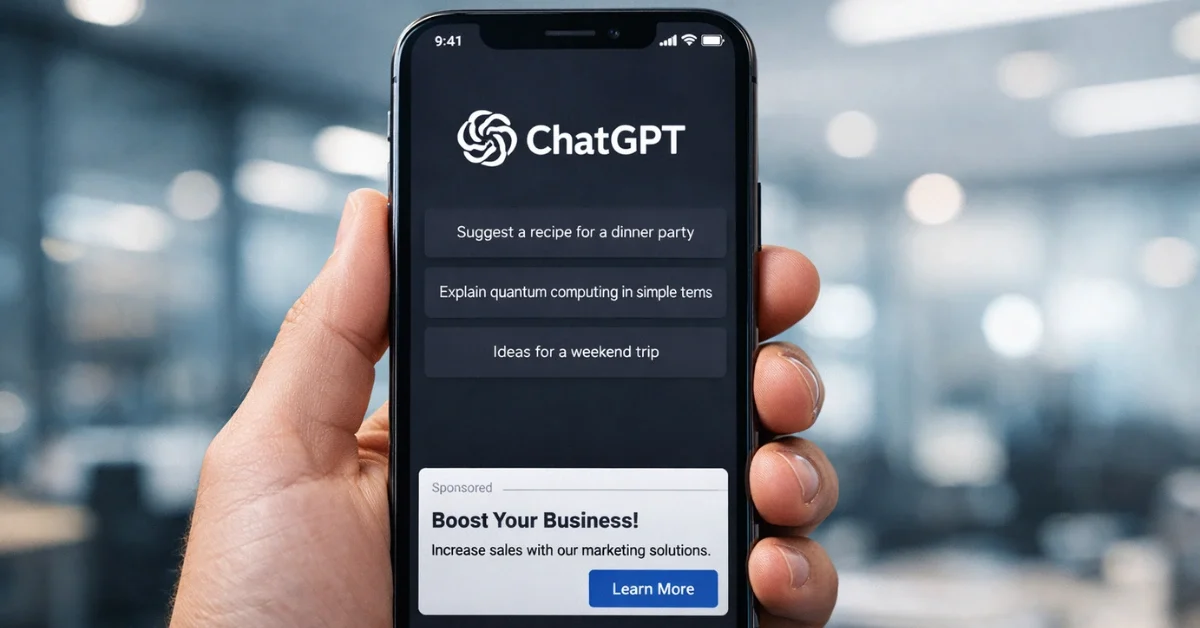
OpenAI is officially preparing to introduce advertisements to its flagship platform. In the coming weeks, the company will begin testing ChatGPT ads for logged-in adults in the United States using the free version of the chatbot, as well as its new low-cost subscription tier.
The move marks a significant shift in OpenAI’s strategy as it balances immense operational costs with a user base of nearly one billion weekly active users. The advertising rollout will be gradual, and company representatives have clarified that the initial testing phase will remain strictly limited to the U.S. market, despite recent privacy policy updates that sparked rumors of a global release.
How ChatGPT Ads Will Work
The newly designed ChatGPT ads will appear in clearly marked boxes below the chatbot’s organic responses. According to OpenAI, the advertising system operates entirely independently from the artificial intelligence model that generates answers. Advertisers will not be able to influence, modify, or dictate the content that the chatbot produces.
To maintain a helpful user experience, the advertisements will be contextual. The system will match sponsored products and services based on the specific topics discussed in a user’s current conversation. Fidji Simo, OpenAI’s CEO of applications, emphasized that the platform’s responses must be driven by what is objectively useful to the user, never by paid placements.
OpenAI is also implementing strict boundaries to protect user privacy and safety. The company stated that it will not sell user data, share personal chat histories, or provide advertisers with access to sensitive information like age, location, or personal interests. Advertisers will only receive aggregate performance metrics, such as ad impressions and click-through rates. Furthermore, advertisements are restricted from appearing alongside sensitive or regulated topics, including health, mental health, and politics. The platform will also block ads from showing on accounts belonging to users under the age of eighteen.
For users who prefer an uninterrupted experience, OpenAI will continue to offer ad-free environments. The advertisements will not appear on the Pro, Business, or Enterprise subscription plans. Additionally, users on the ad-supported tiers will have the ability to turn off ad personalization, clear their advertising data, and dismiss specific ads while providing feedback.
Expanding the Low-Cost Subscription Tier
Alongside the introduction of ChatGPT ads, OpenAI is expanding the availability of its low-cost subscription plan, ChatGPT Go. Priced at $8 per month, the Go tier offers expanded access to messaging, image creation, file uploads, and memory features.
ChatGPT Go has already launched in 171 countries since August, and the company is now bringing the service to the United States. Like the free version, U.S. users on the Go tier will be included in the upcoming advertising tests.
The Drive Toward Profitability
The decision to introduce ChatGPT ads comes as OpenAI faces mounting financial pressure. Training and deploying advanced artificial intelligence models requires massive computational power and data center capacity. Deutsche Bank projected that OpenAI could amass $143 billion in losses between 2024 and 2029. An OpenAI spokesperson stated that this figure is incorrect, while an internal source indicated that the company’s own projections align with a $111 billion cash burn by 2030.
To navigate these financial hurdles, OpenAI leadership aims to transform the organization’s massive user base into a sustainable business model. Internal documents reportedly show the company targeting $1 billion in free user monetization starting in 2026, with a goal of reaching $25 billion by 2029. Overall profitability is expected by 2029.
Leading this commercialization effort is Fidji Simo, a former Meta and Instacart executive who joined OpenAI to shape how the company operates and generates revenue. Under her leadership, the company is shifting toward a more traditional technology business structure, prioritizing enterprise users, coding capabilities, and productivity tools.
This transition has created internal friction as OpenAI evolves from a research-focused laboratory into a highly scrutinized consumer product company. Several researchers and executives have recently departed, citing a shift away from exploratory research in favor of commercial product milestones. However, company leaders maintain that a strong financial foundation and diverse revenue streams—including advertising—are essential to support ongoing research and make artificial intelligence accessible to a wider global audience.
