

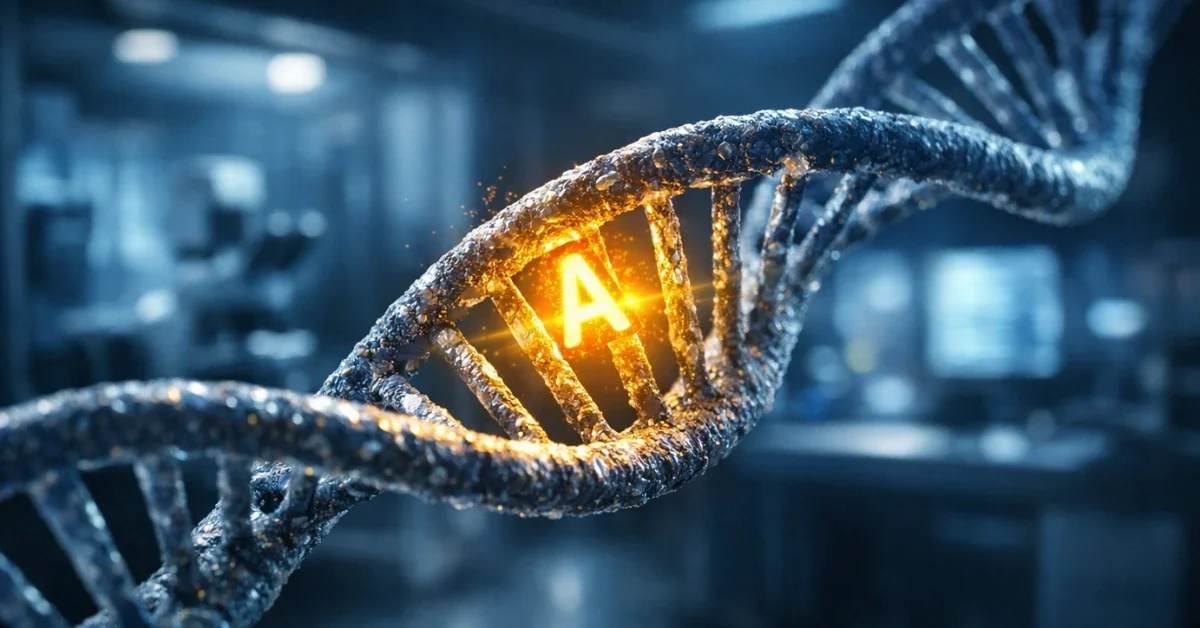
A groundbreaking discovery by researchers at Bar-Ilan University has revealed that altering just one letter in the genome can completely reverse the biological sex of a mouse . This unprecedented finding demonstrates the profound impact of a single DNA letter change, proving that microscopic genetic tweaks can yield dramatic developmental consequences . The study, recently published in the journal Nature Communications, sheds new light on the mysterious regulatory mechanisms that determine biological sex .
Using the advanced CRISPR genome-editing tool, the scientific team successfully mutated a specific section of the mouse genome . By changing a single DNA letter out of approximately 2.8 billion, the researchers observed a startling outcome . Mice carrying two X chromosomes, which are genetically programmed to develop as females, instead developed fully as males . These XX mice grew testes and male genitalia, completely bypassing their expected biological trajectory .
The research highlights the critical role of the non-coding genome, which makes up about 98 percent of human and animal DNA . Historically dismissed as “junk DNA,” this vast genetic landscape is now understood to be the “dark matter” of our biology . While these regions do not produce proteins themselves, they act as essential control panels that determine exactly when and how specific genes are activated or silenced .
The Genetic Switch and the Sox9 Gene
The scientists focused their attention on a specific regulatory element known as Enh13 . This microscopic switch controls the activity of a crucial gene called Sox9, which is strictly required for the development of testes . During normal embryonic development, the Sox9 gene must remain entirely turned off for ovaries to form and for the embryo to develop as a female .
Principal investigator Dr. Nitzan Gonen described the Enh13 regulatory region as a molecular battle site where the developmental fate of the sexes is decided . In male embryos, specific factors bind to Enh13 to promote testis development by activating the Sox9 gene . Conversely, in female embryos, different factors must bind to this exact same switch to actively repress Sox9 and allow normal ovary formation .
When the researchers introduced the microscopic genetic typo into the Enh13 switch using CRISPR, the normal repression mechanism completely failed . The Sox9 gene was accidentally activated in the genetically female mice, halting ovary development and triggering the growth of male reproductive organs . To confirm their findings, the team created multiple mouse models featuring incredibly small mutations, including a one-base-pair insertion and a three-base-pair deletion . Both variations resulted in the XX mice developing testes .
This recent breakthrough directly builds upon a previous study published by the same research group in 2024 . In that earlier work, the team demonstrated that different small mutations within the exact same regulatory region could produce the opposite effect, causing genetically male XY mice to develop entirely as females . Together, these complementary studies confirm that the Enh13 switch serves a dual purpose: it operates as a necessary enhancer during male development but requires strict, active repression during female development .
Implications for Human Sex Development
Beyond fundamentally shifting our understanding of basic biology, these findings carry significant medical implications for humans . The research offers new hope for understanding Differences of Sex Development (DSD), a broad category of conditions where reproductive anatomy does not align with typical biological definitions of male or female . These conditions affect approximately one in 4,000 births worldwide .
Currently, more than half of all children born with a difference in sex development never receive a definitive genetic diagnosis . This lack of understanding often leads to sub-optimal clinical care and leaves families without clear answers . Medical professionals typically sequence only the protein-coding parts of the genome when searching for the root cause of these conditions . Because these standard tests ignore the non-coding components of the DNA, many underlying genetic variations remain entirely undetected .
Lead author and doctoral student Elisheva Abberbock noted that looking exclusively at traditional genes is no longer sufficient . The Bar-Ilan University study proves that crucial, disease-causing mutations can hide deep within the non-coding genome . By expanding diagnostic searches to include these regulatory regions, doctors may finally provide accurate diagnoses and better clinical care to patients living with DSD .
Dr. Gonen emphasized that understanding the exact genetic cause of a condition brings significant peace of mind to patients and their families, even when the condition results in infertility . The researchers, who collaborated with Dr. Ariel Afek of the Weizmann Institute and Dr. Francis Poulat of the University of Montpellier, believe that the Enh13 switch represents merely the tip of the iceberg .
The scientific team suspects that hundreds of similar enhancer regions are scattered throughout the genome . Future research will systematically identify and test these non-coding regulatory regions . Unlocking these genetic secrets could eventually explain a wide variety of unsolved developmental disorders and genetic diseases that currently baffle the medical community .
