

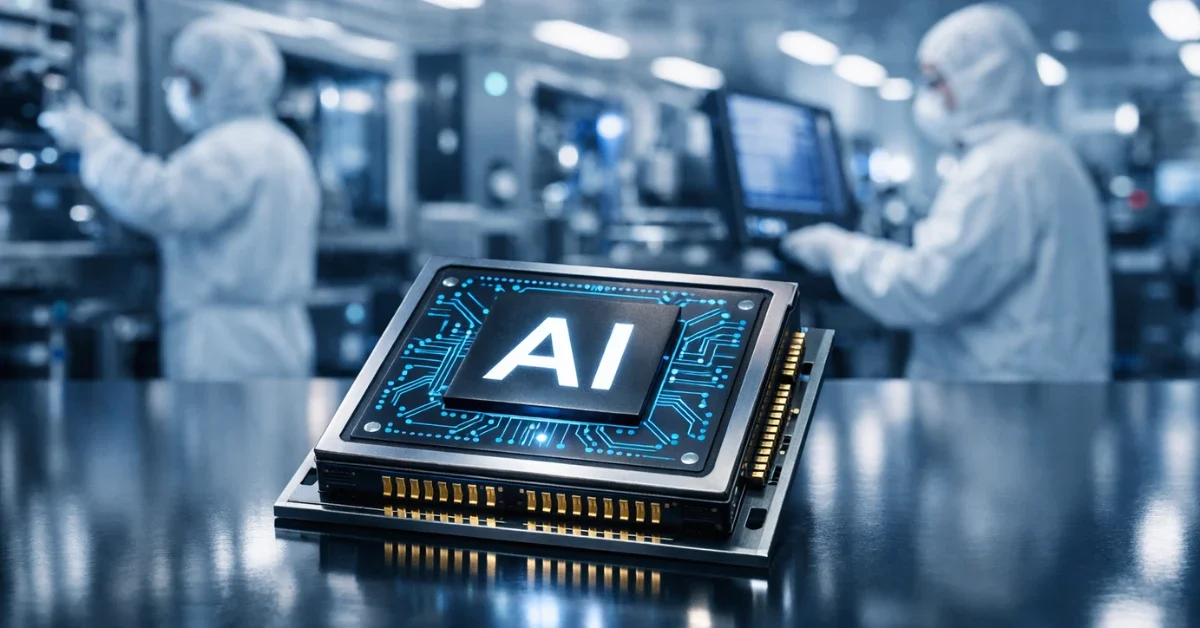
TikTok parent ByteDance is developing its own custom artificial intelligence chip — codenamed SeedChip — and is in active negotiations with South Korea’s Samsung Electronics to handle its manufacturing. The move marks a significant strategic push by the Chinese tech giant to secure greater control over its AI infrastructure as global demand for advanced processors surges.
Built for AI Inference
The chip is designed primarily for AI inference tasks — the process in which AI systems apply trained models to deliver real-time results, such as video recommendations or language model responses. ByteDance reportedly aims to receive its first engineering sample chips by the end of March. Production ambitions are substantial: the company plans to produce at least 100,000 units this year, with a long-term possibility of scaling that output to as many as 350,000 units.
SeedChip sits within a far broader investment push. ByteDance reportedly plans to spend more than 160 billion yuan — approximately $22 billion — on AI-related procurement in 2026 alone. More than half of that spending is expected to flow toward Nvidia chips, including the high-demand H200 model, as well as toward the development of its own in-house processors.
Memory Chips Are Central to the Deal
What makes the Samsung negotiations particularly noteworthy is that they extend well beyond chip fabrication. Discussions reportedly also cover access to memory chip supplies — hardware components that have become exceptionally difficult to source as the global AI infrastructure boom strains supply chains. Gaining reliable access to memory chips through this partnership would represent a significant competitive advantage for ByteDance in a market where shortages remain a serious constraint.
Samsung has declined to comment on the reported talks.
ByteDance Denies the Project
Despite detailed reporting from multiple outlets, ByteDance has pushed back firmly on the story. A company spokesperson told Reuters that the information about its in-house chip project was inaccurate — though no further explanation was provided. What, specifically, ByteDance considers inaccurate remains unclear.
Separately, ByteDance executive Zhao Qi reportedly acknowledged during an internal company meeting in January that the company’s AI models currently lag behind global leaders, including OpenAI. At the same time, Zhao expressed continued commitment to advancing ByteDance’s AI development efforts.
Joining Big Tech’s Custom Silicon Race
If the project moves ahead as reported, ByteDance would join a growing cluster of major technology companies that have invested in custom AI chips to reduce dependence on outside suppliers and tailor hardware performance to their specific workloads. Google, Amazon, and Microsoft have all pursued this path, each building proprietary processors designed around their own AI requirements.
For ByteDance, designing its own silicon could allow far more precise optimization for the workloads that drive its core business — short-form video recommendation, large language model operations, and enterprise cloud services. It would also give the company greater insulation from external supply chain volatility and reduce its heavy reliance on Nvidia’s products.
What ByteDance Is Really Building
ByteDance is much more than the company behind TikTok. Founded in 2012 by Zhang Yiming, the Beijing-headquartered firm operates an extensive portfolio across social media, digital entertainment, education, and enterprise software. Artificial intelligence has been woven into its products from the very beginning, underpinning the recommendation systems that power user engagement across all of its platforms.
The SeedChip initiative reflects an ambition to extend that AI-first approach all the way down to the hardware level. Rather than continuing to rely primarily on chips sourced from outside suppliers, ByteDance appears determined to build a more complete technology stack — spanning from AI model development down to the silicon layer — to support its long-term ambitions.
Whether the Samsung deal ultimately materializes on the terms reported, or takes a different shape, the direction of ByteDance’s strategy is unmistakable: the company is making a serious, resource-intensive bet on owning more of the AI infrastructure it depends on.
