

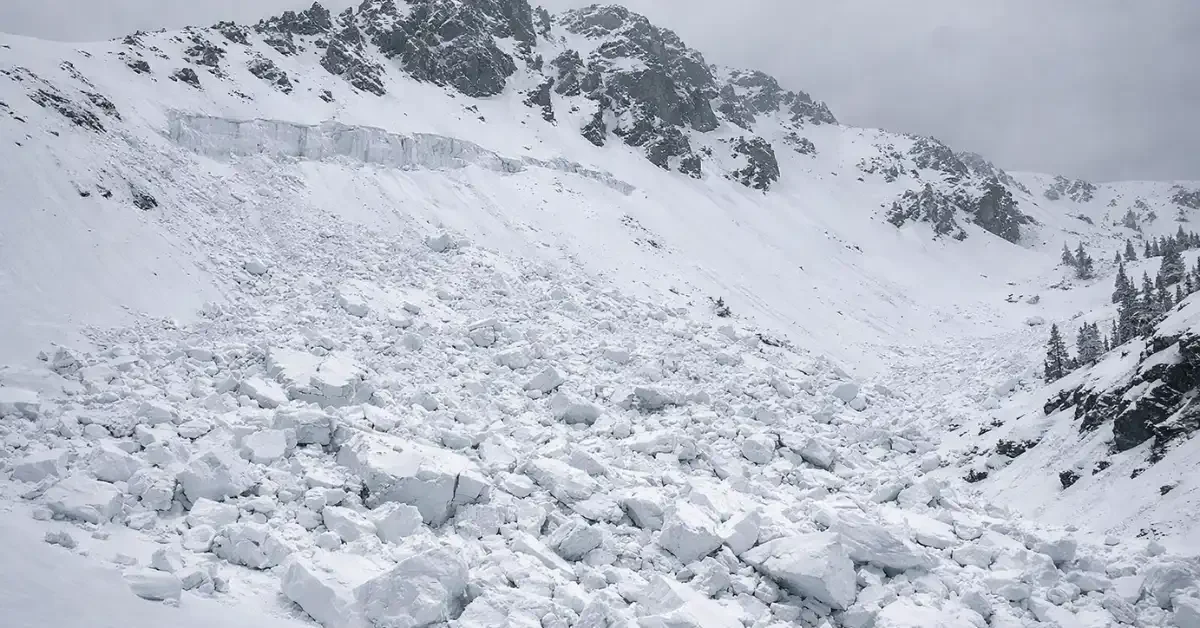
A massive avalanche that tore through the Castle Peak backcountry area of California’s Sierra Nevada mountains on February 17, 2026, has killed at least eight people, with a ninth presumed dead. The disaster, described as the deadliest avalanche in the United States in 45 years, struck a guided group of 15 skiers and guides northwest of Lake Tahoe and has now sparked both a criminal negligence investigation and a separate workplace safety inquiry.
The group was in the middle of a three-day backcountry expedition when the avalanche hit at around 11:30 a.m. local time. The slide, roughly comparable in size to a football field, moved so quickly that even a shouted warning from one group member who spotted it approaching could not prevent catastrophe. Six survivors were pulled to safety approximately six hours after the avalanche struck, with two of them requiring hospitalization. The nine who could not escape — seven women and two men, all between the ages of 30 and 55 — are presumed dead. The remains of eight have been located within the avalanche debris.
A Guided Trip Gone Terribly Wrong
The party of 15 was being led by Blackbird Mountain Guides, a professional guiding company. They had been staying in remote huts just north of Donner Pass and were on their way back when the wall of snow hit. Blackbird Mountain Guides was among the first to alert authorities about the disaster, along with distress signals from the group’s emergency beacons. Nevada County Sheriff Shannan Moon confirmed at a press conference that the operation has since shifted from search and rescue to recovery. One of the more painful details to emerge: one of the victims was the partner of a member of the search-and-rescue team responding to the disaster.
Three guides were among those killed. The six survivors included two women and four men, one of whom was also a guide from Blackbird Mountain Guides. Nevada County Sheriff’s Captain Russell “Rusty” Greene noted that the deceased were found relatively close to one another, reflecting how swiftly the avalanche consumed the group.
Six Victims Named by Their Families
Six of the women killed have been identified by their families as Carrie Atkin, Liz Clabaugh, Danielle Keatley, Kate Morse, Caroline Sekar, and Kate Vitt. They were close friends from the Bay Area, the Truckee region, and Idaho — and two of the women were sisters. A joint statement from their families, released through a spokesperson, captured the depth of the loss: “We are devastated beyond words. They were all mothers, wives and friends, all of whom connected through the love of the outdoors.”
The tragedy has sent shockwaves through the skiing community. The American Avalanche Association, a non-profit focused on avalanche education, released a public statement expressing solidarity: “We share in the pain with our fellow avalanche professionals and the broader winter sports community,” the organization said, extending condolences to all the families affected.
Criminal Negligence Investigation Launched
On Thursday, the Nevada County Sheriff’s Office announced it had opened a criminal negligence investigation running alongside the coroner’s inquiry into the deaths. In a formal statement, the office said it is “conducting an independent investigation to assess the potential involvement of criminal negligence,” while cautioning that the probe is still in its early phases and that it is too soon to identify any individuals who could face charges. The Nevada County District Attorney’s Office, which would ultimately decide whether to pursue those charges, declined to comment publicly.
California’s workplace safety agency, Cal/OSHA, has also launched its own separate investigation into Blackbird Mountain Guides. Sheriff Moon indicated that investigators would look closely at the decision to continue with the expedition in light of severe weather forecasts that were already predicting dangerous conditions across the Sierra.
Avalanche Warnings Were Already in Effect
The Sierra Avalanche Center had declared HIGH avalanche danger in the region and issued a special avalanche alert that was set to remain active through Friday, February 20. The center warned that storm slabs were forming across both wind-exposed and wind-sheltered terrain, with uncertainty surrounding buried weak layers beneath heavy storm snowpack. Officials explicitly advised against travel near or below avalanche-prone areas, calling conditions too hazardous for backcountry travel.
Ongoing winter storms have further delayed recovery efforts, preventing crews from safely retrieving the remaining victims from the mountain. Officials noted that the operation is not lacking in resources — but safe weather windows have been extremely limited.
Tragically, this is the second fatal avalanche near Castle Peak in 2026, following the death of a snowmobiler buried in the same area in January. The back-to-back incidents have intensified calls for greater vigilance across the Sierra Nevada backcountry and renewed scrutiny over how guided expeditions respond to extreme winter storm forecasts.
