

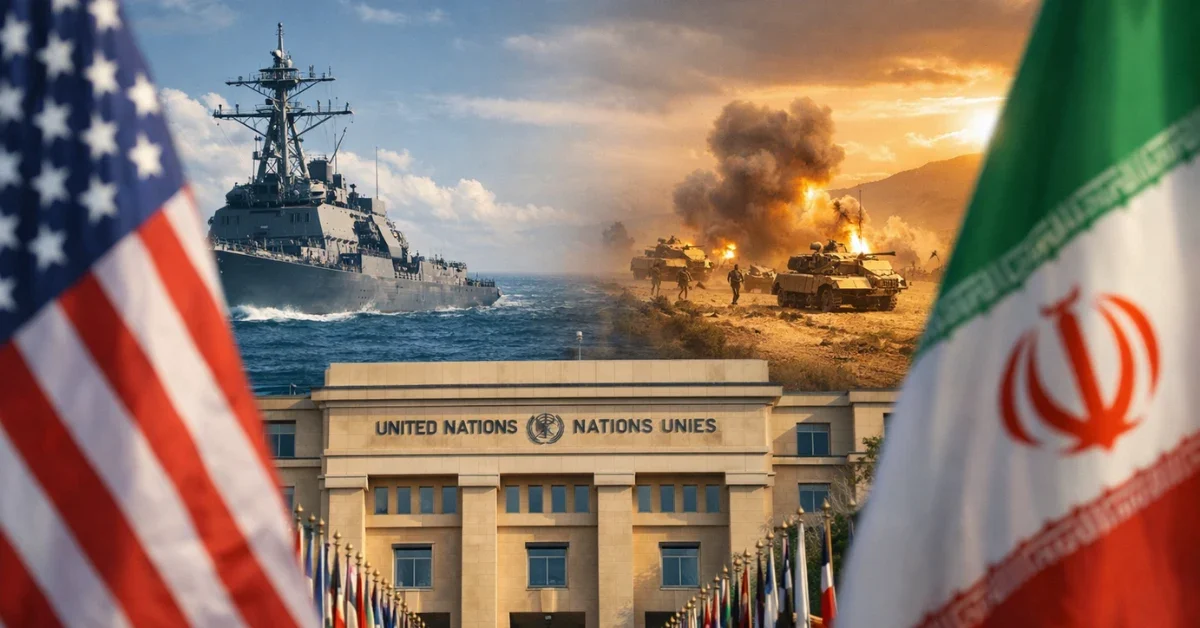
As high-stakes nuclear negotiations continue in Geneva, the White House has issued a stark warning to Tehran, urging the Iranian leadership to accept a diplomatic resolution or face the consequences of a rapidly expanding American military presence in the Middle East.
White House Press Secretary Karoline Leavitt told reporters on Wednesday that Iran would be “very wise” to make a deal with President Donald Trump and his administration. The warning comes as U.S. and Iranian officials concluded a second round of indirect talks, with both sides offering conflicting assessments of the progress made. While Iranian diplomats touted “good progress” on guiding principles, U.S. officials signaled that significant gaps remain, particularly regarding Washington’s “red lines.”
The diplomatic push is playing out against a backdrop of escalating military tension. The Pentagon has ordered the deployment of a second battleship to the region, and U.S. commanders are reportedly preparing for “extended operations” should the talks collapse. In response, Iran’s Islamic Revolutionary Guard Corps (IRGC) has launched major military exercises in the strategic Strait of Hormuz, raising fears of a broader conflict if diplomacy fails.
“A Prudent Choice”: The U.S. Ultimatum
The Trump administration is pursuing a strategy of “maximum pressure” combined with diplomatic outreach. Leavitt’s comments on Wednesday underscored the administration’s position that the window for a peaceful agreement is narrowing. “Iran would be very wise to make a deal with Trump and his administration,” she stated, noting that there are “numerous reasons and arguments” that could support a strike against Iran if necessary.
Vice President JD Vance reinforced this hardline stance, stating earlier this week that Tehran had not yet addressed all of Washington’s key security concerns. The U.S. delegation, led by negotiators Steve Witkoff and Jared Kushner, has reportedly pushed for a broader agreement that goes beyond nuclear restrictions. According to sources familiar with the discussions, the U.S. is seeking limits on Iran’s ballistic missile program and an end to its support for proxy groups like Hamas and Hezbollah—conditions that Tehran has historically rejected.
President Trump, who withdrew the U.S. from the original nuclear accord in 2018, remains optimistic about achieving a new deal but has not ruled out military action. Reports indicate he has recently conferred with top advisers about potential strike options, with some scenarios envisioning U.S. action as early as this weekend if the deadlock continues.
Military Escalation in the Gulf
While diplomats meet in Switzerland, the situation on the ground in the Persian Gulf is becoming increasingly volatile. The arrival of additional U.S. naval assets, described by President Trump as a “substantial naval fleet,” is intended to signal resolve. U.S. officials confirmed that military planners are readying options for sustained operations against Iranian targets if authorized.
Iran has responded to this pressure with its own show of force. The IRGC conducted drills in the Strait of Hormuz—a vital global shipping lane for oil—earlier this week. Some reports suggest the strait was temporarily closed for these exercises, a move interpreted by analysts as a reminder of Iran’s ability to disrupt global energy markets.
Despite the saber-rattling, Iranian Foreign Minister Abbas Araghchi has signaled openness to verification measures. Following a meeting with Rafael Grossi, head of the International Atomic Energy Agency (IAEA), Araghchi expressed a willingness to develop a coherent framework for future negotiations. However, Iran maintains that it will not compromise on its right to enrich uranium for civilian purposes or discuss its missile arsenal until sanctions are lifted.
Shadows of Past Strikes and Domestic Unrest
The current negotiations are shadowed by the violence of the recent past. Negotiators are attempting to avoid a repeat of the events from June of last year, when a breakdown in talks was followed by a joint U.S.-Israeli bombing campaign targeting Iranian nuclear sites. Since those strikes, Tehran claims to have halted its uranium enrichment activities, though Western allies remain skeptical of its long-term intentions.
The Iranian regime is also grappling with severe internal challenges. The country has been rocked by nationwide protests driven by a cost-of-living crisis and the economic toll of international sanctions. These demonstrations were met with a violent crackdown that resulted in thousands of casualties.
Calls for decisive action are also growing within the U.S. political sphere. Senator Lindsey Graham, speaking from Israel on Monday, advocated for a tougher approach, suggesting that history would judge the U.S. poorly if it failed to stop the Iranian regime. “We’ve got a chance here to stop this regime,” Graham said, reflecting the views of hawks who believe conditions for a strike are aligning.
As the talks in Geneva pause, the region remains on a knife-edge. With both Washington and Tehran ramping up their military readiness, the next few days could determine whether the standoff ends in a landmark agreement or a new war.
