

The Department of Health and Human Services (HHS) and the U.S. Department of Agriculture (USDA) have released the Dietary Guidelines for Americans, 2025–2030, marking what officials call a “historic reset” of federal nutrition policy. Led by HHS Secretary Robert F. Kennedy Jr. and Agriculture Secretary Brooke Rollins, the updated guidance shifts focus toward “real food,” significantly increasing the recommended intake of protein and full-fat dairy while declaring a crackdown on highly processed products.
“Eat Real Food” and End the War on Fats
The new framework, aligned with the administration’s “Make America Healthy Again” (MAHA) initiative, abandons previous low-fat mandates in favor of a “food as medicine” approach. Secretary Kennedy emphasized a clear message during the White House briefing: “Eat real food.”
A central pillar of the new guidelines is a robust emphasis on protein. The recommendations urge Americans to prioritize protein at every meal, setting a target of 1.2 to 1.6 grams per kilogram of body weight daily—a significant increase from prior standards. Unlike the scientific advisory committee’s earlier suggestion to prioritize plant-based sources, the final guidelines encourage high-quality protein from both animal and plant origins, including red meat, poultry, seafood, eggs, beans, and legumes.
In a major departure from decades of nutrition advice, the guidelines seek to “end the war on healthy fats.” The new policy explicitly supports the consumption of full-fat dairy products without added sugars, replacing previous recommendations for low-fat or fat-free options. Officials advise obtaining the bulk of fats from whole food sources, such as animal proteins, avocados, nuts, seeds, and olive oil. While the text retains the specific limit of keeping saturated fat under 10% of total daily calories, the broader messaging—and a new visual guide featuring red meat and skin-on poultry—suggests a more permissive approach to animal fats.
Cracking Down on Processed Foods
The 2025–2030 update takes a firm stance against “highly processed” foods, advising Americans to sharply reduce their intake of products like chips, cookies, candy, white bread, and refined carbohydrates. A new government factsheet states that these items, often loaded with added sugars and sodium, can disrupt digestion and contribute to chronic disease.
The guidelines stop short of using the term “ultra-processed foods” due to the lack of a standardized definition, a decision that has drawn mixed reactions from industry and health advocates. Instead, the focus remains on minimizing “highly processed packaged, prepared, and ready-to-eat foods.” This shift is accompanied by stricter advice on added sugars, particularly for children; the guidelines notably recommend that children aged 5 to 10 avoid added sugars entirely.
Visual Changes and Clinical Confusion
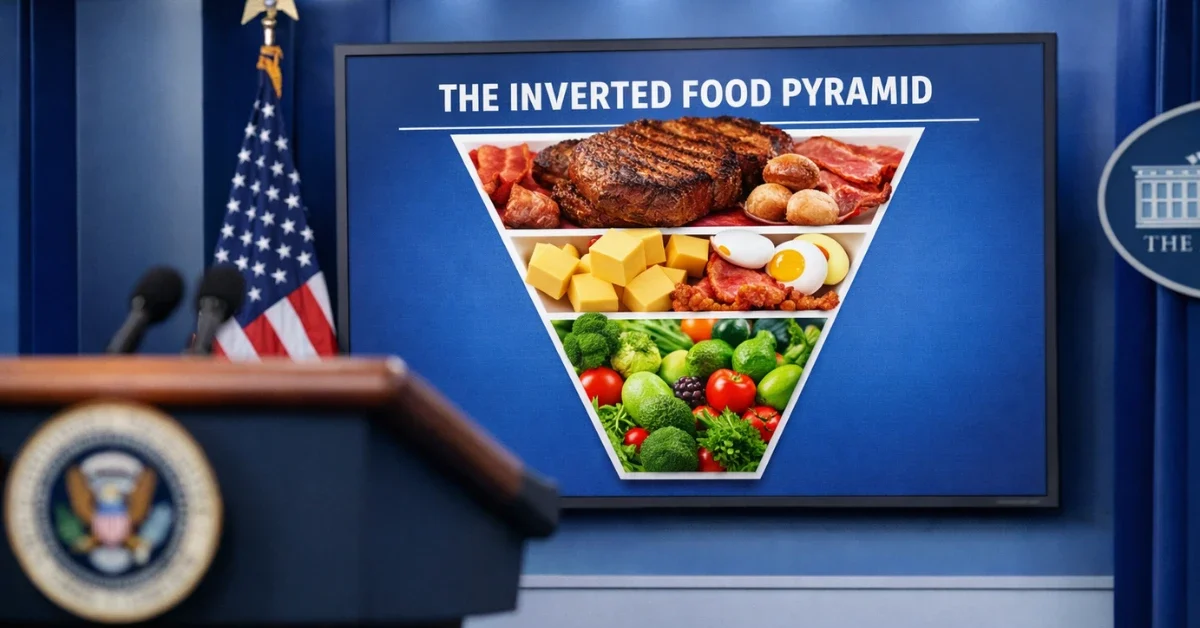
To reinforce these shifts, the administration has introduced a new visual representation of a food pyramid, which reportedly supersedes the “MyPlate” diagram established during the Obama administration. This updated graphic places meats, cheese, and vegetables at the top, creating what some observers describe as an “inverted pyramid.”
However, the disconnect between the new visuals and the detailed written standards has sparked confusion among healthcare providers. Experts note that while the visual guide prominently features red meat and full-fat dairy, the written text still caps saturated fat intake at 10% of calories—a balance that clinicians warn may be difficult for the average consumer to achieve without detailed counseling. Nutritionists have pointed out that following the visual cues could easily lead individuals to exceed the recommended limits for saturated fat and sodium.
Mixed Reactions from Health Organizations
The release has generated a complex response from the medical community. The American Heart Association (AHA) welcomed the strong stance against added sugars and highly processed foods, noting these elements align with long-standing science on cardiovascular health. However, the AHA expressed concern regarding the new advice on red meat and salt seasoning, warning that these recommendations could inadvertently drive up sodium and saturated fat consumption, which are primary drivers of heart disease.
While the AHA continues to advocate for low-fat dairy, the administration argues that previous guidelines “demonized” protein and fats to the detriment of public health. As the rollout continues, officials maintain that this “historic reset” will empower Americans to combat chronic disease by returning to the basics of nutrient-dense, whole foods.
