

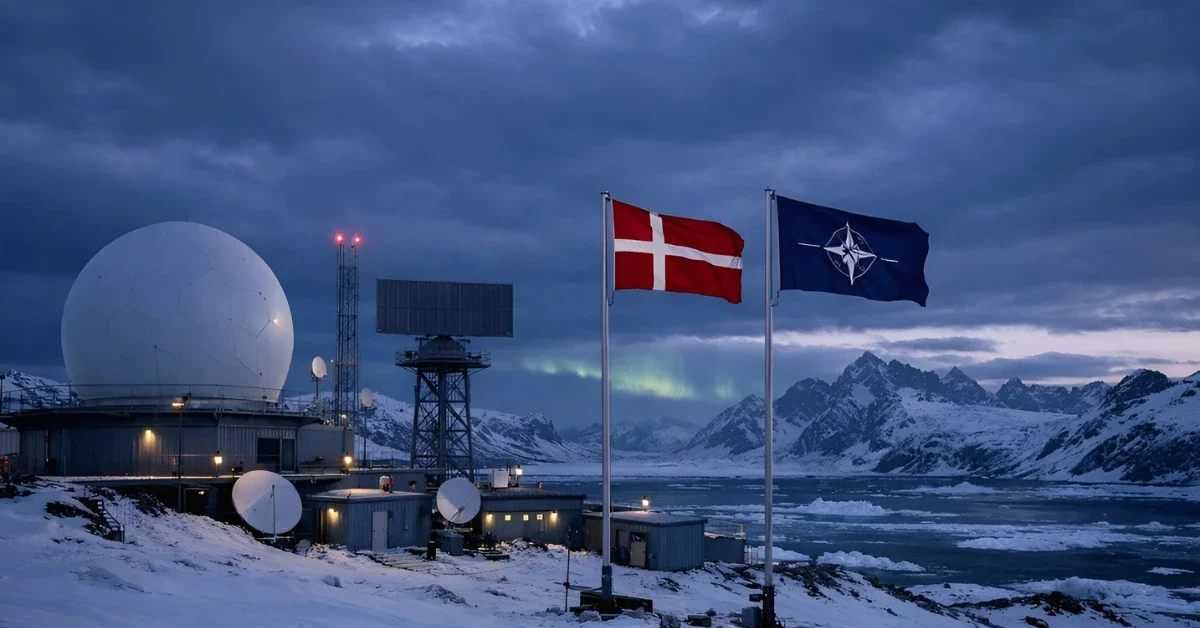
NATO has officially initiated military planning for a new mission in the High North, dubbed “Arctic Sentry,” to bolster security across the region. The move comes as the alliance seeks to address lingering geopolitical tensions surrounding Greenland and ensure stability in the Arctic. The planning phase was confirmed by alliance officials on Tuesday, February 3, marking a significant step in NATO’s strategic focus on the region.
“Arctic Sentry” to Enhance Vigilance
According to Colonel Martin O’Donnell, a spokesperson for NATO’s Supreme Headquarters Allied Powers Europe (SHAPE), preparations are now “in progress” for the operation, which is formally classified as a “NATO enhanced vigilance activity.” Speaking to reporters, O’Donnell stated that the mission aims to “further strengthen NATO’s posture in the Arctic and High North.”
While specific operational details remain under wraps as planning has just commenced, the directive for the mission appears to have come from the highest levels of the alliance’s military command. Reports indicate that U.S. General Alexus G. Grynkewich, a NATO commander, ordered concrete plans to begin for the operation. The initiative reflects a broader push within the alliance to increase its visible presence and monitoring capabilities in a region that has become increasingly central to global security discussions.
The launch of “Arctic Sentry” follows a period of intense diplomatic activity involving the United States, Denmark, and Greenland. The mission appears to be part of a broader “framework” designed to address American security concerns while respecting the sovereignty of the Kingdom of Denmark.
Diplomatic Context and Regional Stability
The decision to move forward with a dedicated NATO mission follows weeks of strained relations triggered by U.S. President Donald Trump’s renewed interest in Greenland. President Trump had previously insisted that the United States needed to exercise control over the island to mitigate security threats from Russia and China. These assertions caused significant friction within the alliance, prompting urgent talks between Washington, Copenhagen, and Nuuk.
Tensions appeared to ease following a meeting between President Trump and NATO Secretary General Mark Rutte in Davos. After the talks, President Trump indicated that a “framework” agreement had been reached to safeguard U.S. interests, leading him to step back from earlier demands regarding ownership of the territory. Rutte subsequently confirmed that he and the President had discussed how NATO allies could work collectively to ensure Arctic security.
Despite this diplomatic progress, wariness remains among Greenlandic officials. Greenland’s Prime Minister, Jens-Frederik Nielsen, recently warned that the U.S. continues seeking “paths to ownership and control over Greenland.” The new NATO mission is seen by many analysts as a compromise—a way to demonstrate a serious commitment to Arctic security and satisfy U.S. concerns without altering the political status of the island.
Danish officials have actively supported this multilateral approach. Danish Defence Minister Troels Lund Poulsen revealed earlier in January that Denmark and Greenland had jointly proposed the establishment of a NATO mission. “We have put forth this proposal,” Poulsen said following discussions with Secretary General Rutte and Greenland’s Minister Vivian Motzfeldt. He expressed optimism that the alliance could create a framework for implementation that aligns with the wishes of the Greenlandic government.
Expanding International Involvement in the Arctic
As NATO formalizes its plans, other nations are also ramping up their engagement in the region. The United Kingdom has been holding discussions with European allies regarding security measures in the High North. While British officials described talks on deterring Russian activity as “business as usual,” media reports have suggested that London is consulting with Germany and France about potential deployments to safeguard Greenland. British Defence Minister John Healey noted that he anticipates further discussions on these measures at the upcoming NATO Defense Ministers meeting in Brussels.
Canada is also strengthening its diplomatic footprint in Greenland. A new Canadian consulate is set to actively commence operations in Nuuk this week. To mark the occasion, Nivi Rosing, a prominent member of the Greenlandic parliament, is attending the inauguration alongside a high-level Canadian delegation. The delegation includes Canada’s Minister of Foreign Affairs, Anand, and Governor General Mary Simon, the first Indigenous person to hold the office.
Global Affairs Canada has stated that the consulate’s priorities will include strengthening ties between the two neighbours and enhancing collaboration on Arctic governance and security. This move complements the resolution of the Hans Island border dispute between Canada and Denmark in 2022, which has facilitated greater freedom of movement for Inuit communities across the territorial boundary.
Current Operations and Future Steps
While “Arctic Sentry” is in the planning stages, military activity in the region is already ongoing. Denmark is currently leading “Operation Arctic Endurance,” a NATO exercise taking place in Greenland. This existing operation underscores the alliance’s capability to operate in the harsh Arctic environment, even as it prepares to expand its posture with the new vigilance activity.
The location for the upcoming “Arctic Sentry” exercises has not yet been publicly confirmed. However, the rapid progression from political proposal to military planning highlights the urgency with which NATO is treating the situation. With the NATO Defense Ministers scheduled to meet in Brussels next week, the Arctic is expected to remain a top agenda item as allies refine their strategies to maintain stability and unity in the High North.
