

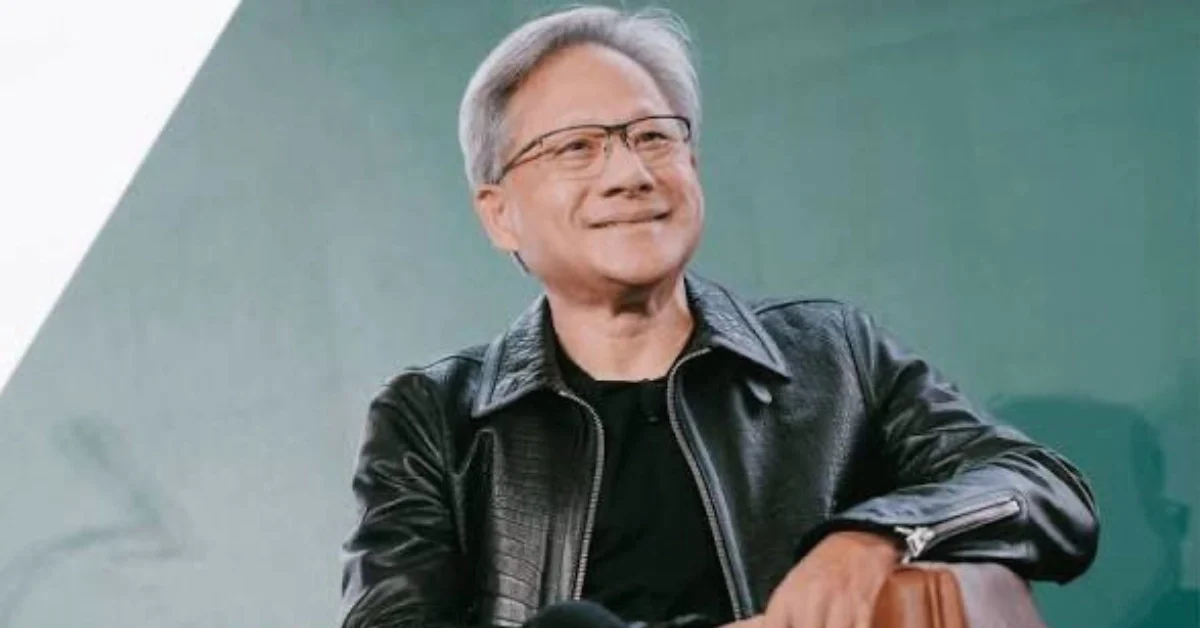
At the annual Nvidia GTC 2026 developer conference in California, CEO Jensen Huang projected that the tech giant will generate at least $1 trillion in cumulative revenue through 2027 from artificial intelligence chips and infrastructure. However, despite these massive financial forecasts, Wall Street investors remained unconvinced, sending the $4 trillion company’s stock lower during the founder’s two-and-a-half-hour keynote address.
The nervousness felt by financial markets stood in stark contrast to the buzzing atmosphere of Silicon Valley. Speaking to a crowd of over 18,000 attendees at a hockey arena, the leather-jacket-clad executive outlined how the top AI chipmaker plans to adapt to a rapidly evolving technological landscape. Huang doubled his previous revenue estimate of $500 billion, driven by surging demand for Nvidia’s Blackwell and Vera Rubin chips, as well as updated networking gear.
Record Projections and Surging Compute Demand
During his expansive presentation, Huang estimated that the AI agent ecosystem represents a $35 trillion market, while the physical AI and robotics sector presents a $50 trillion opportunity. He noted that global computing needs have increased a million times over the past two years.
“Every single enterprise company, every single software company in the world needs an AI agent strategy,” Huang told the audience. He explained that this industry will offer specialized agents rather than just basic tools. To illustrate the scale of the company’s reach, Huang claimed that Nvidia’s technology and platforms currently touch nearly 100 percent of the world’s $100 trillion global industries.
Despite these staggering numbers, Huang did not provide specific details on the underlying metrics of his $1 trillion revenue forecast.
The Shift to AI Inference and Major Partnerships
A key element of Nvidia’s future strategy is a pivot from AI training to real-time inference, where trained models execute queries and tasks at scale. Declaring that “the inference inflection has arrived,” Huang framed this shift as a multi-trillion-dollar opportunity where Nvidia’s GPUs provide superior cost efficiency and performance. To accelerate its push into inference processing, Nvidia secured a multi-billion-dollar licensing deal with AI startup Groq, which includes hiring Groq’s top engineering talent.
The conference also served as a launchpad for numerous high-profile corporate partnerships. Amazon Web Services announced plans to purchase one million GPUs by the end of 2027, integrating Blackwell and Rubin processors alongside Groq technology. Microsoft Azure is adding Nvidia’s Cosmos world models and its Alpamayo open models for robotics, which will be accessible via GitHub.
In the automotive and transportation sectors, Nvidia revealed agreements with BYD, Hyundai, Nissan, Geely, and Uber. Additionally, sovereign AI tie-ups were announced with Palantir for secure deployments in regulated sectors, and Indian startup Sarvam AI for localized model development. Nebius Group also committed to building multi-billion-dollar gigawatt-scale AI factories. Furthermore, Huang confirmed that Samsung is manufacturing Nvidia’s new AI chips, news that caused the South Korean company’s shares to rise.
Wall Street’s Uncertain Reaction
Despite Nvidia reporting a 73 percent year-over-year revenue increase in its last quarter, the financial sector reacted coolly. Analysts suggest that investors are weighing the rapid pace of innovation against fears of a potential AI bubble.
Daniel Newman, CEO of Futurum, observed that markets inherently dislike uncertainty. However, he argued that enterprise AI adoption is approaching a rapid inflection point, suggesting that skeptical headlines are often based on outdated, six-month-old survey data. Kevin Cook, a senior equity strategist at Zacks Investment Research, echoed this sentiment. He noted that the broader economy is effectively orbiting around Nvidia as traditional companies, such as Caterpillar, adopt physical AI and build upon these new platforms.
National Security and AI Policy Rhetoric
Beyond financial and technical updates, Huang used the GTC stage and a separate appearance on the No Priors podcast to address the political climate surrounding artificial intelligence. He argued that the greatest national security risk to the United States is not AI going rogue, but rather Americans becoming so fearful and paranoid that domestic adoption slows down while rivals like China advance without similar safety guardrails.
“Warning is good, scaring is less good, because this technology is too important to us,” Huang stated. He emphasized that AI is simply computer software, adding, “It is not a biological being. It is not alien. It is not conscious.”
Huang criticized “doomer” narratives embedded in Washington policy circles, calling some of their claims outright inventions. His comments follow a public dispute between major Nvidia customer Anthropic and the Trump administration. After Anthropic CEO Dario Amodei insisted on contract terms preventing the use of its products for domestic surveillance and fully autonomous weapons, the administration declared Anthropic a supply-chain risk.
While Huang did not take sides in Anthropic’s resulting legal battle with the government, he expressed strong confidence in the startup’s future. He predicted that Anthropic could surpass $1 trillion in revenue by 2030, suggesting that Amodei has been conservative with his own internal estimates.
