

U.S.-Iran nuclear talks in Oman wrapped up after two rounds of indirect discussions, with officials indicating another round could happen in the coming days. The negotiations appeared to circle back to basic questions about how the sides want to structure talks over Iran’s nuclear program, even as military and political tensions remain high.
Iran and the United States held the talks in Muscat, Oman’s capital, and Iranian Foreign Minister Abbas Araghchi said the discussions should take place in a calm atmosphere without threats or pressure. Araghchi said refraining from threats and pressure is a prerequisite for dialogue and added that Iran expects that approach to be observed if talks are to continue.
Military pressure in the room
For the first time in talks between the countries, the United States brought its top military commander in the Middle East to the table, according to the report. US Navy Admiral Brad Cooper, who leads US Central Command, attended in dress uniform, a detail presented as a reminder that the aircraft carrier USS Abraham Lincoln and other warships were positioned off Iran’s coast in the Arabian Sea.
The report said President Donald Trump has repeatedly threatened to use force to push Iran toward an agreement, and it linked the carrier’s earlier deployment to Iran’s crackdown on nationwide protests. It also said the US side at the talks included Middle East special envoy Steve Witkoff and Jared Kushner, Trump’s son-in-law, and that the United States did not immediately comment publicly on the talks.
What Iran and Oman said next
Araghchi said diplomats would return to their capitals, signaling the round had ended. He also described the Muscat discussions as occurring over multiple rounds and said they focused mainly on finding a framework for further negotiations.
Araghchi said Iran would consult with its capital on next steps and then convey the results to Oman’s foreign minister. He also said mistrust is a serious challenge for the negotiations and argued it must be addressed before talks can move to a deeper level.
Omani Foreign Minister Badr al-Busaidi said the talks were useful for clarifying Iranian and American thinking and for identifying areas where progress might be possible. Al-Busaidi said the sides aim to reconvene “in due course,” while Oman described the discussions as an effort to establish foundations for resuming diplomatic and technical negotiations rather than a direct step toward a nuclear deal or broader de-escalation.
War fears and new sanctions
The report said Gulf Arab nations fear a US strike on Iran could trigger a regional war that could pull them in. It added that Iran has vowed a harsh response to any strike and has warned neighboring countries hosting US bases that they could be in the firing line.
In the days before the Muscat talks, the report said US forces shot down an Iranian drone near the USS Abraham Lincoln and that Iran tried to stop a US-flagged vessel in the Strait of Hormuz. It also said that, earlier in the week, an adviser to Iran’s supreme leader threatened that Iran would retaliate against Israel in an “unprecedented” way in the event of an attack, including striking “at the heart of Tel Aviv,” and that Prime Minister Benjamin Netanyahu said Israel would respond powerfully if Iran attacked.
Shortly after the talks ended, the United States announced new sanctions targeting shipping entities and vessels, aimed at curbing Iran’s oil exports, though the report said it was unclear whether the move was tied to the outcome of the negotiations. The report said the sanctions included targeting 14 vessels and quoted State Department spokesperson Tommy Pigott describing the administration as committed to driving down Iran’s “illicit oil and petrochemical exports” under a “maximum pressure” campaign.
The issues still on the table
The report said the talks had initially been expected to take place in Turkey in a format that would have included regional countries and would have included topics such as Iran’s ballistic missile program and Iran’s crackdown on protests, but it said Iran appeared to reject that approach in favor of focusing only on its nuclear program. It added that Tehran has maintained the talks will be limited to the nuclear file, while also noting uncertainty about what Iran is willing to negotiate in practice.
The report said that before a June war, Iran was enriching uranium up to 60% purity, which it described as a short technical step from weapons-grade levels. It also cited the International Atomic Energy Agency as saying Iran is the only country enriching to that level that is not armed with a nuclear bomb.
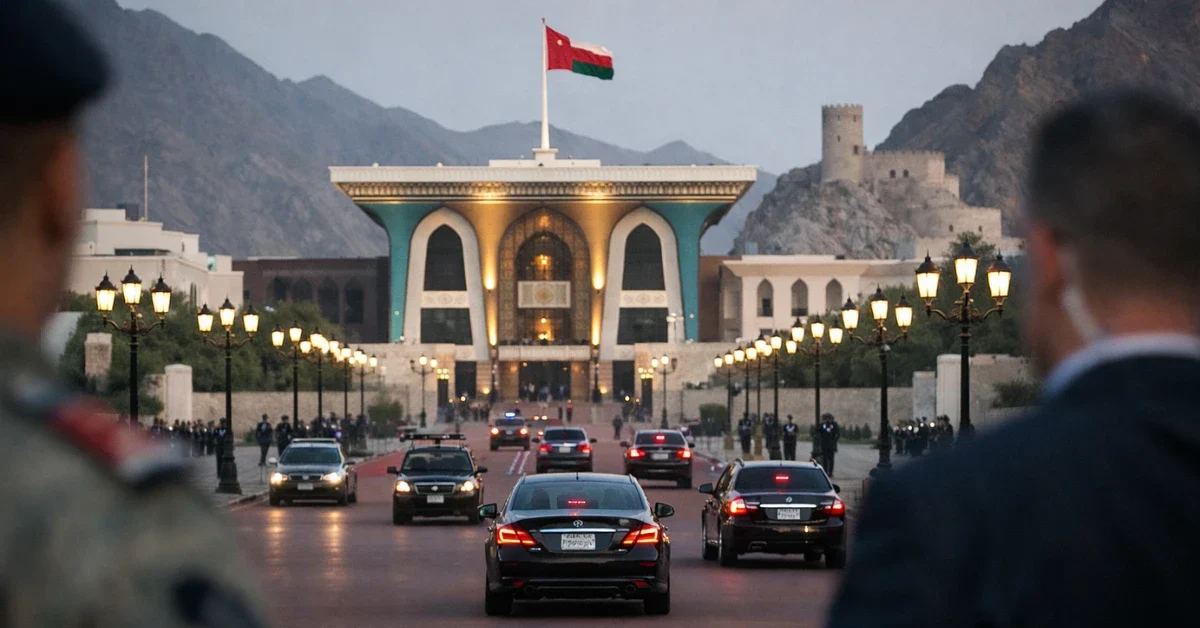
It said Iran has refused requests from the IAEA to inspect sites bombed in the June conflict, raising concerns among nonproliferation experts, and it said Iran had already restricted IAEA inspections since Trump’s 2018 decision to withdraw the United States from the 2015 nuclear deal. The report also described the Muscat venue as a palace near the city’s international airport and said Associated Press journalists saw Iranian and American officials arriving separately.
The report further said Al Jazeera had described a proposal involving Egypt, Turkey, and Qatar, under which Iran would halt enrichment for three years, send highly enriched uranium out of the country, and pledge not to initiate the use of ballistic missiles. It added that Russia signaled it would take the uranium, while Iran was described as saying ending its program or shipping out the uranium would be nonstarters.
The report also said US Secretary of State Marco Rubio argued the talks should cover Iran’s nuclear program, its ballistic missiles, its support for proxy groups in the region, and the “treatment of their own people,” and it quoted Rubio saying he was not sure a deal was possible but the United States would try to find out.
