

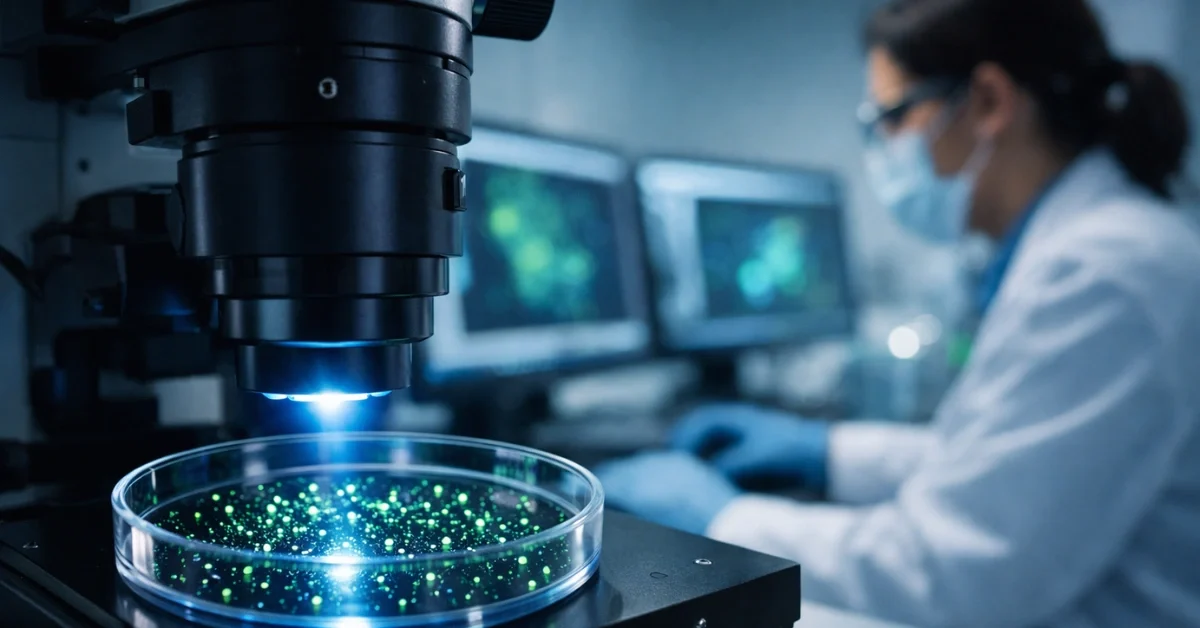
Scientists have outlined a new fluorescent strategy designed to help researchers track microplastics and nanoplastics inside living organisms in real time, including as particles move, change, and break down. The approach aims to address a major research gap: many current methods can measure what is present in a sample, but cannot show how these particles behave dynamically over time inside a living system.
Microplastics and nanoplastics have been reported across the environment, from ocean depths to agricultural soils, and they have also been detected in human tissues, including blood, liver, and brain samples, according to the sources summarizing the study. At the same time, the global scale of plastic production remains vast, with the sources stating that annual production now exceeds 460 million tons, alongside millions of tons of microplastics and nanoplastics entering the environment each year.
Why tracking is hard today
A key challenge is that widely used detection approaches can be destructive. The sources describe methods such as infrared spectroscopy and mass spectrometry as requiring tissue processing that prevents researchers from observing the same organism over time as particles travel, accumulate, transform, or degrade.
Fluorescence imaging is presented as a promising alternative because it can support visualization, but existing labeling can struggle in biological settings. The study summaries say current fluorescence labeling may face problems such as fading signals, dye leakage, and reduced brightness in complex biological environments.
What the new fluorescent strategy does
The proposed method is described as a “fluorescent monomer controlled synthesis strategy,” which builds fluorescent components into the plastic polymer itself rather than coating particles with an external dye. In the full journal article, this is framed as a way to reduce issues linked to surface adsorption or encapsulation approaches, such as uneven fluorescence and dye leakage that could interrupt tracking, especially after biodegradation.
The strategy uses aggregation-induced emission (AIE) materials, which the sources describe as producing stronger light when aggregated, helping reduce signal loss and improve stability during imaging. Because fluorescent groups are distributed throughout each particle, the sources say both intact plastics and smaller fragments created during degradation can remain visible, supporting “end-to-end” tracking across the particle life cycle.
The approach is also presented as tunable. The summaries state researchers can adjust brightness, emitted color or wavelength, and particle size and shape, and the journal article explains this can be done by controlling factors such as monomer choices and labeling ratios during synthesis.
What it could change for health research
The sources tie this technical goal to a bigger question: what microplastics and nanoplastics do after they enter living organisms. In the study summaries, corresponding author Wenhong Fan says many current methods provide only a snapshot, making it difficult to directly observe how particles travel, accumulate, transform, or break down.
The summaries also connect microplastics research to potential health concerns reported in laboratory studies. They state that lab experiments have linked exposure to inflammation, organ damage, and developmental effects, while also emphasizing that a major scientific gap remains in understanding behavior inside living systems.
Separate from the fluorescent-method study, a 2025 review article in Diagnostics describes microplastics as plastic particles under 5 mm and discusses evidence that they have been found in multiple types of respiratory-related human samples, including nasal lavage fluid, bronchoalveolar lavage fluid, sputum, pleural fluid, and lung tissue. That review also notes that microplastics research faces methodological constraints, including contamination risks and differences in detection limits across techniques such as μ-FTIR and Raman microscopy.
What the researchers say comes next
Across the summaries and the journal article, the new strategy is described as still undergoing experimental validation. Even so, the sources say its design is grounded in established principles from polymer chemistry and biocompatible fluorescence imaging, and it is presented as a potential tool to study interactions between microplastics and biological tissues and organs.
The study summaries argue that clarifying transport and transformation processes inside organisms is important for assessing ecological and health risks, and they suggest dynamic tracking could help move beyond exposure counts toward a better understanding of toxicity mechanisms. The sources add that as concern over plastic pollution grows, tools that reveal what happens inside living systems may support improved risk assessment and help inform future regulatory decisions.
