

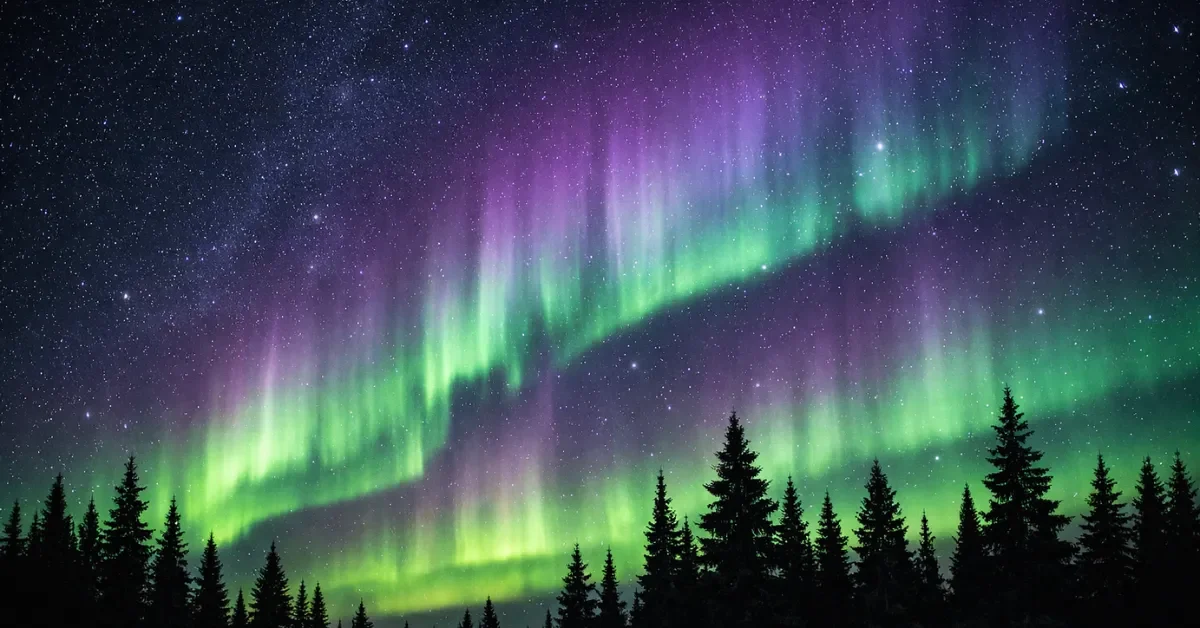
A spectacular display of the aurora borealis is expected to illuminate the sky across the northern United States tonight. As solar activity increases ahead of the spring equinox, skywatchers have a prime opportunity to witness the March northern lights in all their vibrant glory. The National Oceanic and Atmospheric Administration has forecasted that optimal viewing conditions will align for millions of residents, provided the weather cooperates.
For those eager to catch this celestial event, the March northern lights are anticipated to be visible across 10 specific states. Because this time of year is widely known as aurora season, geomagnetic activity often peaks, offering brighter and more expansive light shows than usual. Stargazers should prepare for late-night viewing to get the best possible experience.
Where and When to See the Aurora Borealis Tonight
If the skies remain clear, the northern lights are expected to be visible in 10 states along the Canadian border. These include Alaska, Washington, Idaho, Montana, North Dakota, South Dakota, Minnesota, Wisconsin, Michigan, and Maine. If the geomagnetic activity surpasses current expectations, the glowing lights could potentially dip even further south into areas like Nebraska, Iowa, and New York.
The best time to look up is generally between 10 p.m. and 2 a.m. local time, though viewing windows can sometimes extend until 4 a.m. This late-night period is when geomagnetic activity typically reaches its peak. To maximize the chances of seeing the colorful display, experts recommend traveling to a dark location far away from the light pollution of cities. Once settled in a dark area, viewers should allow their eyes to adjust for at least 20 minutes and gaze directly toward the northern horizon.
Why March is an Active Month for Auroras
The weeks leading up to and immediately following the spring equinox on March 20 are recognized by astronomers as aurora season. During this window, the way solar wind interacts with Earth’s magnetosphere makes geomagnetic storms much more likely to occur.
This heightened activity is driven by a phenomenon known as the Russell-McPherron Effect. During the equinox, the north-pointing magnetic field of the Earth and the south-pointing magnetic field from the sun—carried by solar wind—can effectively cancel each other out. This interaction opens a temporary gap in Earth’s magnetic field, allowing the solar wind to easily flow toward the magnetic poles and generate the vibrant light displays. The current surge in activity is specifically tied to a high-speed stream of solar wind escaping from a negative polarity coronal hole in the sun’s atmosphere.
The Science Behind the Light Display
Northern light displays happen when fast-moving solar wind collides with the atoms and molecules present in Earth’s upper atmosphere. When the charged particles from the sun clash with these atmospheric elements, they cause the atoms to emit a bright glow. This process creates the mesmerizing spectrum of light that dances across the night sky.
The frequency of these displays is also tied to the sun’s 11-year cycle. Although the current solar maximum—the peak period of solar activity—is coming to a close after peaking recently, the sun continues to emit strong solar activity. This lingering energy is responsible for the frequent and intense geomagnetic storms that have been lighting up the northern hemisphere.
What the Northern Lights Tell Us About Space
While the aurora borealis is famous for its stunning beauty, it also serves as a crucial tool for scientists studying space weather. The lights provide valuable information about the upper atmosphere, revealing details about its density, composition, flow speeds, and the strength of its electrical currents.
Understanding these factors helps researchers map Earth’s magnetic field and observe how it extends dynamically into space. More importantly, the auroras act as a visible indicator of our planet’s protective magnetic shield. By deflecting and channeling harmful particle radiation toward the north and south poles, the magnetic field prevents this radiation from raining down on the surface. Ultimately, these brilliant light shows are a reminder that Earth’s magnetic shield is actively working to keep the planet safe for life.
