

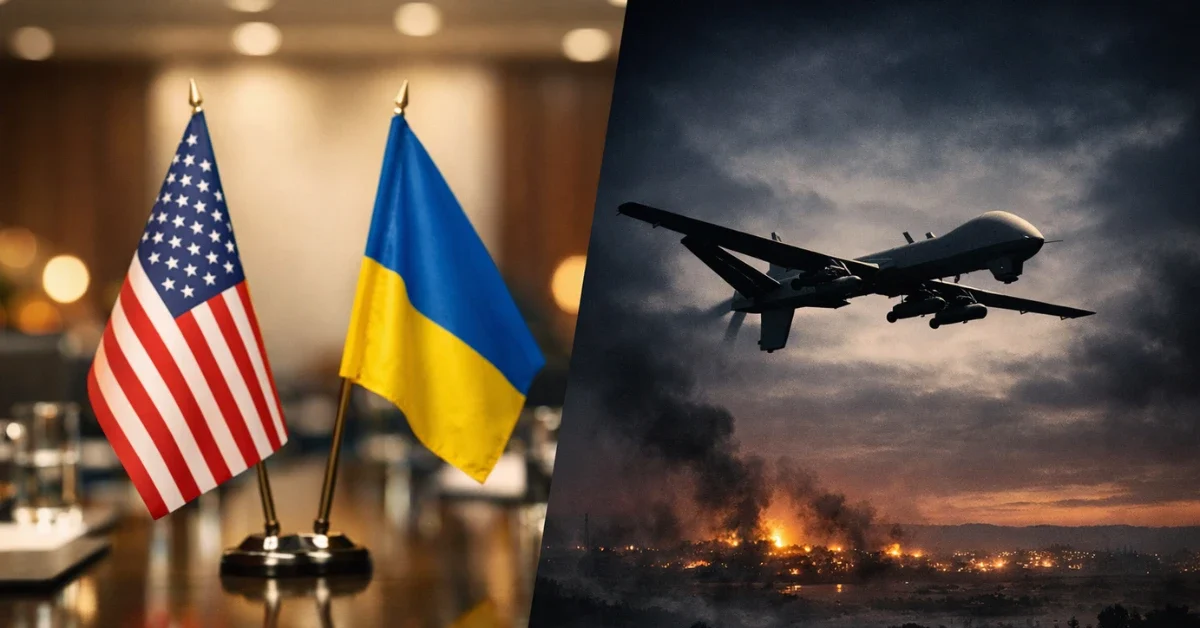
Diplomatic efforts are taking center stage this weekend as peace talks between Ukraine and the United States officially resume in Florida. Scheduled to continue through Sunday, March 21, 2026, these high-level discussions represent a critical juncture in the ongoing conflict. As the international community watches closely, Ukrainian officials have emphasized that dialogues aimed at resolving the war remain a top priority. In conjunction with these meetings in the United States, Ukrainian President Volodymyr Zelenskyy has publicly stated that his administration wants a clear timeline for the next round of negotiations involving Russia.
These major developments highlight the complex dual reality of the current situation. While diplomats sit down at the negotiating table in Florida to hash out potential frameworks for peace, the military conflict on the ground and in the skies continues to escalate to unprecedented levels. The pursuit of a negotiated settlement is happening simultaneously with some of the most intense combat operations seen since the invasion began, demonstrating that neither side has halted military operations during these discussions.
Unprecedented Aerial Assaults and Evacuations
In one of the largest aerial operations of the entire war, Ukraine recently launched an extraordinary offensive, sending nearly 300 drones into Russian territory. This massive drone strike underscores a significant shift in military tactics, showcasing an increasing capacity to project power across the border. The sheer scale of launching almost 300 unmanned aerial vehicles at once marks a historic escalation in aerial warfare, pointing to highly coordinated efforts by the Ukrainian military to disrupt operations deep inside Russia.
However, the situation on the ground within Ukraine’s borders remains deeply precarious. In stark contrast to the offensive drone strikes, defensive realities have forced drastic humanitarian measures. Local authorities have explicitly ordered children to evacuate from a key Ukrainian stronghold. This mandatory evacuation order comes as Russian military forces continue to advance on the position. The directive to remove children from the frontline city highlights the severe and immediate danger posed by the advancing Russian troops, as local administrations prioritize the safety of the most vulnerable civilian populations.
Ukraine Shares Anti-Drone Expertise in the Middle East
Beyond the immediate theater of war in Eastern Europe, the conflict’s technological and tactical lessons are rippling across the globe. Kyiv has actively deployed over 200 anti-drone specialists to the Middle East. Specifically, 201 Ukrainian military experts have been sent to work alongside international partners to counter the growing threat of unmanned aerial systems. This deployment brings vital battlefield experience to the region, focusing on defense strategies against Iranian-made Shahed drones, which have been frequently used in various global conflicts.
President Zelenskyy confirmed these international defense collaborations, noting that Ukrainian teams are already operating on the ground in the United Arab Emirates, Qatar, and Saudi Arabia. Furthermore, an additional 34 technical personnel are currently preparing to deploy to Kuwait. By sharing the hard-earned expertise gained from defending their own cities, these Ukrainian specialists are assisting partner nations in the Middle East with advanced drone-defense mechanisms and tactical countermeasures.
Digital Iron Curtain and Russian Internet Censorship
Meanwhile, as international diplomacy and military operations evolve, the Russian government is enforcing a severe domestic digital lockdown. Described as a “great crackdown,” Russia is rapidly tightening the screws on internet freedom within its borders. State authorities have introduced strict new laws that obligate mobile network operators to disconnect clients under specific conditions. This aggressive online clampdown is designed to strictly control the flow of information accessible to the general public during the ongoing war.
The scope of this digital suppression is vast and highly systematic. The national communications regulator has severely restricted access to popular messaging applications and foreign social media platforms. In their place, authorities have established a “white list” of explicitly approved domestic applications. Furthermore, the government has accelerated its efforts to test a “sovereign internet,” which is a centralized network architecture deliberately isolated from the global internet ecosystem. To enforce this isolation, hundreds of Virtual Private Network services used to bypass state censorship have been systematically blocked, and individuals face the threat of severe fines for attempting to access restricted information.
Navigating the Next Steps for Peace
As the weekend peace talks in Florida continue, the convergence of these events paints a complicated picture of the road ahead. The explicit demand from the Ukrainian leadership for a definitive timeline regarding future direct talks with Russia suggests an urgent push for a structured diplomatic resolution. Yet, the simultaneous realities of massive drone assaults, the forced evacuation of vulnerable children from key strongholds, and the tightening of digital censorship illustrate the immense hurdles that remain. The international community continues to monitor the US-Ukraine discussions, waiting to see how these critical negotiations will influence the trajectory of the war.
