

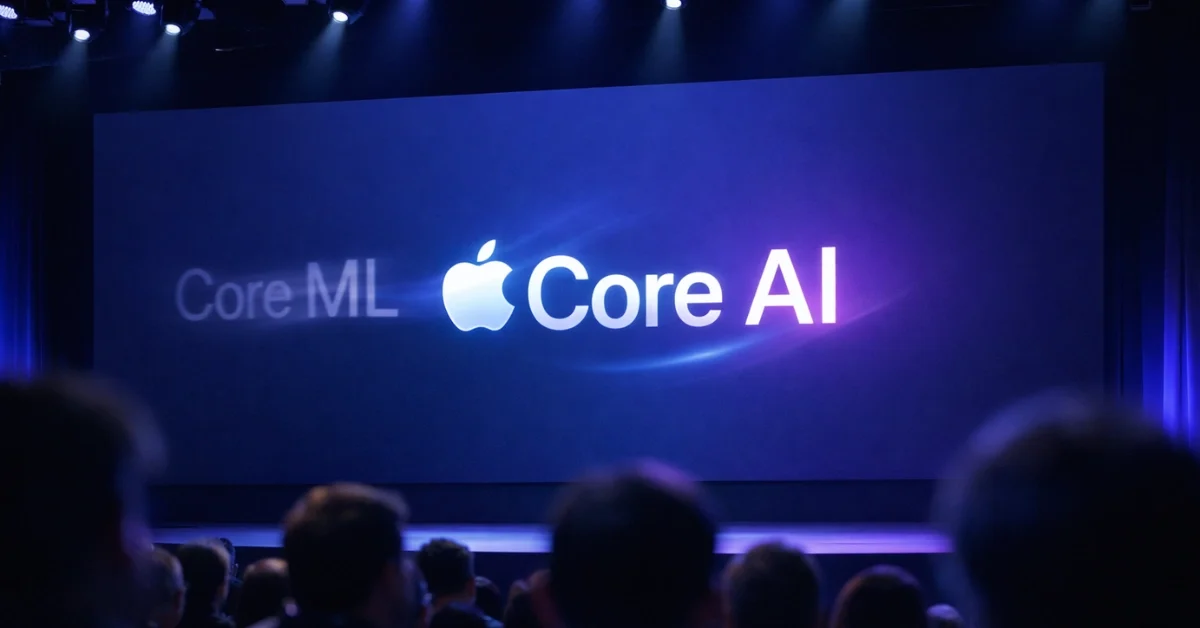
Apple is reportedly preparing a significant software overhaul for its upcoming Worldwide Developers Conference (WWDC) in 2026, centering on a major shift in its artificial intelligence strategy. According to recent reports, the tech giant plans to replace its long-standing Core ML framework with a newly modernized system branded as “Core AI.”
This highly anticipated transition is expected to be a cornerstone of the upcoming iOS 27, iPadOS 27, and macOS 27 updates. By introducing the Core AI framework, Apple aims to provide developers with enhanced tools to integrate modern artificial intelligence models directly into their applications, moving decisively beyond traditional machine learning boundaries and reshaping how its devices handle complex software tasks.
Retiring the Machine Learning Label
For years, Core ML has served as the foundational framework enabling developers to weave machine learning capabilities into applications across the Apple ecosystem. Over time, its applications have naturally expanded to include generative tools and advanced artificial intelligence technologies. However, reports from Bloomberg’s Mark Gurman indicate that Apple now views the phrase “machine learning” as a dated term that no longer resonates effectively with everyday consumers or software developers.
The shift to the Core AI name reflects a deliberate strategic move to align with the broader artificial intelligence narrative currently dominating the technology industry. While the rebranding signals a fresh focus and a software reset, the framework’s fundamental objective remains unchanged. Core AI will continue helping developers embed external AI models into their software without requiring them to rely heavily on third-party resources or build complex integration tools from scratch.
Currently, Apple provides developers with avenues to incorporate large language models and diffusion models into their applications through Core ML. Some sources suggest that during this transitional phase, both the legacy Core ML and the new Core AI frameworks may coexist for a period to ensure a smooth transition for existing applications.
Building on Previous Innovations
The move to Core AI builds directly upon the groundwork laid during previous software cycles. During WWDC 2025, Apple announced significant enhancements to Core ML that enabled developers to optimize and execute sophisticated generative machine learning models on devices more quickly and efficiently. Core ML Tools received detailed, composable weight compression techniques specifically designed to facilitate the deployment of large language models and diffusion models on Apple silicon.
Furthermore, a standout feature of the OS 26 release was the introduction of capabilities allowing developers to integrate Apple Foundation Models directly into their apps. This functionality allowed for robust on-device AI processing to produce text outputs and perform various complex functions. The transition to Core AI is expected to streamline these processes even further, with a potential focus on the seamless integration of third-party AI models, possibly utilizing protocols like MCP.
Siri Upgrades and Gemini Integration
The introduction of Core AI is part of a much wider AI software shake-up across Apple’s operating systems. A major component of this initiative is a completely revamped version of the Siri virtual assistant, which is reportedly being developed under the code name “Camp.” This project intends to significantly improve Siri’s underlying capabilities, allowing the assistant to better utilize personal data and execute sophisticated in-app controls.
To achieve this next-generation functionality, Apple is expected to leverage Google’s Gemini models. While the broader iOS 27 cycle will heavily spotlight these advancements, certain enhancements could arrive much sooner. Reports indicate that Apple might introduce a highly anticipated upgrade to Siri and Apple Intelligence—powered directly by the Gemini AI models—as early as the iOS 26.5 release. Apple is currently testing iOS 26.4 with developers and public beta testers, meaning the first iOS 26.5 beta could be just weeks away.
Impact on Users and App Developers
For everyday Apple users, this backend transition will ultimately translate into a significantly enhanced experience across all their devices. By actively integrating more modern artificial intelligence technologies natively into the operating system, Apple is paving the way for applications to become smarter and much more intuitive over time.
For software developers, the new Core AI framework promises an easier path to innovation. By natively supporting advanced features, developers can create highly capable apps without constantly relying on expensive third-party services. This accessible ecosystem is expected to spark a new wave of highly intelligent applications available on the App Store.
What to Expect at WWDC 2026
The upcoming WWDC event, traditionally held in June, is anticipated to be completely packed with artificial intelligence announcements. This comes even as earlier speculations indicated that the OS 27 cycle might primarily center on bug resolutions and stability improvements. Instead, the spotlight will be firmly on Apple Intelligence and the newly trained Gemini Apple Foundation Models.
During the event, Apple is poised to unveil chatbot-like functionalities for Siri, adding to the array of anticipated new features. Additionally, upcoming hardware releases, such as the highly anticipated iPhone 17 Pro Max, are expected to be significant players in executing these new comprehensive artificial intelligence features natively on the device.
Ultimately, the transition from Core ML to Core AI signifies a notable shift in Apple’s strategic priorities, clearly indicating that the company is actively shaping the market and not simply waiting for the current artificial intelligence trend to fade away.
