

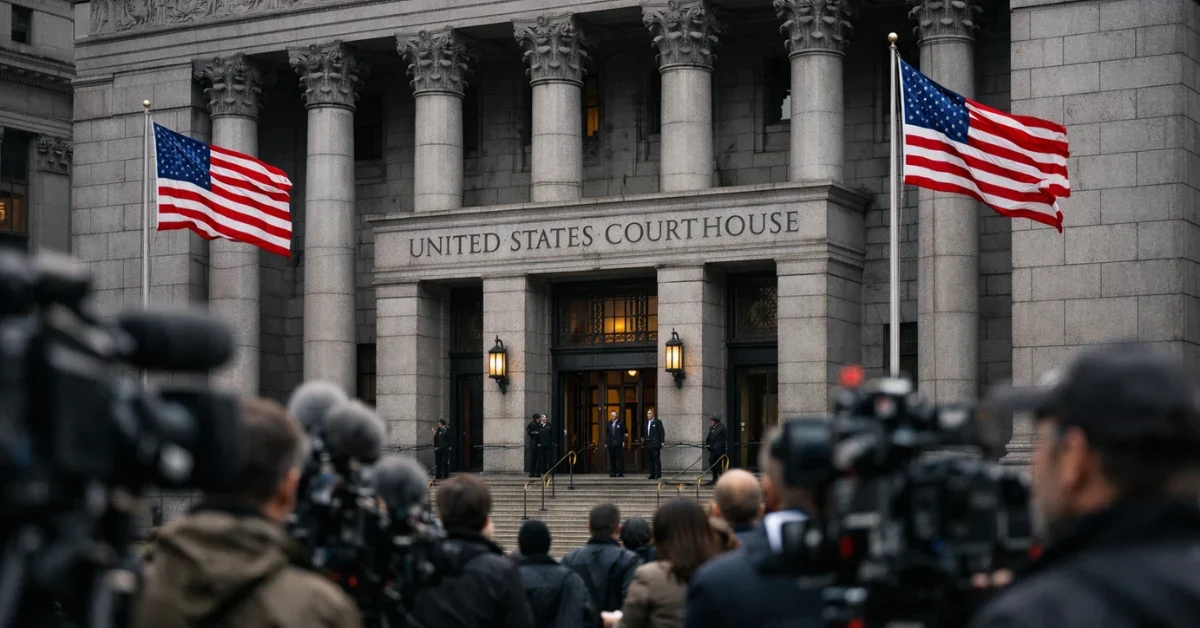
Ousted Venezuelan President Nicolas Maduro and his wife, Cilia Flores, returned to a Manhattan federal court on Thursday for a crucial hearing regarding their ongoing legal battle. The couple is actively seeking the dismissal of their drug trafficking and narcoterrorism charges, arguing that the United States government is unfairly blocking their access to essential legal defense funds. This unprecedented geopolitical dispute over financial sanctions has quickly become the central focus of the recent Nicolas Maduro US court proceedings.
The former Venezuelan leader, who was initially indicted by the Trump administration, claims that Washington is intentionally undermining his constitutional rights. His legal team strongly argues that strict US sanctions prevent the Venezuelan government from covering his expensive attorney fees. According to his lawyers, this financial blockade is effectively hindering his ability to secure a fair defense ahead of the highly anticipated Nicolas Maduro US court trial.
The Battle Over Legal Representation and Defense Funds
The legal conflict over defense funding stems directly from severe US sanctions placed on Venezuelan government assets and financial accounts. During Thursday’s hearing, defense attorney Barry Pollack argued that the US Treasury Department’s Office of Foreign Assets Control (OFAC) is severely restricting his client’s fundamental rights. By prohibiting the use of Venezuelan public funds for legal representation, the defense claims the US is violating Maduro’s Sixth Amendment right to choose his own legal counsel. This vital constitutional protection applies to all criminal defendants facing trial in the United States, regardless of their citizenship or immigration status.
In detailed court documents submitted in February, Pollack highlighted a brief moment when the defense team believed the complex funding issue was officially resolved. On January 9, OFAC initially granted a temporary exemption to the financial sanctions, which would have legally permitted the Venezuelan government to pay the legal costs for both Maduro and Flores. However, this critical approval was abruptly retracted just hours later without any formal explanation provided to the defense team.
According to Pollack, Venezuelan law and longstanding custom dictate that the national government is fully responsible for covering the expenses of the President and the First Lady. Because the US government is actively blocking these specific resources, Maduro submitted a written statement to the court formally declaring his financial inability to pay for his own defense attorneys.
Prosecutors Defend Sanctions and National Security Interests
Federal prosecutors pushed back strongly against the defense’s request to dismiss the criminal charges. Prosecutor Kyle Wirshba informed the court that the US government has already permitted Maduro and Flores to use their own personal funds to pay for legal representation. However, prosecutors refuse to authorize any financial payments that originate from sanctioned, government-controlled Venezuelan accounts.
Wirshba argued in court that the financial sanctions preventing the release of these specific public funds are fully legally justified. He confidently stated that maintaining the block on Venezuelan government accounts is absolutely necessary to protect critical US national security and foreign policy interests.
If the defense team’s motion to dismiss the case is ultimately rejected by the judge, the funding dispute could force the former Venezuelan leader to seek alternative legal options. To qualify for a taxpayer-funded public defender in the US federal court system, Maduro must officially demonstrate complete financial incapacity to cover the steep costs of a private attorney.
Background on the Narcoterrorism Indictment
The complex legal saga surrounding Nicolas Maduro began when the US Department of Justice unsealed a massive indictment against him in March 2020. The federal charges formally allege that Maduro and other senior Venezuelan officials actively participated in a sprawling narcoterrorism conspiracy. US authorities claim the Venezuelan administration collaborated with dangerous Colombian guerrilla groups to traffic massive quantities of cocaine into the United States over several years.
The 63-year-old ousted leader and his wife made their initial court appearance before US District Judge Alvin Hellerstein on January 5, 2026. At that time, both high-profile defendants pleaded not guilty to all criminal charges. During the January hearing, Maduro defiantly declared himself a “prisoner of war” to the courtroom. The couple is currently being held in a highly secure Brooklyn detention center as they await their upcoming trial.
Geopolitical Tensions and Future Implications
The ongoing Nicolas Maduro US court case highlights deep-rooted and ongoing geopolitical tensions between Washington and Caracas. During his first presidential term, former President Donald Trump significantly intensified economic and financial sanctions against Venezuela. The Trump administration cited widespread systemic corruption within the Venezuelan government and ongoing attacks on the nation’s democratic institutions as the primary reasons for the strict penalties. Additionally, the US government officially denounced Maduro’s 2018 reelection victory as completely fraudulent.
Despite these intense historical conflicts, the current Manhattan court proceedings are taking place during a unique period when Washington is cautiously attempting to warm diplomatic ties with Caracas. The federal judge’s upcoming decision on whether to dismiss the charges or allow the use of Venezuelan state funds will undoubtedly impact both the legal fate of Nicolas Maduro and the broader geopolitical landscape.
