

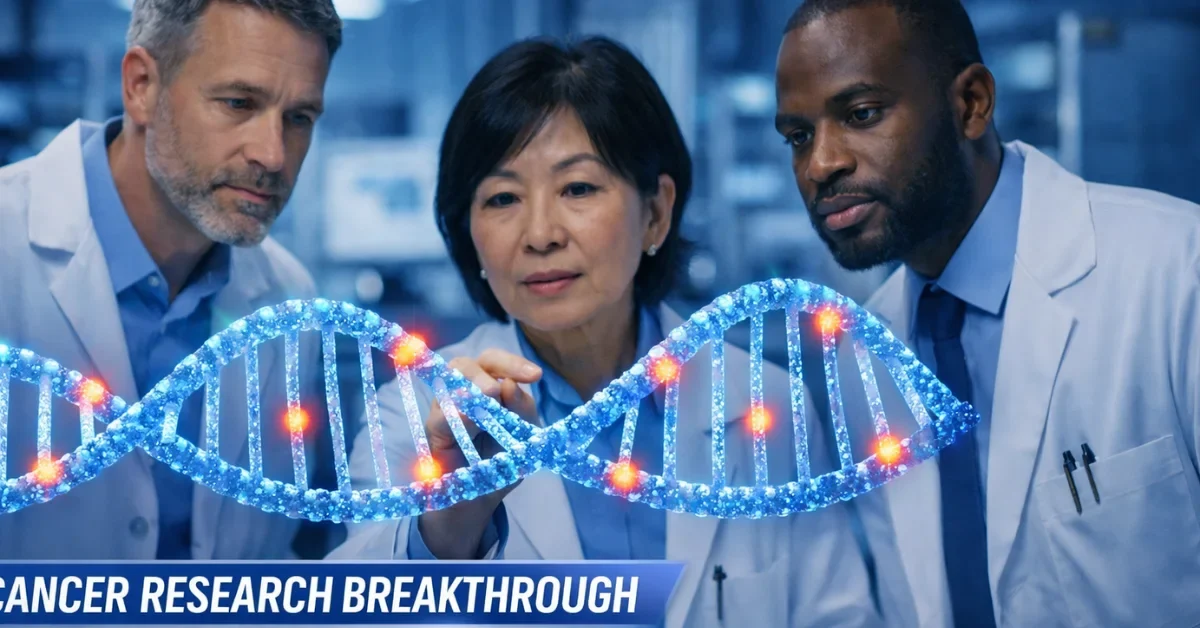
Recent advancements in oncology have spotlighted a revolutionary approach to cancer treatment: personalized cancer vaccines. Unlike traditional preventive vaccines, these therapeutic vaccines are designed to train the immune system to recognize and attack existing cancer cells. New data from ongoing clinical trials and research reviews highlight the potential of mRNA-based personalized cancer vaccines to provide durable benefits for patients with difficult-to-treat tumors, such as pancreatic cancer and melanoma. By leveraging artificial intelligence (AI) and advanced genomic sequencing, scientists are now able to tailor treatments to the unique genetic profile of an individual’s tumor.
The integration of AI into vaccine design has been a game-changer for the field. AI algorithms analyze vast amounts of biological data to identify tumor-specific mutations, known as neoantigens, which are unique to cancer cells and absent in healthy tissue. This precise identification allows for the creation of vaccines that direct the immune system to target only the cancer, sparing healthy cells and potentially reducing side effects. As research progresses, these personalized therapies are showing signs of extending recurrence-free survival in patients who have exhausted other treatment options.
AI Revolutionizes Vaccine Design and Neoantigen Discovery
The development of a personalized cancer vaccine begins with the identification of neoantigens, a process that has been significantly accelerated by AI. According to a 2024 review in Frontiers in Immunology, AI technologies are now instrumental in predicting which neoantigens will elicit the strongest immune response. Tools like DiscoTope-3.0 and other machine learning models analyze the structure of proteins on the surface of cancer cells to predict their ability to bind with immune system molecules. This ensures that the vaccine targets the most effective antigens, a crucial step for stimulating a robust immune attack against the tumor.
Deep learning models are also being used to predict patient-specific responses to these vaccines. By analyzing complex datasets that include genomic profiles and immune system characteristics, AI can help classify patients as likely responders or non-responders. This capability not only streamlines the development of vaccines but also enables oncologists to personalize treatment strategies further. For instance, AI algorithms can identify specific genetic alterations and biomarkers, such as tumor mutational burden, to refine the selection of vaccine candidates and improve the precision of immunotherapy.
mRNA Technology Enables Rapid and Flexible Vaccine Production
At the core of these new personalized treatments is messenger RNA (mRNA) technology, the same platform used effectively in COVID-19 vaccines. A 2025 article in Acta Naturae explains that mRNA vaccines work by delivering genetic instructions to antigen-presenting cells (APCs) in the body. These cells then produce the tumor-specific antigens, which are displayed to the immune system to trigger a targeted response. This method offers several advantages, including the ability to encode multiple antigens in a single vaccine and a manufacturing process that is faster and more scalable than traditional methods.
The flexibility of mRNA platforms allows for the rapid creation of vaccines tailored to a patient’s specific tumor profile. Once the neoantigens are identified, the corresponding mRNA sequence is synthesized and encapsulated in lipid nanoparticles (LNPs) for delivery. These LNPs protect the mRNA from degradation and ensure it reaches the target cells efficiently. Clinical trials have demonstrated that this approach can induce strong cellular immunity, activating both helper and cytotoxic T cells to seek out and destroy cancer cells.
Promising Clinical Outcomes in Melanoma and Pancreatic Cancer
Recent clinical trials have provided encouraging data on the efficacy of personalized mRNA cancer vaccines. The Acta Naturae review details results from studies involving the vaccine candidate mRNA-4157 (V940) in patients with high-risk melanoma. In a phase II trial, patients who received the vaccine in combination with the immunotherapy drug pembrolizumab showed a recurrence-free survival rate of 79% at 18 months, compared to 62% in those who received pembrolizumab alone. This significant improvement underscores the potential of combining vaccines with checkpoint inhibitors to enhance patient outcomes.
Even more striking results have been observed in pancreatic cancer, a malignancy known for its poor prognosis. A trial of the personalized vaccine Cevumeran (RO7198457) reported that 50% of patients responded to the treatment. Remarkably, for those who responded, recurrence-free survival exceeded 38 months, suggesting that the vaccine can induce a long-lasting immune memory that keeps the cancer in check. These findings offer new hope for patients with aggressive solid tumors and pave the way for further research into long-term survival benefits.
Overcoming Challenges and Future Directions
Despite these successes, the path to widespread clinical use faces challenges. Tumor heterogeneity—where different cells within the same tumor carry different mutations—remains a significant hurdle. As noted in the Frontiers in Immunology review, AI models must continue to evolve to account for this variability and ensure that vaccines target all subclones of a tumor. Additionally, the complex manufacturing and supply chain requirements for personalized mRNA vaccines, including strict temperature controls during transport, present logistical obstacles that need to be addressed.
Looking ahead, researchers are exploring various administration routes to optimize immune responses. While intramuscular injection is standard, studies suggest that intradermal or intranodal delivery might elicit stronger T-cell activity. Continued collaboration between AI experts, immunologists, and clinicians is essential to refine these therapies. As technology advances, the goal of transforming cancer into a manageable chronic condition—or even achieving a cure—becomes increasingly tangible.
