

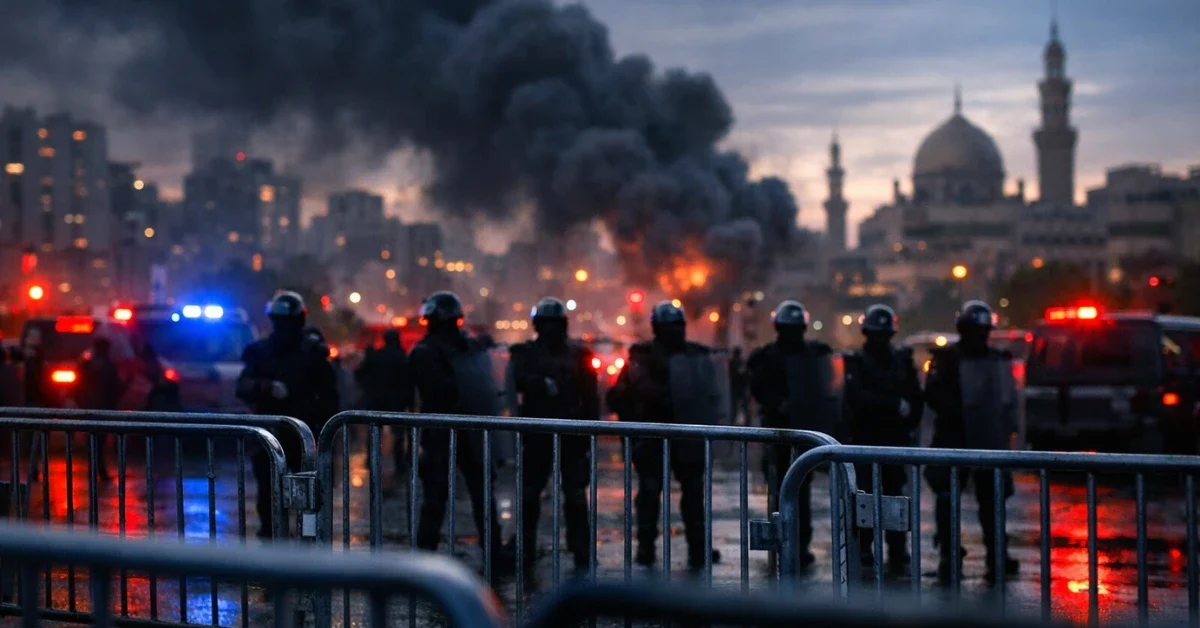
Millions of people marked the annual event on the last Friday of Ramadan, but this year’s Al-Quds Day rallies were significantly disrupted by escalating international conflicts. These global demonstrations, traditionally held to express support for Palestinians and oppose Israel, faced unprecedented challenges, including a deadly explosion during a state-organized gathering in Iran, a historic protest ban in the United Kingdom, and a last-minute legal injunction in Canada.
Amid heightened military hostilities and geopolitical tensions, these demonstrations drew massive crowds and heavy security responses. The convergence of targeted military strikes and stringent government interventions highlighted the volatile atmosphere surrounding this year’s global events.
Deadly Explosion Strikes Tehran Demonstration
In Iran, a powerful explosion rocked a massive state-organized rally in central Tehran. Thousands of people had gathered near Ferdowsi Square and Tehran University to chant anti-Israel slogans. According to Iranian state broadcaster Press TV, the blast killed at least one woman via shrapnel. The network described the incident as a combined United States and Israeli airstrike.
Prior to the explosion, the Israeli military posted warnings in Farsi on social media, advising individuals to evacuate the targeted area. However, a widespread government-imposed internet blackout largely prevented Iranian citizens from receiving the alert. Following the blast, the Israeli military released a second statement criticizing the Iranian government for shutting down internet access and noting the presence of prominent Iranian leaders at the targeted location.
Despite the chaotic scene of thick black smoke and panicked crowds, high-ranking Iranian officials remained at the event. Judiciary Chief Gholamhossein Mohseni Ejei, who was surrounded by his security detail during a television interview when the blast occurred, defiantly raised his fist and stated that the nation would never retreat. President Masoud Pezeshkian also stayed at the gathering, while security official Ali Larijani characterized the suspected strike as an act of desperation.
UK Government Enforces Historic Protest Ban
In London, authorities took extraordinary measures to prevent a planned march organized by the Islamic Human Rights Commission. For the first time since 2012, the British government officially banned a protest march. Home Secretary Shabana Mahmood approved the rare request from the Metropolitan Police to prohibit the Sunday event, citing the necessity to prevent serious public disorder amid ongoing Middle Eastern conflicts.
Law enforcement officials argued that the march posed unique risks due to extreme tensions between participating factions and counter-protesters. Police also emphasized severe threats originating from the Iranian regime. According to the Metropolitan Police, security services have thwarted more than twenty Iranian state-backed attacks on British soil over the past year. Recently, authorities arrested four individuals under the National Security Act for allegedly spying on Jewish communities on behalf of Iran.
The Islamic Human Rights Commission strongly condemned the ban, labeling the decision politically charged. The organization accused the police of regurgitating Zionist talking points without providing any evidence and announced that they would seek legal advice to challenge the restriction. While the march itself is banned for an entire month, police acknowledged they lack the legal authority to prevent a stationary demonstration. The organizers have confirmed they will hold a strictly policed static rally instead.
Ontario Seeks Injunction Against Toronto Demonstration
Across the Atlantic, local governments also moved to block related demonstrations. In Canada, Ontario Premier Doug Ford instructed his Attorney General to file a last-minute legal injunction to completely ban an Al-Quds Day protest scheduled for Saturday afternoon outside the United States consulate in downtown Toronto.
Ford released a video statement strongly condemning the planned demonstration, alleging that it glorifies violence, celebrates terrorism, and serves as a breeding ground for antisemitism. The premier referenced recent domestic incidents, noting that synagogues and consulates have faced gunfire, leaving communities targeted and intimidated.
Organizers of the Toronto event had previously promoted the gathering on social media as a day of global solidarity against imperialist aggression and a stand for the liberation of oppressed people. Prior to the provincial government’s pursuit of a total ban, Toronto police had already implemented measures to reduce expected tensions, including restricting the airspace above the demonstration site and deploying specialist officers to monitor the crowd.
