

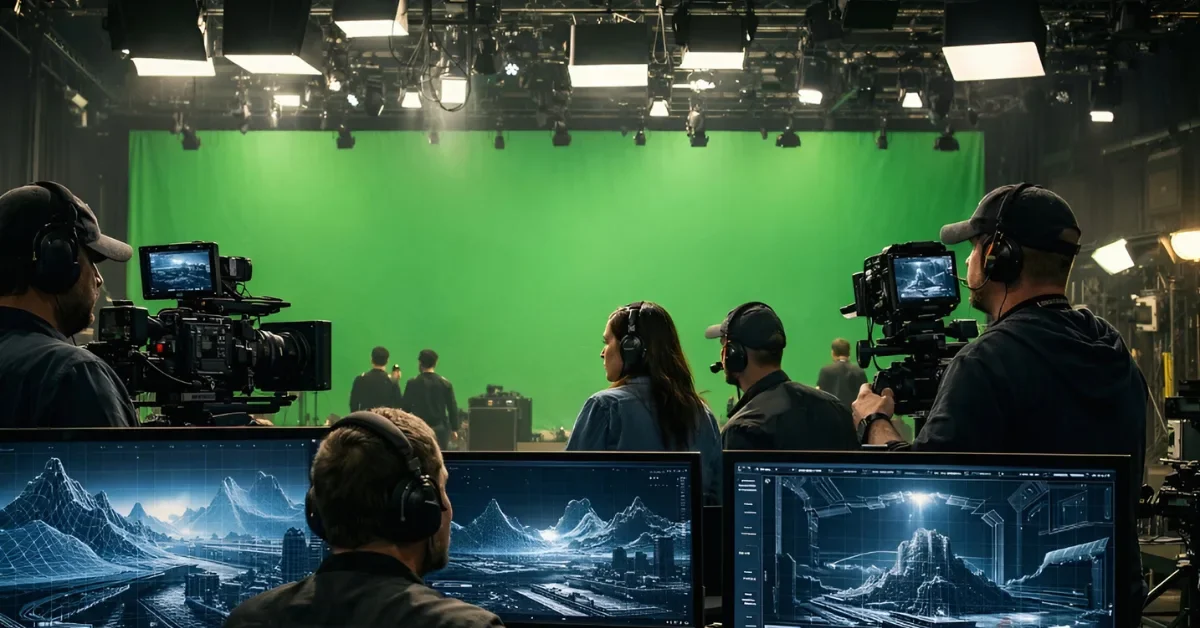
Amazon MGM Studios is taking a significant step into the future of entertainment by introducing new artificial intelligence tools designed to accelerate film and television production. Under the leadership of veteran executive Albert Cheng, the studio has developed a dedicated “AI Studio” to streamline creative workflows and reduce the high costs associated with filmmaking.
The initiative moves into a critical phase next month, with a closed beta program launching in March. Amazon plans to invite industry partners to test these proprietary tools, with initial results expected to be shared by May. This move signals Amazon’s intent to integrate AI deeply into its production processes, aiming to bridge the gap between existing consumer AI technology and the precise needs of professional directors and crews.
Streamlining Production with the “AI Studio”
The “AI Studio” operates like a startup within the larger company, adhering to Amazon founder Jeff Bezos’s famous “two pizza team” philosophy—keeping the group small enough to be fed by two pizzas. The team is composed primarily of product engineers and scientists, supported by a smaller group of creative and business experts.
According to Cheng, the goal is not to replace human creativity but to enhance it. “The cost of creating is so high that it really is hard to make more and it really is hard to take great risk,” Cheng stated in an interview. “We fundamentally believe that AI can accelerate, but it won’t replace, the innovation and the unique aspects that (humans) bring to create the work.”
The tools are built to address specific “last mile” challenges in production, offering directors granular control over cinematic content. Key features include ensuring character consistency across different shots and integrating seamlessly with industry-standard creative platforms. To support these capabilities, the studio is leveraging Amazon Web Services (AWS) and collaborating with multiple large language model providers.
Protecting Intellectual Property
A major focus for the AI Studio is the protection of intellectual property. Cheng emphasized that ensuring AI-generated content is not absorbed into other AI models is essential for the initiative’s success. This approach aims to safeguard the unique assets of creators while providing them with powerful new capabilities for pre- and post-production.
Collaborating with Industry Heavyweights
Amazon is not developing these tools in isolation. The studio is actively collaborating with prominent industry figures to determine the best implementation strategies. Key partners include:
- Robert Stromberg: The director of “Maleficent” and his company, Secret City.
- Kunal Nayyar: “The Big Bang Theory” actor and his production company, Good Karma Productions.
- Colin Brady: A former animator for Pixar and Industrial Light & Magic (ILM).
These partnerships are intended to ensure the tools meet the practical demands of top-tier filmmaking.
Real-World Application: “House of David”
Amazon has already begun testing these technologies in its original productions. The studio highlighted the second season of its biblical epic series, “House of David,” as a prime example of the technology’s potential.
Director Jon Erwin utilized AI in combination with live-action footage to create expansive battle scenes for the series. This hybrid approach allowed the production to broaden the scope of its sequences significantly while keeping costs manageable. Reports indicate that the season featured approximately 350 AI-generated shots, seamlessly edited together with traditional footage.
Industry Context and Job Market Concerns
The push for AI adoption comes at a time of heightened anxiety in Hollywood regarding the impact of technology on employment. While Amazon emphasizes that writers, directors, and actors will remain central to the process, the company has also acknowledged the efficiency of AI as a factor in recent organizational changes. Since October, Amazon has cut approximately 30,000 corporate jobs, including positions at Prime Video, citing the success of its technology investments as one of the reasons.
Other major players are also exploring similar technologies. Netflix co-CEO Ted Sarandos recently revealed that the series “The Eternaut” used generative AI to create a complex building collapse scene, further underscoring the industry-wide shift toward AI-assisted production.
