

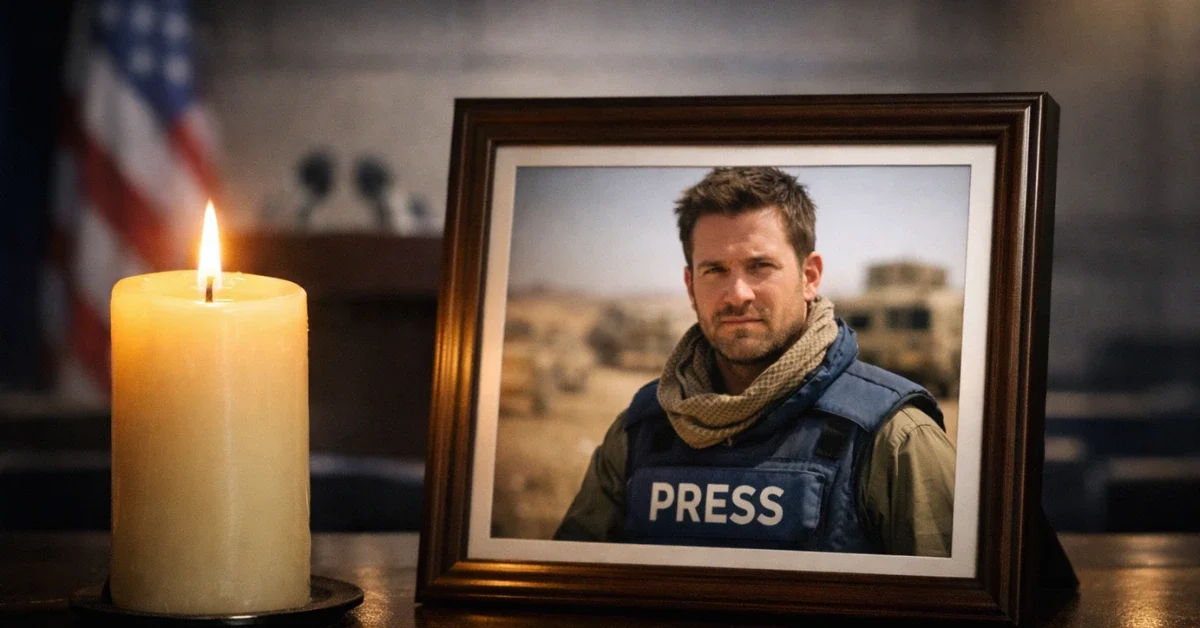
More than a decade after he vanished while reporting on the Syrian civil war, the campaign to locate missing American journalist Austin Tice is gaining fresh momentum in Washington and beyond. On U.S. Hostage and Wrongful Detainee Day in March 2026, Senator John Cornyn issued a passionate plea to renew the search for the Texas native. His remarks highlighted the enduring commitment of U.S. officials to bring Tice home, emphasizing that the mission remains a top priority even as the political landscape in the Middle East undergoes massive transformations.
The fall of Bashar al-Assad’s regime in late 2024 unlocked a wave of optimism for the Tice family and his supporters. For years, the Syrian government’s tight grip on its intelligence apparatus made it nearly impossible to uncover concrete details about his whereabouts. Now, with new authorities in Damascus, investigators and diplomatic teams are navigating an unprecedented opportunity to uncover the truth.
Hope Rekindled by Fresh Intelligence
Before the recent congressional push, the Tice family shared an incredibly encouraging update with the public. In late 2024, Austin’s mother, Debra Tice, announced that the family had received vetted information from a highly significant source. This intelligence confirmed that her son is alive and being treated well. After enduring years of false leads and agonizing uncertainty, the family felt a renewed sense of confidence.
Marc Tice, Austin’s father, noted that this fresh information felt drastically different from past rumors. He explained that the intelligence pointed to his son being cared for as recently as earlier in the year. The White House, along with the FBI and CIA, has continuously operated under the assumption that the former Marine remains alive. The sudden collapse of the Assad government has only amplified the urgency to capitalize on this intelligence and safely extract him from the region.
The Hunt for Austin Tice
Public awareness of the case has surged alongside these diplomatic and intelligence breakthroughs. A recent investigative podcast by Gareth Browne, a Middle East correspondent for The Economist, has introduced the complex story to a global audience. The series, titled “The Hunt for Austin Tice,” meticulously digs into the timeline of his disappearance and the geopolitical hurdles that have complicated rescue efforts.
By bringing the narrative back into the spotlight, the podcast has helped apply pressure on international stakeholders. It explores the shifting alliances in post-Assad Syria and how these new power dynamics could either hinder or help the safe return of foreign captives. The renewed media attention ensures that the missing journalist does not become a forgotten casualty of a prolonged conflict.
Disputed Claims from a Syrian General
Despite the wave of optimism, the search has not been without its dark and frustrating moments. In the summer of 2025, a top security advisor to the former regime, General Bassam Hassan, reportedly told U.S. intelligence agencies a very different story. Hassan, who was a key figure in Assad’s inner circle, claimed that the former president had ordered the execution of the American captive.
The Tice family immediately and forcefully rejected this narrative. In a public statement, they expressed deep disappointment that the claims were published, dismissing them as completely false. According to their firsthand information and vetted intelligence, the general’s account was viewed as a deliberate attempt to spread disinformation. U.S. officials have long viewed Hassan with intense suspicion, given his history of coordinating chemical attacks and maintaining close ties to hostile foreign operations.
A Brief Escape in Damascus
The complex web of intelligence surrounding the case also includes astonishing details of a briefly successful bid for freedom. Sources recently revealed that in early 2013, just months after his initial abduction, the resourceful former Marine actually managed to slip out of his holding cell. This daring escape marked the first public sighting of him since he disappeared at a checkpoint south of Damascus.
After escaping, he was spotted wandering through the streets of the Mazzeh neighborhood in the Syrian capital. He eventually sought refuge at the home of a prominent local family. Unfortunately, the freedom was short-lived, and government-aligned forces quickly recaptured him. U.S. officials believe this incident is the strongest piece of evidence proving that forces loyal directly to the Assad regime were responsible for holding him.
Today, the search operation remains massive and relentless. With thousands of political prisoners freed following the regime’s collapse, investigators are scouring Damascus and beyond for any trace of the missing American. From the halls of the U.S. Capitol to the streets of Syria, the unified message remains clear: the mission will not end until Austin Tice is finally brought home.
