

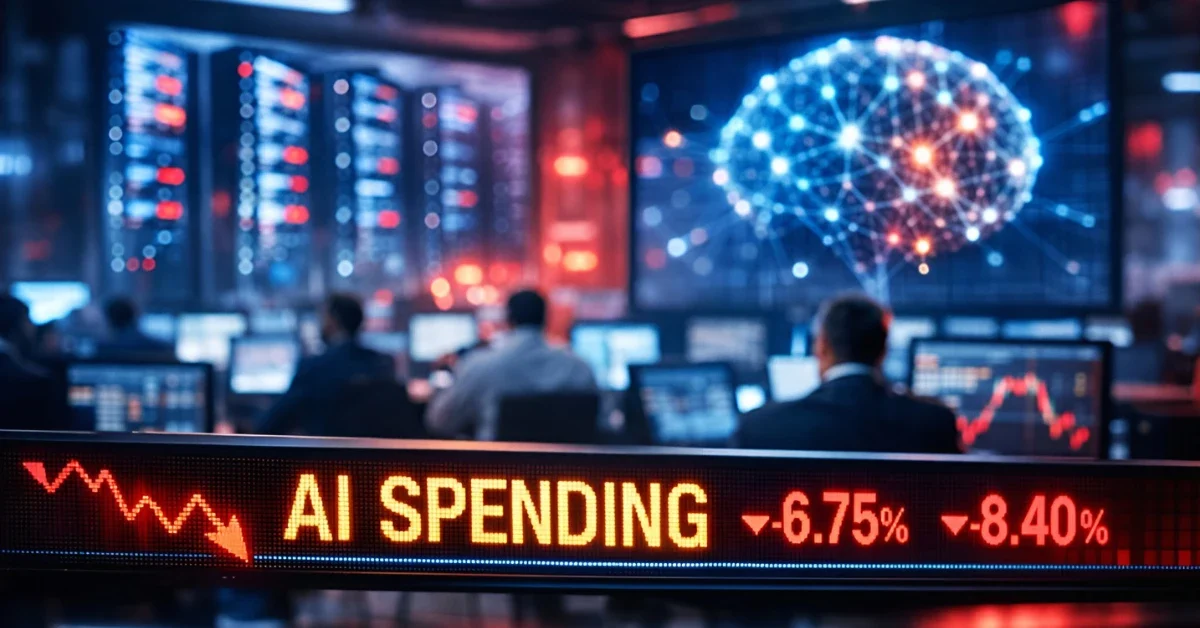
Global technology and data stocks faced a sharp downturn this week as a dual wave of anxiety swept through the markets. Investors are increasingly alarmed by the colossal capital expenditure plans revealed by major technology firms, known as hyperscalers, while simultaneously grappling with fears that advanced artificial intelligence models could severely disrupt traditional software business models.
The sell-off intensified on Friday, February 6, 2026, driven by Amazon’s premarket plunge and a broader realization of the sheer scale of spending intended for the coming year. The four largest U.S. technology companies—Amazon, Alphabet, Microsoft, and Meta—are now projected to pour approximately $650 billion into AI infrastructure in 2026 alone. This figure, a historic high-water mark for capital investment, has sparked concerns about profit margins and the timeline for returns on such massive outlays.
Amazon Leads the Slide Amid Capex Shock
Amazon became the focal point of investor jitters on Friday, with its shares dropping 8 percent in premarket trading. The catalyst for the decline was the company’s announcement of a capital expenditure plan expected to reach $200 billion in 2026. This revelation deepened existing worries regarding the “spending spree” that has characterized the sector’s pivot toward artificial intelligence.
Market participants are reacting negatively to the signaling of even higher expenditures. While an increase in capital intensity was anticipated, analysts noted that the scale of the spending is significantly larger than consensus estimates had predicted. This massive allocation of resources is primarily earmarked for new data centers and the expensive equipment required to operate them, including AI chips, networking cables, and backup generators.
Amazon is not alone in this aggressive strategy. Alphabet, Google’s parent company, indicated earlier in the week that its capital spending could double compared to the previous year. Following its announcement, Alphabet’s stock fell as much as 8 percent during trading on Thursday, though it managed to recover to close largely unchanged. Meta and Microsoft have similarly ramped up their expenditure projections, contributing to the staggering $650 billion industry-wide forecast.
Disruption Fears Compound Market Jitters
Beyond the immediate financial burden of building infrastructure, a darker narrative is weighing on software and data analytics firms. Investors fear that rapidly improving AI tools could eat into the demand for conventional software services. The concern is that as AI models become more capable, they might replace existing revenue streams rather than just augmenting them, ultimately squeezing profit margins across the sector.
These apprehensions were exacerbated this week by the introduction of a new plug-in from Anthropic’s Claude, which reportedly unsettled global markets by demonstrating capabilities that could threaten established software and data operations. The fear of an “AI bubble” is re-emerging, not necessarily because the technology isn’t real, but because it poses an existential threat to the very companies spending billions to build it, as well as the smaller software firms that rely on traditional service models.
A Trillion-Dollar Hit to the Sector
The financial impact of these fears has been profound. U.S. software and data service firms lost approximately $1 trillion in market capitalization in January alone. The trend has continued into February, with global equities poised for their worst week since November. The S&P 500 index has fallen by 2 percent for the week, reflecting the broader dampening of sentiment.
The sell-off has not been contained to the United States. International markets have felt the tremors, with the decline being particularly sharp in India. Indian software exporters dropped another 2 percent on Friday, capping a tumultuous week that saw the country’s IT index decrease by nearly 7 percent. In total, the rout erased $22.5 billion in market value from the sector in India, underscoring the global nature of the anxiety surrounding AI disruption.
The High Stakes of the AI Arms Race
The driving force behind this unprecedented spending is the pursuit of dominance in the nascent market for AI tools. Each of the tech giants is operating on the premise that generative AI technologies—capable of creating text, reasoning, and assisting in complex tasks—will become central to both enterprise and consumer workflows.
However, the path to recouping these investments remains a point of contention. The total spending forecast for the “Big Four” hyperscalers represents an increase of approximately 67 percent to 74 percent compared to 2025. Investors are questioning whether these companies can generate immediate returns to justify such huge capital outlays. The gap between the billions being spent today and the theoretical revenue of tomorrow is widening, creating a fragile environment where any signal of increased cost is punished severely by the market.
As the earnings season progresses, the disconnect between corporate strategy and investor patience is becoming starker. While tech leaders view this spending as essential for survival and future dominance, shareholders are increasingly wary of the short-term pain required to fund the AI revolution.
