

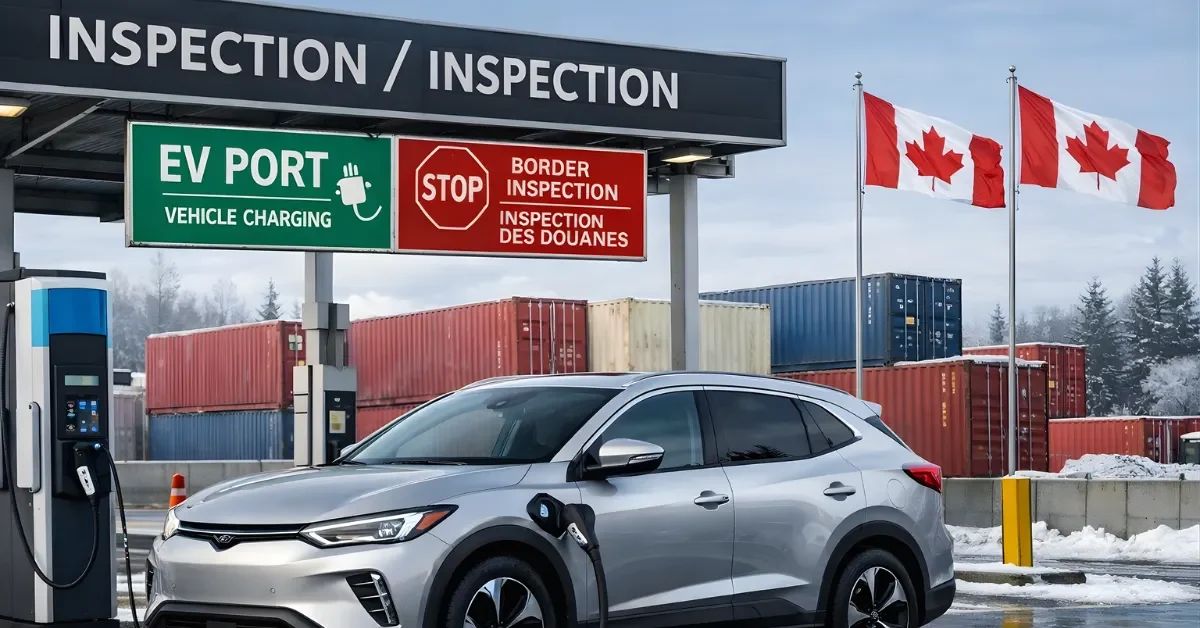
Canada’s Canada-China EV tariff deal will allow up to 49,000 Chinese electric vehicles a year into Canada at a 6.1% tariff, down from a 100% surtax, in exchange for China lowering key tariffs on Canadian canola products.
The move, announced by Prime Minister Mark Carney in Beijing after meetings with Chinese leaders, is being watched closely by Canada’s auto sector and has drawn sharp warnings from officials in the administration of US President Donald Trump.
Deal opens Canadian market to Chinese EVs
Carney said Canada will allow imports of up to 49,000 Chinese EVs annually at a 6.1% tariff rate under most-favoured-nation terms.
The LA Times reported Carney said the deal sets an initial annual cap of 49,000 vehicles and is designed to grow to about 70,000 over five years.
Carney described the agreement as “preliminary yet significant” and tied it to a broader effort to remove trade barriers and lower tariffs as Canada builds a strategic partnership with China.
Carney also said the change would improve affordability for Canadian consumers.
China to cut canola tariffs by March 1
As part of the package, Canada expects China to lower tariffs on Canadian canola seed to about 15% by March 1, down from current levels above 80%.
Bloomberg reported Carney also said China would suspend “anti-discrimination” duties on imports of some other farm products, including canola meal and lobsters.
CTV reported Carney called the canola shift “enormous progress” in efforts to reduce trade friction.
US officials warn Canada will “regret” it
Al Jazeera reported officials from President Trump’s administration said Canada may come to regret its decision to allow Chinese EVs into its market, and said those cars would not be allowed to enter the United States.
US Transportation Secretary Sean Duffy said at an event in Ohio that Canada would look back on the move and regret allowing Chinese cars into its market, according to Al Jazeera’s account.
US Trade Representative Jamieson Greer said the limited number of vehicles would not disrupt American carmakers’ supply into Canada, while also calling Canada’s decision “problematic” in a separate interview, Al Jazeera reported.
Auto industry alarm and political backlash
Bloomberg reported the decision has rattled Canadian auto executives and raised questions about how far Carney is willing to diverge from US strategy on Chinese EVs.
The same Bloomberg report said Ontario Premier Doug Ford criticized the deal as a threat to auto jobs.
BNN Bloomberg reported Canada’s automotive sector is seeking more clarity after the federal government announced a landmark tariff-and-quota arrangement with China that caps EV imports.
Canadian dollar dips after announcement
Reuters reported the Canadian dollar slid to a six-week low against the US dollar as investors weighed the Canada-China trade deal and other market factors.
The loonie was down 0.2% at 1.3915 Canadian dollars per US dollar after touching 1.3928 intraday, Reuters said.
Reuters also reported oil—an important Canadian export—settled up 0.4% at $59.44 a barrel.
What’s clear—and what’s still being debated
The New York Times described the shift as a major change in policy, saying Canada will lower tariffs on some Chinese electric vehicles while China will do the same for Canadian canola products.
Electrek characterized the move as a major break from earlier policy alignment, and reported the agreement sets the 49,000-vehicle quota at a 6.1% tariff rate while framing the quota as less than 3% of Canada’s new vehicle market.
Electrek also reported the agreement text anticipates that within five years, “more than 50%” of the imported vehicles will be “affordable EVs” with an import price under $35,000, and said the deal is expected to drive new Chinese joint-venture investment in Canada tied to the EV supply chain.
